Is there a bullet train to Nara?
No shinkansen stops in Nara. Here is how the bullet train still fits a Nara trip: the nearest stations, the transfer at Kyoto, fares, and when a coach tour beats the rails.
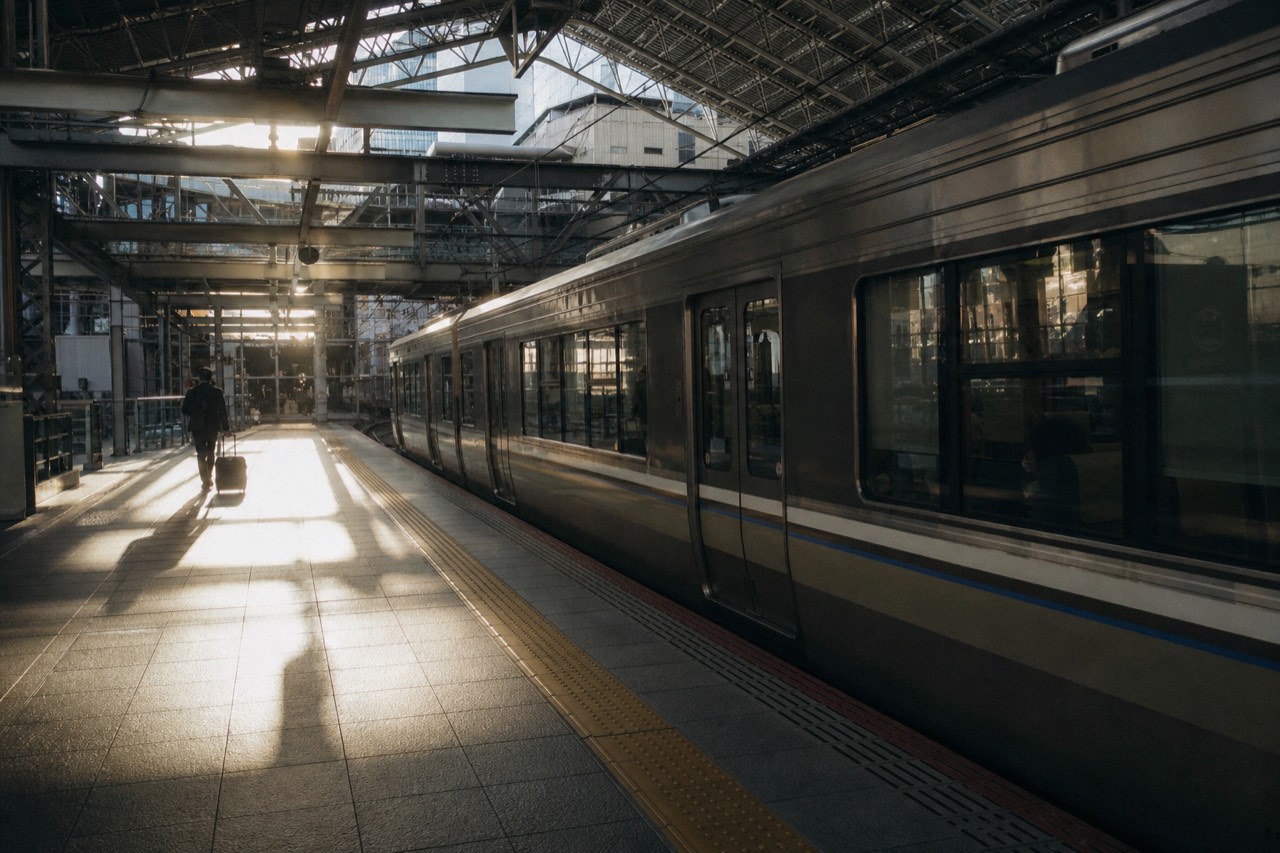
No bullet train stops in Nara. The city has no shinkansen line, no shinkansen station and no plan for one, and that surprises a lot of travellers who assume every famous Japanese destination sits on a high-speed line. The practical answer is short: ride the bullet train to Kyoto Station or Shin-Osaka, then change to a regular train. The Kyoto to Nara leg takes about 45 minutes on the fastest service and costs a little over 700 yen, so the "missing" shinkansen costs you almost nothing.
Is there a bullet train to Nara?
No. Nara has no bullet train service of any kind: no station, no line, and no announced plan to build one. The Tokaido and Sanyo shinkansen routes pass Nara Prefecture by, stopping at Kyoto and Shin-Osaka instead. From either of those stations you change to a conventional line, and the fastest onward train covers Kyoto to Nara in about 45 minutes.
The reason is history rather than neglect. When Japan built its first high-speed line, the route between Tokyo and Osaka followed the Tokaido corridor through Kyoto and Kobe, and Nara sat inland, off that corridor. The older railway already served it. The JR Nara Line and the Kintetsu Kyoto Line both predate the shinkansen by decades, and they never went away. Nara was the capital of Japan in the eighth century, long before railways existed, and the city's modern rail links were laid to serve local and pilgrim traffic from Kyoto and Osaka, not to compete with express corridors along the Pacific coast.
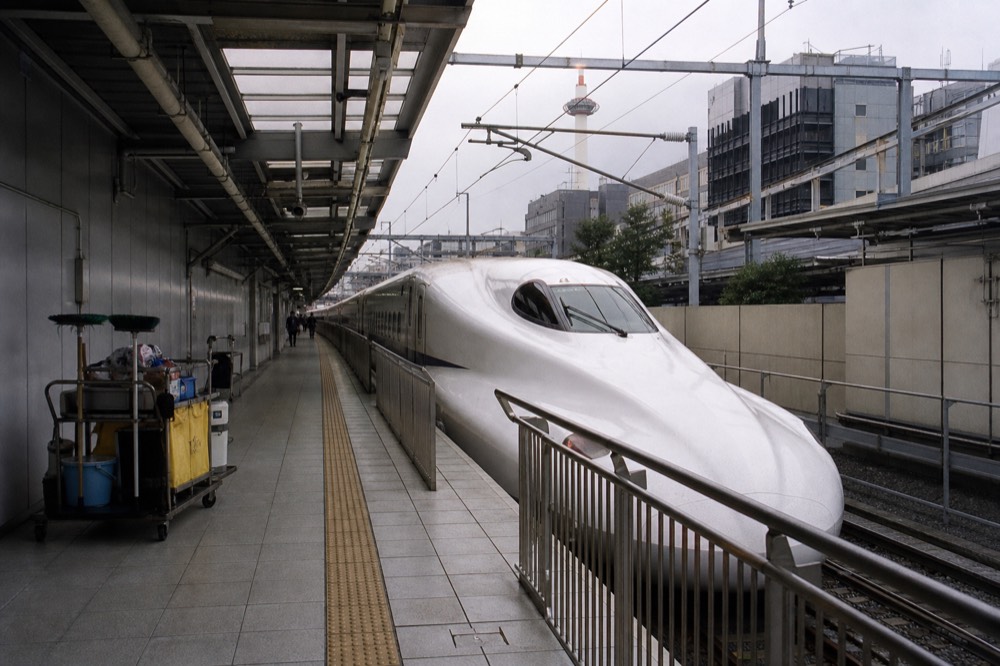
That gap matters less than you would think. The Miyakoji Rapid Service on the JR Nara Line does the run from Kyoto Station to JR Nara Station in about 45 minutes, at roughly half-hourly intervals. Kintetsu's limited express from Kintetsu Kyoto Station to Kintetsu Nara Station is faster still, about 35 minutes, with reserved seating. Neither train feels like a compromise: both are clean, punctual and comfortable, they are simply not 300 km/h machines, because the distance, about 40 kilometres, does not need one.
So a typical Tokyo or Osaka traveller's day looks like this: shinkansen to Kyoto, walk across the concourse, board a Nara train, and arrive before lunch. The bullet train does the heavy lifting; a local rapid does the last leg. If you are working out a full plan, our Nara day trip from Kyoto guide covers what to do once you step off.
There is a useful mental model for the whole Kansai region here. The bullet train runs along the northern edge: Kyoto, Shin-Osaka, Shin-Kobe. The ancient capitals and temple towns, Nara and Kyoto's old quarters, sit at or behind that line and are reached by ordinary trains, buses and coaches. Nobody in Japan treats this as a problem. The connections are timed, the stations are signed in English, and the total journey time from Tokyo to Nara door to door is roughly what a Tokyo to Hiroshima shinkansen ride takes.
What is the closest shinkansen station to Nara?
Kyoto Station is the closest shinkansen stop to Nara, about 45 minutes away by the fastest train. Shin-Osaka is the other practical gateway, with connections through central Osaka. Nara itself sits on two ordinary rail lines, JR and Kintetsu, and both start where the bullet train stops.
Kyoto is the better gateway for almost everyone. The Tokaido Shinkansen stops there on every service between Tokyo, Nagoya and Osaka, and the transfer is a same-station change: the JR Nara Line platforms are inside Kyoto Station, so you step off the bullet train, follow the signs, and board. Kintetsu Kyoto Station is one block north, a five-minute walk through the underground passage. Kyoto Station is enormous, one of Japan's largest, but the walk from a shinkansen platform to the Nara Line is a single signed route across the concourse, and the station's city bus terminal sits at the Karasuma north side under Kyoto Tower, while the south side handles highway and sightseeing coaches.

Shin-Osaka works better only if your bullet train terminates in Osaka or you are staying there. From Shin-Osaka you ride the Osaka Metro or JR into the city centre, then take a Kintetsu or JR line south to Nara; that routing typically adds 30 to 60 minutes over a Kyoto transfer, depending on connection timing. It also gives you a second decision to make, since JR and Kintetsu serve Nara on different tracks from different Osaka stations, and the two do not share a platform anywhere in the city.
There is a third option that removes the transfer entirely: a coach. Door-to-door day tours run from both Kyoto and Osaka, the road journey Kyoto to Nara takes about 60 to 80 minutes each way depending on traffic, and the coach drops you at Nara Park rather than at a station a 15-minute walk away. For travellers who would rather not parse two rail operators' timetables, that trade is worth a look.
How do you get from Kyoto Station to Nara?
Two rail operators run Kyoto to Nara. The JR Miyakoji Rapid takes about 45 minutes and costs about 720 yen one way; Kintetsu's express takes about 45 minutes for about 760 yen, and its limited express does it in about 35 minutes for 1,280 yen with a reserved seat. Trains are frequent on both.
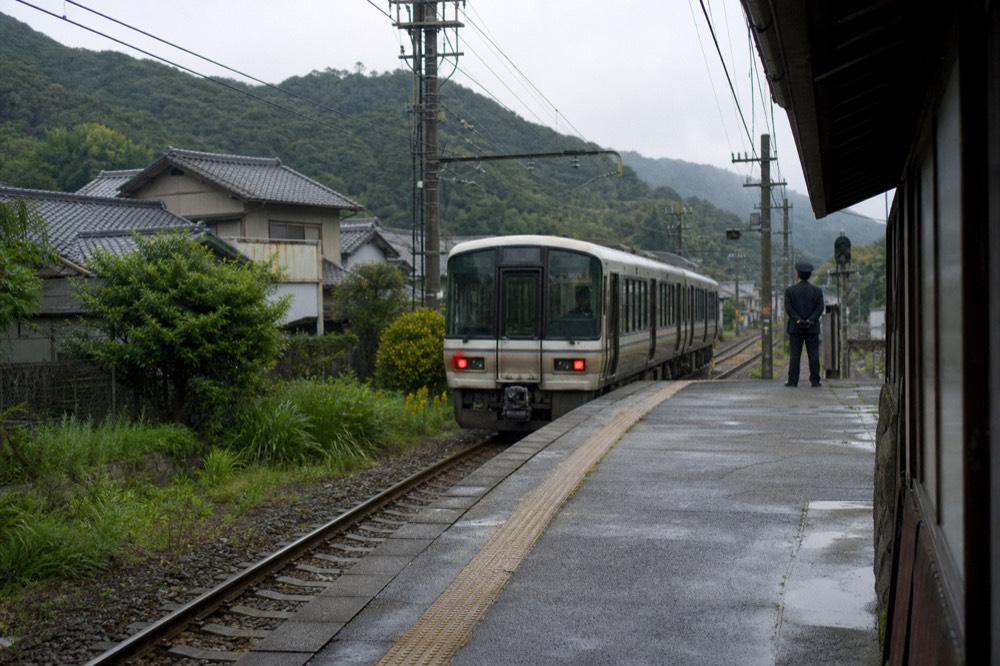
Those fare figures come from route planners rather than the operators' own fare pages, so treat them as close approximations and expect them to change over time. The structural facts are stable, though. JR runs from the main Kyoto Station, and Kintetsu runs from its own adjacent station, and the two lines follow different paths into Nara, arriving at different stations too.
| Route | Operator | Typical time | One-way fare | Arrival station |
|---|---|---|---|---|
| Kyoto to Nara, rapid | JR Nara Line, Miyakoji Rapid | about 45 min | about 720 yen | JR Nara, about 15-25 min walk to the park |
| Kyoto to Nara, express | Kintetsu Kyoto Line | about 45 min | about 760 yen | Kintetsu Nara, about 5-8 min walk to the park |
| Kyoto to Nara, limited express | Kintetsu Kyoto Line, reserved seat | about 35 min | about 1,280 yen total | Kintetsu Nara |
That last column is the detail most visitors miss. Kintetsu Nara Station sits at the edge of Nara Park, a 5 to 8 minute walk from Kofuku-ji, while JR Nara Station is a 15 to 25 minute walk from the park, or a short bus hop. If your first stop is the deer or the temple, Kintetsu saves you nothing in time on the train but several minutes on foot at the far end. Our Kyoto to Nara transport guide goes deeper on the two operators, and Japan Guide's Nara page covers the same routes from an independent angle at japan-guide.com.
A few practical notes make the choice easier. If you are staying near Kyoto Station itself, JR wins on pure convenience, since the platforms are inside the building you are already standing in. If you are staying downtown, nearer Shijo or Karasuma, Kintetsu's line runs through that side of the city and can save you the backtrack to Kyoto Station altogether. Travellers carrying large suitcases should know that Kyoto's city buses restrict big luggage and drivers may refuse it, so the train, a coin locker or a delivery service is the better plan on moving days.
One thing worth knowing before you commit to rail: the whole day out, door to door, runs to roughly about 10.5 hours from Kyoto however you slice it. A guided coach tour folds the transfer, the admissions and the guiding into one booking instead. The Kyoto and Nara Day Tour from JTB Sunrise Tours, rated 4.8 from 32 reviews and priced from $191.65 per adult for the no-lunch Kyoto option, includes a licensed English-speaking guide, the coach and the admission fees in that price. Other departure and lunch combinations are priced in Hong Kong dollars on the operator's live listing, and the included lunch is the one element this listing's reviews criticise most, so the cheaper no-lunch option is the one to beat. Check availability
Does the Japan Rail Pass cover the trip to Nara?
Yes, on the JR side only. The Japan Rail Pass covers the JR Nara Line including the Miyakoji Rapid Service, but not Kintetsu, which is a private railway. For a single Kyoto-Nara return, about 1,440 yen on JR, the pass is irrelevant to the maths: it pays for itself on long-distance shinkansen legs, not on this short hop.
The pass question has a 2026 wrinkle worth knowing. The Japan Rail Pass rises in price on 1 October 2026: the ordinary 7-day pass goes from 50,000 yen to 53,000 yen, the 14-day from 80,000 to 84,000 and the 21-day from 100,000 to 105,000, with the green-car versions rising in step, per the official pass site at japanrailpass.net. The purchase location's local date decides which price applies, so a pass bought before the end of September 2026 locks in the old rate even if you travel later. There are also mechanical rules around the exchange order: it must be exchanged within three months of the order, the start date must fall within one month of exchange, and that start date cannot be changed once printed.
For the Nara leg itself, the arithmetic is blunt. Even after the rise, a Kyoto-Nara return costs about 1,440 yen on JR, a rounding error against a 53,000 yen pass. If you hold a pass because of Tokyo-Kyoto shinkansen travel, use it on the Miyakoji Rapid for free and feel good about it. If you are buying a pass only for a Nara day trip, do not: two single tickets are the cheaper and simpler move.
The cash point deserves a second sentence, because it catches people at the temple gate rather than the station. Todai-ji's Daibutsuden charges 800 yen adult, cash only, and Kofuku-ji's combined ticket is 1,600 yen, also cash only, both stated on the temples' own pages. Buses in Kyoto and Nara take IC cards like ICOCA and Suica, but temple windows take paper money, so withdraw yen before you leave Kyoto. Seven-Eleven and Japan Post cash machines reliably accept foreign cards, so that errand is a two-minute stop, not a project.
Is a coach tour better than the train for a Nara day trip?
For many first-time visitors, yes. The train wins on flexibility and price, roughly 1,440 yen return, while a coach tour wins on logistics: it chains Kyoto and Nara sights into one day, handles admission tickets and gets you a guide, all without a transfer or a timetable to read.
The honest comparison is about what you give up rather than what you save. On the train you choose your own hours, linger where you like and eat where you like; Nara Park, Kasuga Taisha's outer grounds and the approach to Todai-ji all cost nothing to walk. On a coach you surrender the clock but gain a narrative: someone to explain what the Great Buddha's 752 eye-opening ceremony was, why the Kofuku-ji pagoda is hidden under a steel shroud until 2034, and why the deer bow.
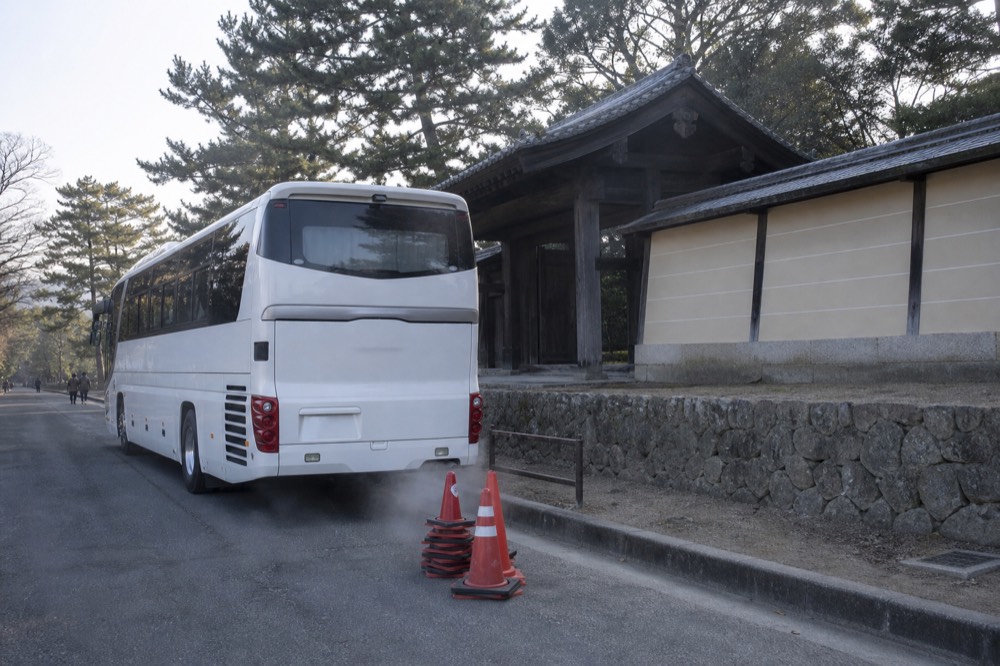
The shuttle logic also favours the coach if you are starting in Osaka. The Osaka departure options meet earlier, around 07:15, versus 08:20 in Kyoto, and the Osaka options end at Osaka Namba rather than returning to Kyoto, which suits travellers sleeping in Osaka and sightseeing in Kyoto on other days. The cheapest of the six options on the tour, the Kyoto no-lunch departure at $191.65 per adult, skips the meal, which some reviewers have flagged as the tour's weakest element, and Nara's own food scene, from kakinoha sushi to mochi pounded at Nakatanidou, is a better lunch anyway.
| Tour option | Departure | Lunch | Published price |
|---|---|---|---|
| Kyoto, no lunch | Kyoto, 08:20 meet | none | from $191.65 per adult |
| Kyoto, Western set lunch | Kyoto | Western set | HK$1,597 |
| Kyoto, Indian Thali lunch | Kyoto | Indian Thali | HK$1,597 |
| Osaka, no lunch | Osaka, 07:15 meet | none | HK$1,597 |
| Osaka, Western set lunch | Osaka | Western set | HK$1,698 |
| Osaka, Indian Thali lunch | Osaka | Indian Thali | HK$1,698 |
Only the Kyoto no-lunch option carries a published dollar price; the other five are listed in Hong Kong dollars, and converting them here would be arithmetic rather than a price. What the roster makes clear either way is that skipping lunch saves money on every departure pair, and the day's structure is identical: Nijo Castle, Kinkaku-ji, the Kyoto Imperial Palace, then the coach south to Kasuga Taisha, Todai-ji and Nara Park. Note what is not on that list: Fushimi Inari, Kiyomizu-dera and Arashiyama, which sit on the other side of Kyoto and need their own half-day if you want them.
Whether rails or coach, one thing does not change: the deer are the same. They are wild, they are a National Natural Monument, and the foundation that protects them asks visitors to feed them nothing except shika senbei, about 200 yen a bundle from park stalls, and to hand a cracker over fast rather than tease. More on that in our Nara deer park guide.
Solo travellers and pairs who like walking will likely prefer the train. Families with children, anyone with luggage or limited Japan rail experience, and visitors who want Kyoto's Nijo Castle and Kinkaku-ji and Nara's Todai-ji in one day will likely prefer the coach. There is no wrong answer, only a different day. Whatever you choose, the planning resources on Kyoto Nara Day Tour cover both routes, from rail fares to what each temple charges at the gate.
Nara is reachable only by ordinary trains, coaches and buses, never by shinkansen. Kyoto Station is the fastest gateway at about 45 minutes, Kintetsu arrives closest to Nara Park, and the Japan Rail Pass covers the JR half but not the Kintetsu half. A full-day coach tour bundles Kyoto and Nara into one itinerary for travellers who prefer not to manage the connections at all.
Common questions about getting to Nara
Is there a bullet train to Nara?
No. Nara has no shinkansen station or line. The nearest bullet train stations are Kyoto and Shin-Osaka, both a short ordinary-train ride from Nara, about 45 minutes from Kyoto.
How long does the train from Kyoto to Nara take?
About 45 minutes on the JR Miyakoji Rapid Service or the Kintetsu express, and about 35 minutes on the Kintetsu limited express. Local trains take longer, about 60 to 75 minutes on JR.
Which Nara station is closer to Nara Park?
Kintetsu Nara Station, about a 5 to 8 minute walk from the park edge. JR Nara Station is about 15 to 25 minutes on foot.
Does the Japan Rail Pass cover the trip to Nara?
It covers the JR Nara Line, including the Miyakoji Rapid, but not Kintetsu. For a single return trip the pass barely matters: the fare is around 1,440 yen return on JR.
Can you do Nara and Kyoto in one day without a bullet train?
Yes. The two cities are about 45 minutes apart by rapid train, and full-day coach tours covering both run from Kyoto and Osaka, typically about 10.5 hours from Kyoto, door to door.