Nara Park Tickets and Fees: What You Actually Pay
Nara Park charges nothing at the gate because there is no gate, but the Daibutsuden, Kasuga Taisha's inner worship area and Kofuku-ji's halls all sell their own tickets. Here is every fee that is actually published, and where to carry cash.
Short answer
Nara Park itself is free and open at all hours, with no ticket booth anywhere. The paid sights sit inside and around it: Todai-ji's Daibutsuden costs 800 yen, Kasuga Taisha's special worship costs 700 yen, and Kofuku-ji's combined ticket costs 1,600 yen. Todai-ji and Kofuku-ji take cash only, so carry notes.
Nara Park has no entrance fee, no ticket gate and no opening hours, because it is a public park, not an attraction with a perimeter. That single fact confuses a lot of first-time visitors, who arrive expecting to buy a "Nara Park ticket" and find nothing of the sort. The money in Nara is spent in slices: each temple hall, shrine precinct and museum around the park sells its own admission, at its own window, on its own terms.
Two of the biggest sights, Todai-ji and Kofuku-ji, state plainly on their own pages that they accept cash only. That is the detail that most often wrecks a carefully budgeted day. This guide puts every published fee in one place, in yen, exactly as the temples and shrines themselves publish them, so you can plan the cash you carry before you leave Kyoto or Osaka. For the wider picture of getting there, see our Nara day trip from Kyoto guide.
Is Nara Park itself free to enter?
Yes, completely. Nara Park is public parkland with no gate, no ticket office and no charge at any time of day or night, and there has never been an entrance fee to pay. Every yen you spend in Nara goes to the individual temples, shrines and museums that sit in and around the park, not to the park itself. Walking among the deer costs nothing at all.
The park is managed by Nara Prefecture as public urban parkland, the same legal category as an ordinary city park. The roughly 1,687 deer counted in the July 2026 census are free-roaming across it, and the foundation that protects them, the Nara Deer Preservation Foundation, states that the deer are habituated but wild. Feeding them is allowed only with the official shika senbei crackers, which cost about 200 yen a bundle, and that is the only "park fee" most visitors ever pay.
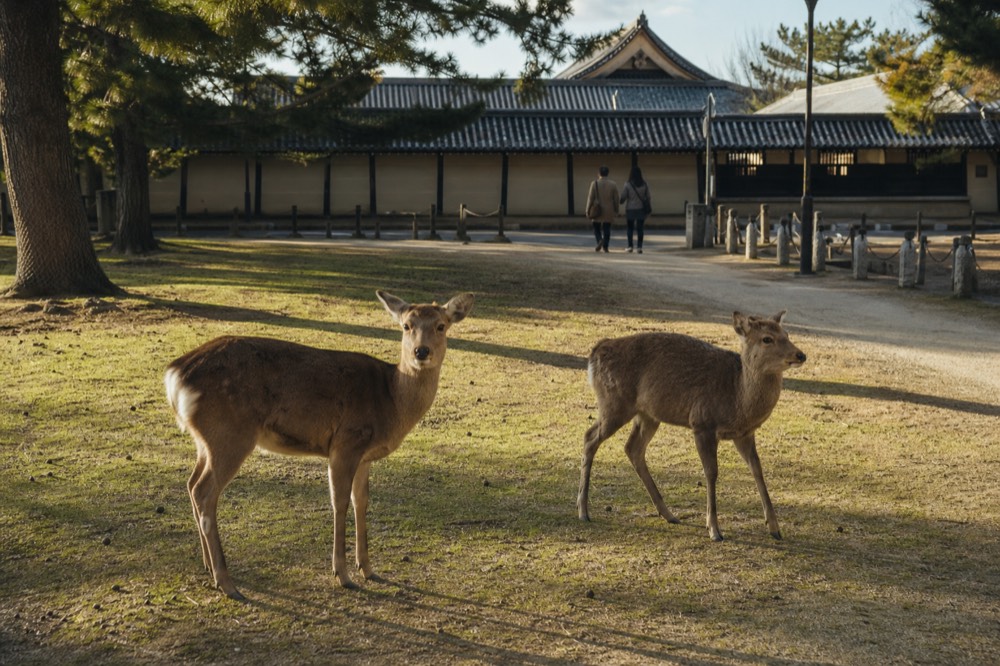
What trips people up is the geography. The paid sights, Todai-ji, Kasuga Taisha, Kofuku-ji and the Nara National Museum, sit on or beside the park, and some of them, like the Daibutsuden, sit well inside it on a hill. So you walk through free parkland for twenty minutes and then hit a ticket window. It feels like a park entrance fee. It is not. It is a temple admission, and the money goes to the temple.
| Cost item | Price | Who charges it |
|---|---|---|
| Nara Park entry | Free, at all hours | Nobody |
| Walking the park and seeing the deer | Free | Nobody |
| Deer crackers (shika senbei) | About 200 yen per bundle of roughly 10 | Licensed park vendors |
| Todai-ji Daibutsuden | 800 yen adult | Todai-ji |
| Kasuga Taisha special worship | 700 yen adult | Kasuga Taisha |
| Kofuku-ji combined ticket | 1,600 yen adult | Kofuku-ji |
If you are weighing whether Nara deserves the day at all, our piece on whether Nara is worth visiting works through the trade-offs, and our guide to things to do in Nara covers the free and paid sights side by side.
How much does Todai-ji cost to enter?
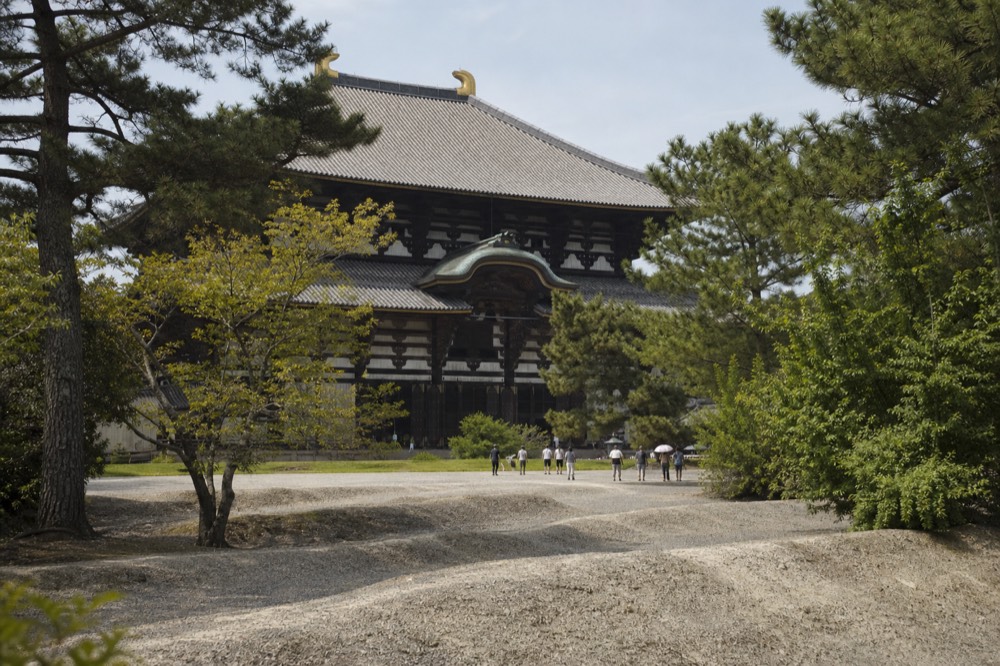
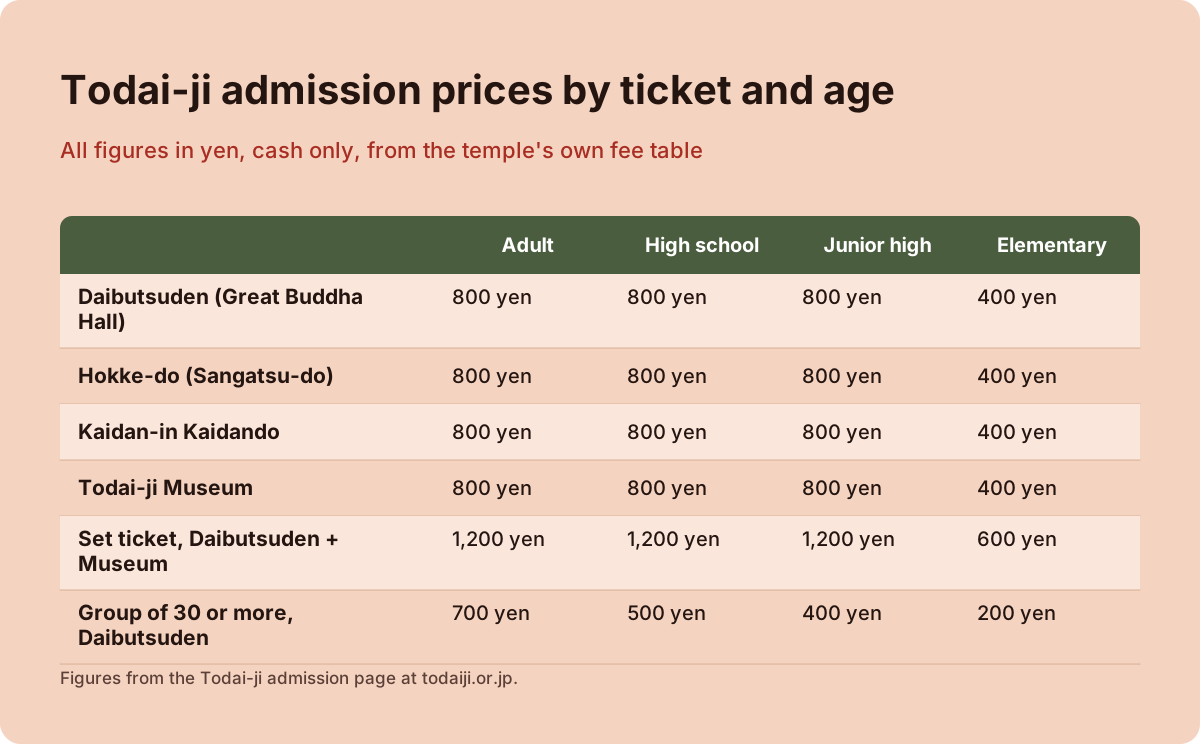
The Great Buddha Hall, the Daibutsuden, costs 800 yen for adults at its own ticket window, with the same 800 yen rate charged separately for the Hokke-do, the Kaidando and the Todai-ji Museum, and a combined Daibutsuden-plus-Museum set ticket at 1,200 yen for junior high age and above. Children pay less, and payment is cash only.
Those figures come straight from the temple's own admission page, which publishes a full fee table, hours for every building and the payment rule. The hall is open 07:30 to 17:30 from April to October and 08:00 to 17:00 from November to March, with no closing days barring special rites. No advance booking is accepted, and none is required: you queue, you pay, you walk in.
The set ticket deserves a moment of thought. At 1,200 yen it saves you 400 yen against buying the Daibutsuden and the Museum separately at 800 yen each, so it pays for itself if you were going into both anyway. The Museum holds a good share of the temple's treasures and is a sensible pairing on a rainy day. The Hokke-do and Kaidando, out on the eastern edge of the precinct, each charge their own 800 yen and are usually the quietest buildings on the hill.
| Todai-ji ticket | Adult | High school | Junior high | Elementary |
|---|---|---|---|---|
| Daibutsuden (Great Buddha Hall) | 800 yen | 800 yen | 800 yen | 400 yen |
| Hokke-do (Sangatsu-do) | 800 yen | 800 yen | 800 yen | 400 yen |
| Kaidan-in Kaidando | 800 yen | 800 yen | 800 yen | 400 yen |
| Todai-ji Museum | 800 yen | 800 yen | 800 yen | 400 yen |
| Set ticket, Daibutsuden + Museum | 1,200 yen | 1,200 yen | 1,200 yen | 600 yen |
| Group of 30 or more, Daibutsuden | 700 yen | 500 yen | 400 yen | 200 yen |
The temple's own admission page at todaiji.or.jp is the authoritative source for these figures and the hours that go with them. One practical note: an audio guide costs 500 yen per person, comes in nine languages, and is collected 15 metres past the Daibutsuden ticket gate, with the desk open from 10:00.
For travellers who would rather not assemble this day by hand, there is a guided option that covers both cities. If you want the full picture of what a guided day looks like, Kyoto Nara Day Tour walks through the whole itinerary on the homepage.
What do Kasuga Taisha's tickets include?
The shrine grounds and the famous lantern-lined approach cost nothing to walk, but the paid parts are the special worship area inside the middle gate at 700 yen, the Kasuga Taisha Museum at 700 yen general admission, and the Man'yo Botanical Garden at 700 yen adult, each sold separately. The special worship fee rose from 500 yen to 700 yen in October 2024.
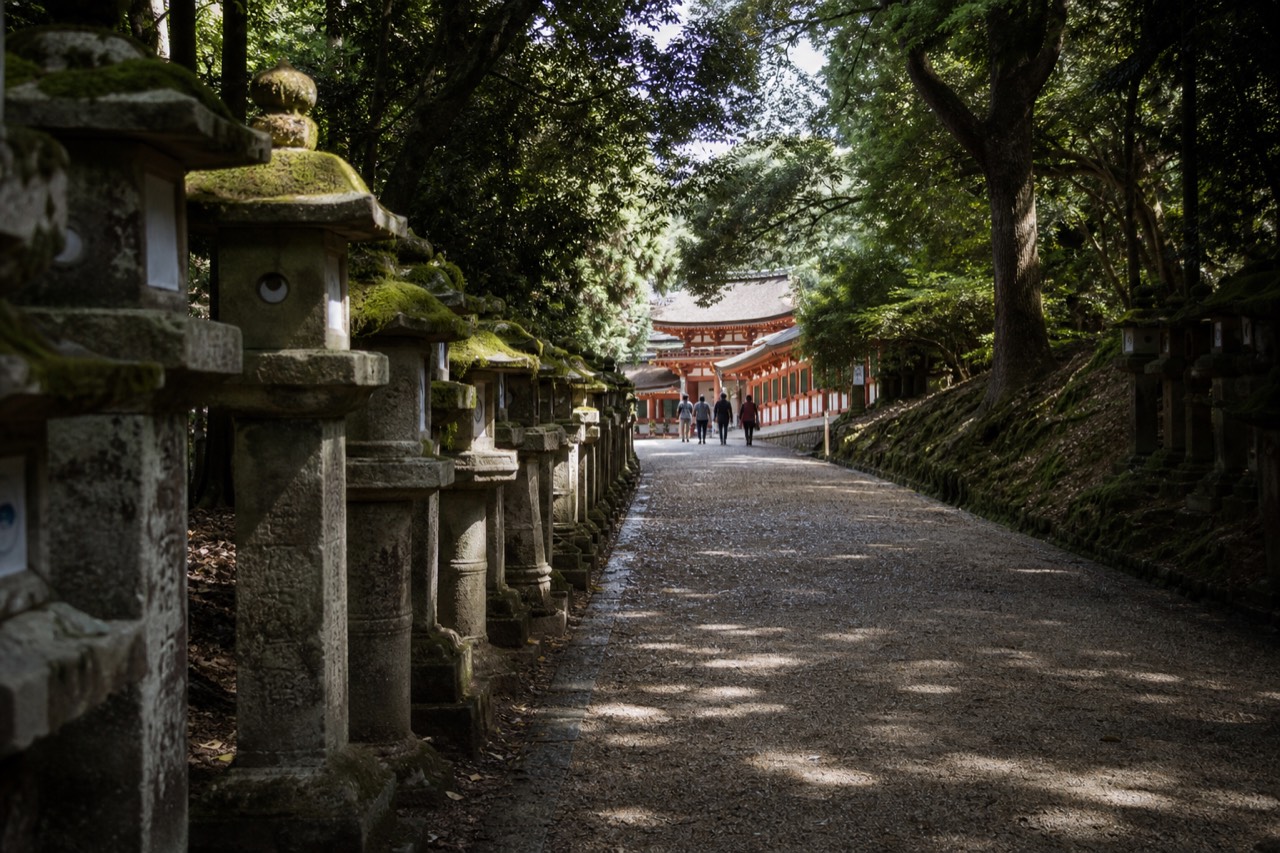
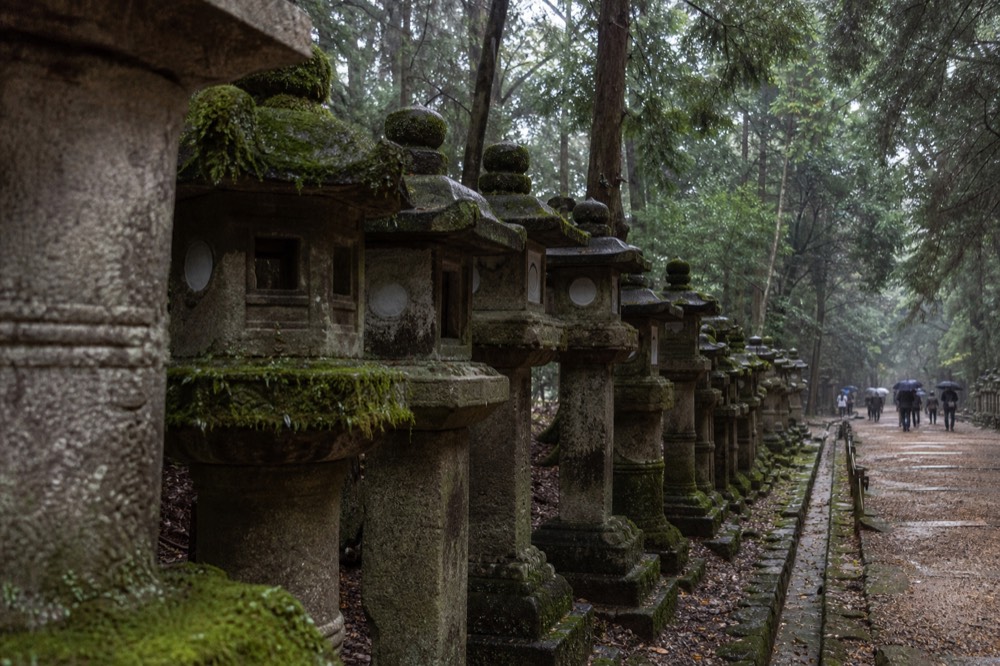
Kasuga Taisha works on a layered model that surprises people who expect one ticket to cover everything. The outer precinct, the vermillion buildings you photograph from the front, the approach under the stone lanterns, all of that is free and always has been. The 700 yen special worship ticket takes you inside the middle gate, closer to the sanctuary itself, between 09:00 and 16:00. The shrine's own notice records the increase, and most guidebooks still print the old 500 yen figure.
The museum, the Kokuhoden, is a separate 700 yen and holds an extraordinary collection: 354 National Treasures and 2,528 Important Cultural Properties according to the shrine's own figures. The botanical garden, founded in 1932 and Japan's oldest garden devoted to the plants of the Man'yoshu poetry anthology, is the third separate 700 yen, open 09:00 to 16:30 with last entry at 16:00, closed Tuesdays from June to March unless a holiday falls on the Tuesday.
| Kasuga Taisha ticket | Price | Notes |
|---|---|---|
| Grounds and lantern approach | Free | No ticket at all |
| Special worship (inside the middle gate) | 700 yen | 09:00-16:00, closed mornings on the 1st, 11th, 21st of each month |
| Kasuga Taisha Museum (Kokuhoden) | 700 yen general | 400 university and high school, 300 younger |
| Man'yo Botanical Garden | 700 yen adult, 300 yen child | Closed Tuesdays June to March |
Timing matters more here than at Todai-ji, because the special worship area shuts for stretches: mornings on the 1st, 11th and 21st of each month, around 8 to 13 March, and the year-end window from 20 December to 7 January, plus a list of festival dates. The shrine's basic information page publishes all of it. If the inner gate is your priority, plan around those dates rather than relying on luck. Our longer Kasuga Taisha shrine guide covers the worship schedule in detail.
The all-in guided day tour stops at Kasuga Taisha as one of its six visits, alongside Nijo Castle, Kinkaku-ji, the Kyoto Imperial Palace, Todai-ji and Nara Park, with a licensed English-speaking guide and the coach included in the price.
What does Kofuku-ji charge?
Kofuku-ji sells its three paid buildings, the Central Golden Hall, the Eastern Golden Hall and the National Treasure Museum, individually at 500, 500 and 900 yen, or as a combined ticket at 1,600 yen for adults and university students, 1,100 yen for high and junior high students and 600 yen for elementary age. All three halls are open 09:00 to 17:00 and admission is cash only.
The combined ticket is the obvious buy if you intend to see more than one building, since the three singles add up to more than the bundle. One catch the temple is explicit about: combined tickets are sold only between 09:00 and 16:00. Walk up at 16:30 and you can still buy single-hall tickets until last entry at 16:45, but the bundle window has closed.
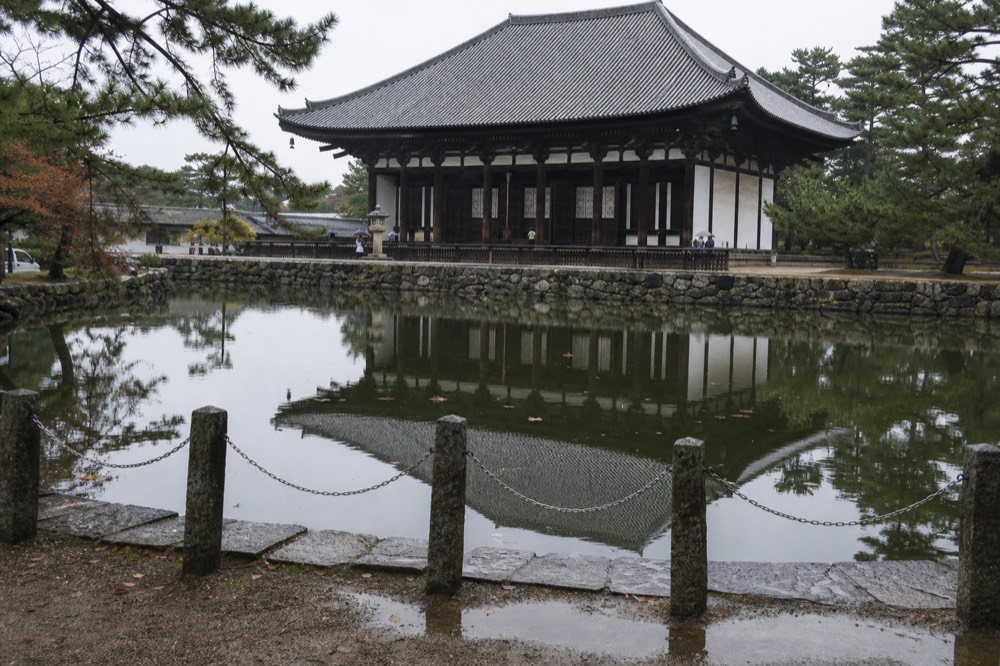
The other thing to know before you budget for Kofuku-ji is the Five-Storied Pagoda. It is the icon of the Nara skyline and the second-tallest surviving wooden pagoda in Japan at about 50 metres, but it is not an interior visit at any price. It has been completely enclosed under a roughly 60-metre steel weather cover since March 2025 for its first full conservation repair in about 120 years, and the work is scheduled to run to March 2034. You will see the shroud, not the pagoda, and no ticket changes that.
| Kofuku-ji ticket | Adult and university | High and junior high | Elementary |
|---|---|---|---|
| Central Golden Hall (Chukondo) | 500 yen | 300 yen | 200 yen |
| Eastern Golden Hall (Tokondo) | 500 yen | 300 yen | 200 yen |
| National Treasure Museum (Kokuhokan) | 900 yen | 800 yen | 500 yen |
| Combined ticket, all three | 1,600 yen | 1,100 yen | 600 yen |
The temple's own visitor page at kohfukuji.com publishes these fees, the hours and the cash-only rule together, and it also states that group bookings are neither accepted nor needed. Like Todai-ji, you simply turn up and pay at the window.
How much are the deer crackers?
Deer crackers, shika senbei, cost about 200 yen for a bundle of roughly ten, sold from licensed stalls inside the park by vendors approved by the Nara Deer Preservation Foundation, with the proceeds supporting deer welfare. There is no other food you are permitted to feed the deer, and the foundation's rules on how to hand them over are strict.
That price is about 200 yen a bundle, and the foundation publishes no exact figure, so treat it as approximate, but it has been stable across recent years and recent reporting has noted the crackers sometimes sell out by midday at peak times. Buy early if feeding the deer is a priority for your group, especially in busy seasons when several stalls in a row can run dry.
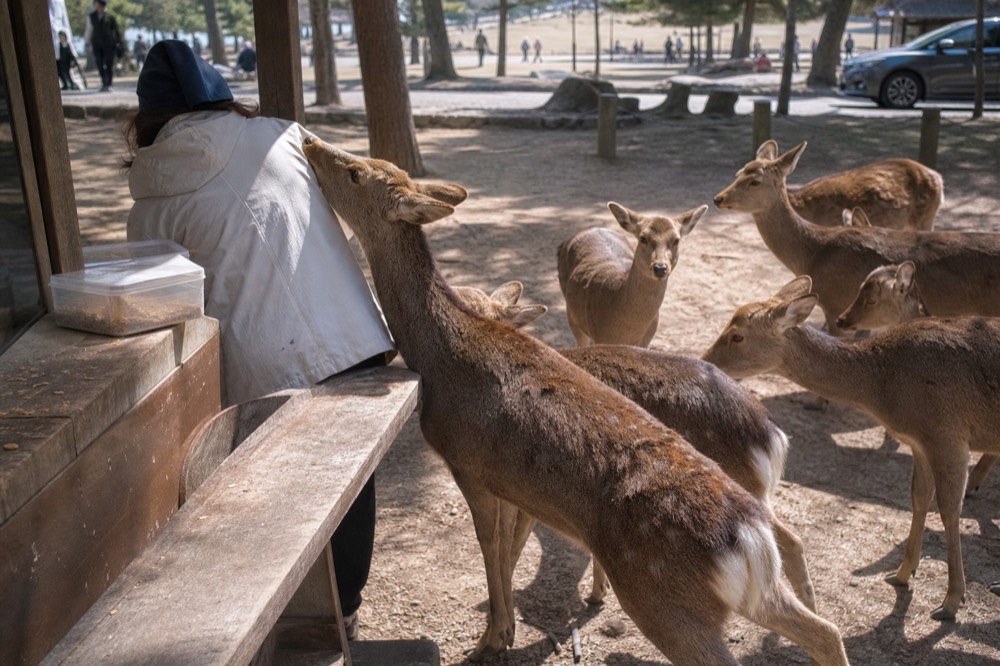
The technique matters as much as the price. The foundation's own guidance is direct: hand the cracker over quickly, do not tease, and never hold it in a closed fist, because a deer kept waiting will follow you and press. Feed nothing except the senbei. The deer are wild animals protected as a National Natural Monument, they bite, strike, butt and charge, and older visitors and small children need extra care. In rutting season, September to November, the stags must not be approached at all.
A reasonable senbei budget for a family is one or two bundles per child. Each feeding session lasts minutes, not hours, and the deer lose interest the moment the crackers run out, which is by design. Our Nara deer park guide goes deeper on the etiquette and the seasons.
Which sights take cash only?
Todai-ji and Kofuku-ji both state on their own admission pages that payment is cash only, with no card option at their ticket windows, and many smaller temples and shrines in the area remain cash-preferred as well. Kasuga Taisha and the cracker stalls are the softer spots, but the safe rule for a Nara day is to carry enough yen for every admission you plan.
This is the single most practical fee fact in Nara and the one that catches the most visitors. You can tap a card almost anywhere in Kyoto and Osaka, ride the trains on an IC card, and then stand in front of the Daibutsuden window with a phone and no way to pay 800 yen in cash. 7-Eleven and Japan Post ATMs accept foreign cards widely, and both chains have branches in central Nara, so a midday cash run is possible, but it costs you time in a day that is probably short.
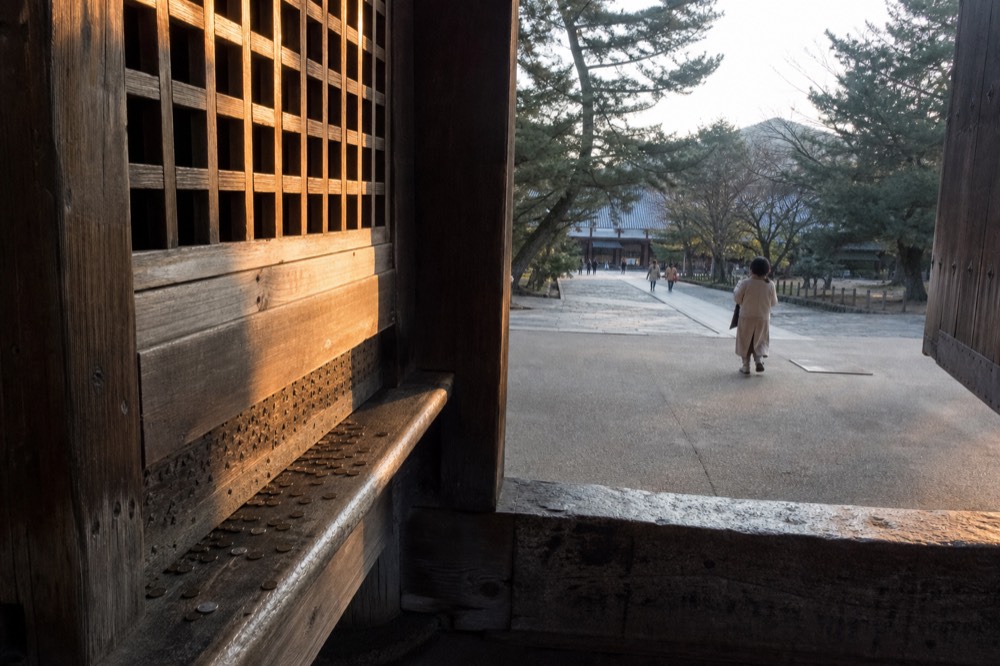
Work out your worst case before you leave. An adult doing the full set, Todai-ji's Daibutsuden at 800 yen, or the 1,200 yen set ticket with the Museum, Kasuga Taisha special worship at 700 yen, Kofuku-ji combined at 1,600 yen and a bundle of senbei at about 200 yen, is looking at several thousand yen in pure cash admissions and crackers, before lunch or shopping. Round up rather than down and you will not be walking back to a convenience store.
| Sight | Adult price | Payment |
|---|---|---|
| Todai-ji Daibutsuden | 800 yen | Cash only |
| Todai-ji set ticket, Daibutsuden + Museum | 1,200 yen | Cash only |
| Kofuku-ji combined ticket | 1,600 yen | Cash only, sold 09:00-16:00 |
| Kasuga Taisha special worship | 700 yen | Cash expected at the gate |
| Deer crackers | About 200 yen | Cash at the stalls |
| Nara Park itself | Free | Nothing to pay |
The temples' payment rules are stated on their own pages, linked above in their sections. Nothing suggests this is changing, so plan on paper money for the foreseeable future.
Can a day tour cover the fees for you?
Yes. A guided coach tour that includes Nara Park and Todai-ji bundles the transport, a licensed English-speaking guide and the day's main admissions into one published price, which removes both the cash-only scramble and the ticket-window queueing from your day. The Kyoto no-lunch option of the Kyoto and Nara Day Tour runs from $191.65 per adult.
That is the from-price of the whole product, operated by JTB Sunrise Tours and rated 4.8 from 32 reviews. The day visits six things: Nijo Castle, Kinkaku-ji, the Kyoto Imperial Palace, lunch on the lunch options, Kasuga Taisha, and Todai-ji with Nara Park. It does not visit Fushimi Inari, Kiyomizu-dera, Arashiyama or Byodo-in, so if any of those are on your list, that is a separate day or a self-guided plan.
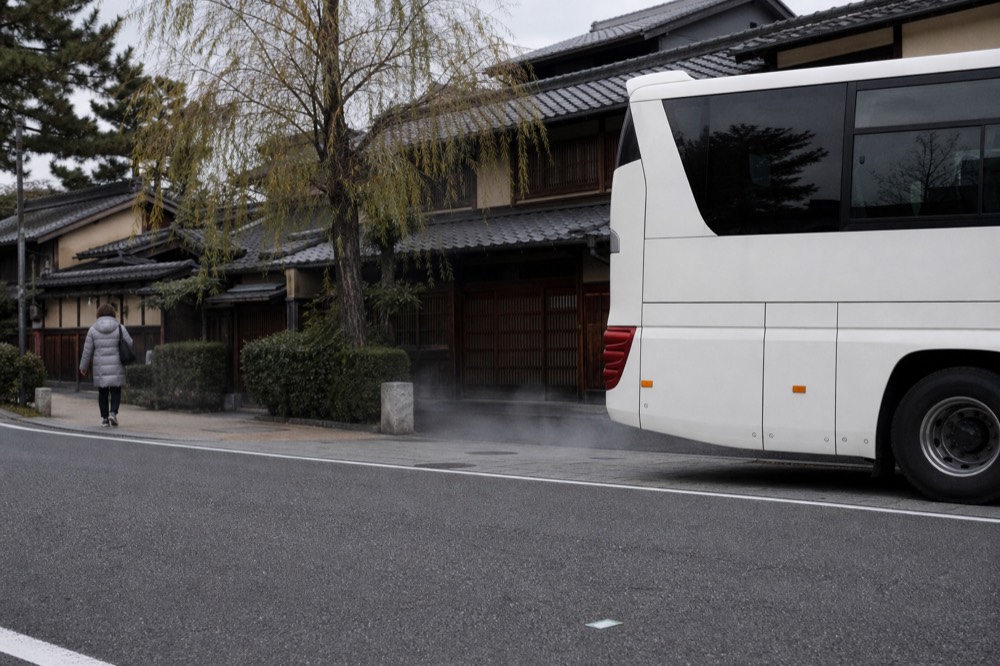
The lunch question is worth facing honestly. The included lunch is the weakest element of the itinerary by the accounts of its own reviewers, in 2015, 2017 and again in 2025. The no-lunch options exist precisely for this: you skip the set meal, pay the lower price, and eat in Nara on your own yen, where the food scene around the park is genuinely good. Our what to eat in Nara guide maps the options within walking distance of the tour's Nara stops.
The three Osaka options end at Osaka Namba and do not return to Kyoto, which matters if your accommodation is in Kyoto. An Osaka departure also adds roughly 30 to 60 minutes each way compared with the Kyoto start, with the meeting point at 07:15 rather than 08:20. For travellers based in Osaka, though, ending the day at Namba instead of dragging back to Kyoto is the more sensible shape.
Whether a tour beats doing it yourself depends mostly on time and confidence. The trains between Kyoto and Nara are quick and cheap, and our Kyoto to Nara transport guide lays out the routes, while our comparison of Nara Park tours weighs guided versus independent in full.
How much cash should you budget for a Nara day?
Count on the published admissions, the Daibutsuden at 800 yen or the 1,200 yen set ticket, Kasuga Taisha special worship at 700 yen, the Kofuku-ji combined ticket at 1,600 yen and senbei at about 200 yen, plus lunch on top. Carrying comfortably more than the sum of the tickets you plan to buy covers everything, including the cash-only windows and the cracker stalls.
The admissions are fixed and published, but lunch varies with appetite and venue, and the cracker figure is approximate. If you trim the day, the arithmetic trims with you. Skip Kofuku-ji's interiors and your cash need drops by 1,600 yen. Take only the Daibutsuden and the senbei and you are paying barely more than 1,000 yen in fees for the whole day, which is remarkably cheap for one of Japan's great sights.
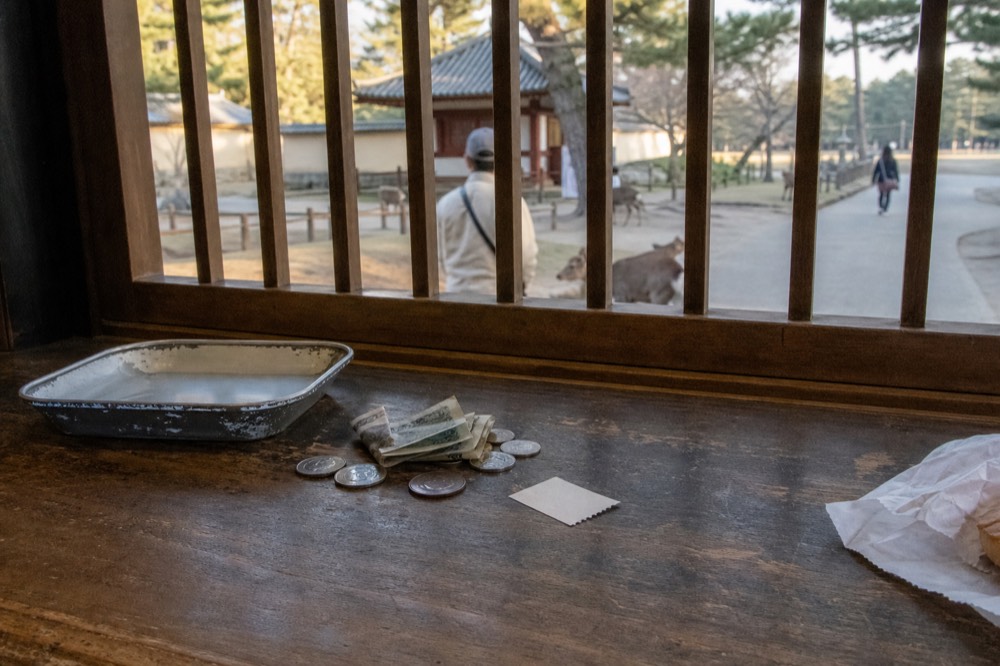
Season changes almost nothing in the fee column. The temples charge the same in cherry season as in winter; only the hours shift, with the Daibutsuden opening at 08:00 instead of 07:30 from November to March. What does change is the crowd pressure on the ticket windows, so arriving at Todai-ji near its opening time saves queueing as much as it saves nothing on price. Our best time to visit Nara guide covers the seasonal trade-offs in more depth.
If a guided day with the admissions folded in appeals more than counting yen at temple windows, the options below cover both the Kyoto and Osaka departures, with and without the included lunch.
Nara Park costs nothing to walk through, but the sights inside it each sell their own admission, and the fee rules have shifted in recent years in ways most printed guides have not caught up with. The questions below cover the fee for every major sight, the payment methods that work and the ones that do not, and the small purchases, like the deer crackers, that sit outside the temple ticket system entirely.
Common questions about Nara Park tickets and fees
Is Nara Park free to enter?
Yes. Nara Park is public parkland with no gate, no ticket office and no charge at any hour. Every yen spent in Nara goes to the individual temples, shrines and museums in and around the park, or to the deer cracker stalls.
How much is Todai-ji entrance?
The Daibutsuden, the Great Buddha Hall, costs 800 yen for adults. A set ticket covering the Daibutsuden plus the Todai-ji Museum costs 1,200 yen for junior high age and above. Payment is cash only.
Do I need to book Nara Park tickets in advance?
No. There is no park ticket to book, and the main sights sell admission at their windows on the day. Todai-ji states that advance booking is neither accepted nor required, and Kofuku-ji says the same for groups.
Can you pay by card at Todai-ji and Kofuku-ji?
No. Both temples state on their own admission pages that payment is cash only. Carry yen. Convenience store and post office ATMs in central Nara accept foreign cards if you need to withdraw.
How much are the deer crackers at Nara Park?
About 200 yen for a bundle of roughly ten crackers, sold at licensed stalls with proceeds supporting deer welfare. The price is approximate rather than officially published, and stalls can sell out by midday at busy times.
What does the Kofuku-ji combined ticket include?
The Central Golden Hall, the Eastern Golden Hall and the National Treasure Museum, at 1,600 yen for adults, 1,100 yen for high and junior high students and 600 yen for elementary age. It is sold only between 09:00 and 16:00.