Kasuga Taisha Shrine: Fees, Lanterns, and What to Know Before You Go
Kasuga Taisha is Nara's most famous shrine, and the walk to it through the deer park is half the experience. This guide breaks down exactly which parts are free, which need a ticket, and how the shrine fits into a Kyoto and Nara day tour.
Short answer
Kasuga Taisha's outer grounds and the lantern-lined approach are free. The inner sanctuary (honden) requires a 700-yen special worship ticket, raised from 500 yen in October 2024. The shrine museum and Man'yo Botanical Garden are separate paid zones. The shrine is a stop on the Kyoto and Nara Day Tour, which includes admission and a licensed guide.
What is Kasuga Taisha and why is it famous?
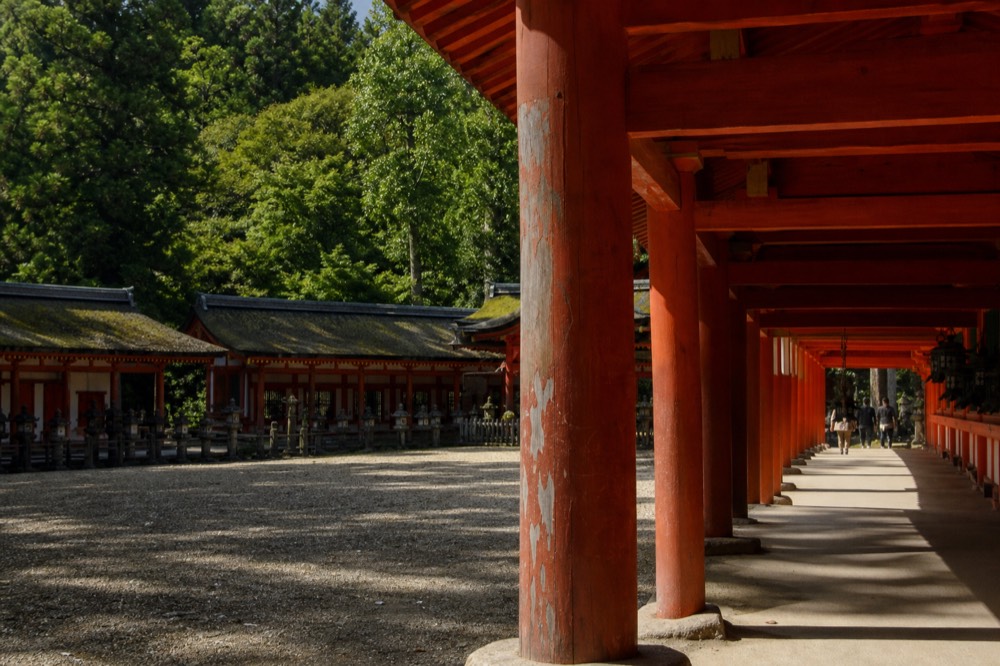
Kasuga Taisha is Nara's most important Shinto shrine, established in the Nara period and dedicated to the Fujiwara clan's ancestral deities. Its vermilion halls sit at the foot of Kasugayama Primeval Forest, a sacred woodland that has been protected from logging for over a thousand years, and the shrine's lantern-lined paths are among the most photographed scenes in Japan.
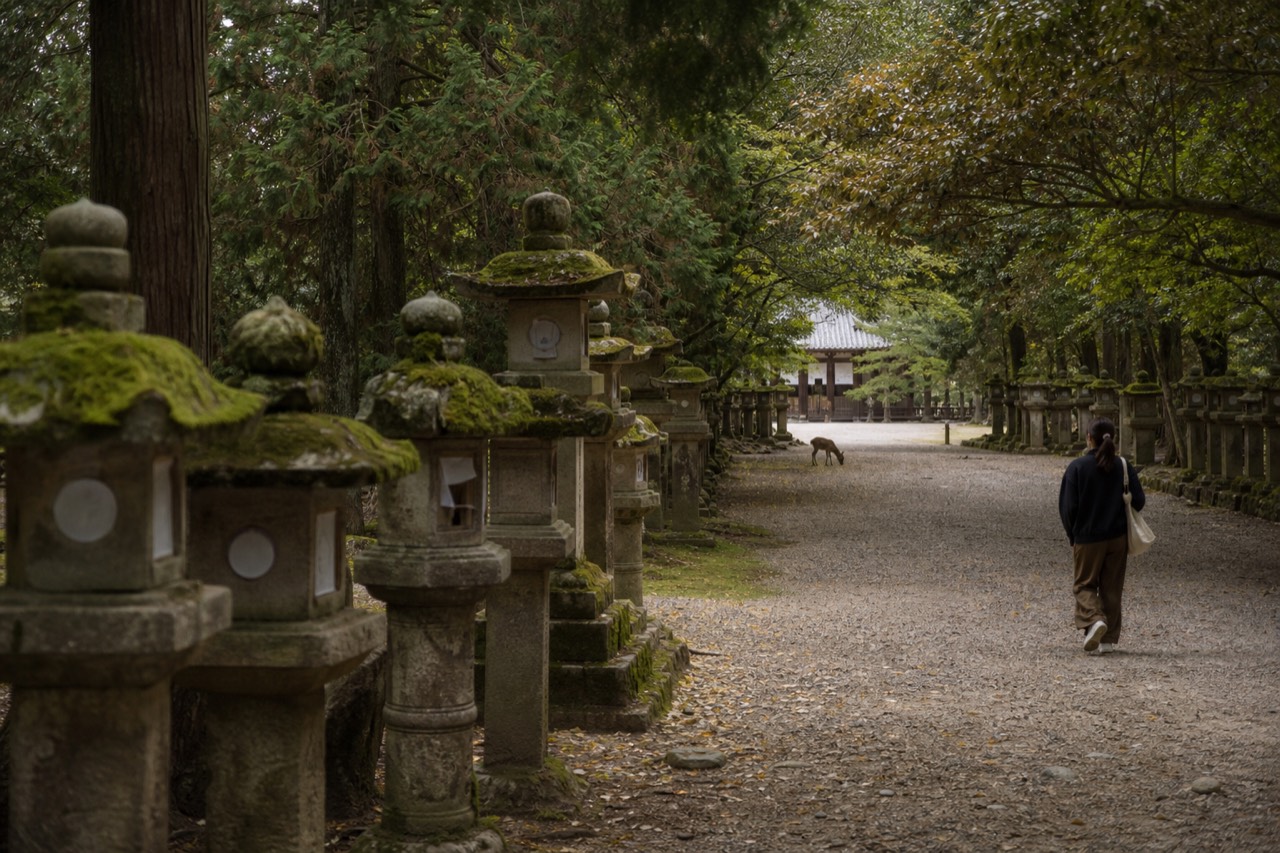
The shrine was built at the request of the Fujiwara family to protect the new capital of Heijo-kyo, and it has remained a place of deep reverence ever since. The approach begins in Nara Deer Park, where sacred deer, considered messengers of the gods, wander freely. From the park, a wide stone path leads under towering cryptomeria trees, past rows of moss-covered stone lanterns, and eventually to the bright vermilion gates of the shrine itself.
Kasuga Taisha is part of the UNESCO World Heritage listing for the Historic Monuments of Ancient Nara, inscribed in 1998. The shrine's architectural style, known as Kasuga-zukuri, features a distinctive curved roof and deep eaves, and the main sanctuary consists of four separate halls arranged side by side. The entire complex sits against the dark green backdrop of Kasugayama Primeval Forest, a protected area that has been off-limits to logging since the early Heian period. That forest, combined with the lanterns and the deer, gives the shrine a sense of timelessness that few other places in Japan can match.
Unlike some of Nara's temples, Kasuga Taisha is not a single admission site. The outer grounds and the lantern-lined corridors are free, but the inner sanctuary, the museum, and the botanical garden each require a separate ticket. Understanding what is free and what is paid is the key to planning a visit that matches your time and budget.
How much does it cost to visit Kasuga Taisha?
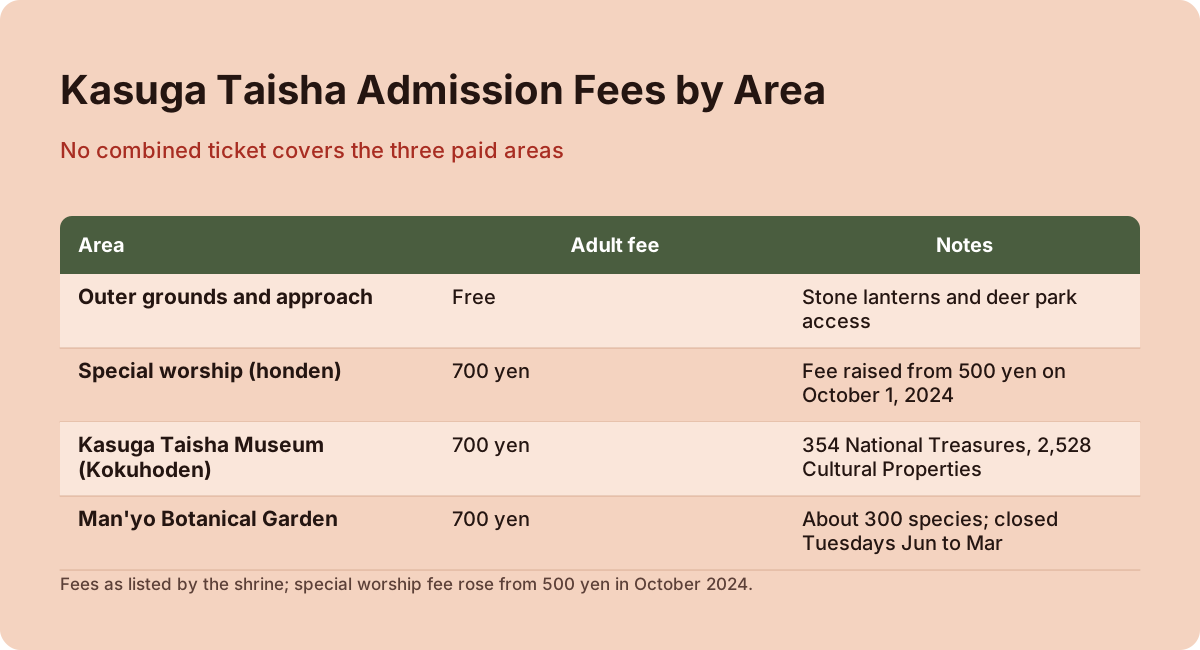
Kasuga Taisha's outer grounds, including the famous lantern-lined approach and the main courtyard, are free to walk through. The inner sanctuary (honden) requires a special worship ticket costing 700 yen, a price that rose from 500 yen in October 2024. The shrine museum and the Man'yo Botanical Garden are separate paid areas, each with its own ticket.
Many visitors are surprised to find that the iconic stone lanterns and the first courtyard are completely open, with no ticket gate. You can photograph the lanterns, watch the deer, and admire the architecture without spending a single yen. The paid areas begin where the spiritual heart of the shrine lies, beyond the middle gate.
| Area | Adult fee | Notes |
|---|---|---|
| Outer grounds and approach | Free | Stone lanterns, outer corridors, deer park access |
| Special worship (honden) | 700 yen | Inside the middle gate; fee raised from 500 yen on October 1, 2024 |
| Kasuga Taisha Museum (Kokuhoden) | 700 yen | 354 National Treasures and 2,528 Important Cultural Properties |
| Man'yo Botanical Garden | 700 yen | Japan's oldest Man'yo plant garden, about 300 species |
The special worship ticket is what most guidebooks refer to as the shrine's admission, but it is more accurately a donation for a closer look at the four main halls. The museum and garden are entirely separate, and there is no combined ticket that covers all three. If you want to see everything, budget 2,100 yen per adult.
For a well-organized day that covers both cities, Kyoto Nara Day Tour includes Kasuga Taisha along with five other major sights. The tour's admission covers the special worship fee, so you walk straight in without queuing for a separate ticket. Below are three of the most popular tour options, each with a different departure point and lunch choice.
What is the special worship (honden) and when did the fee rise?
The special worship (御本殿特別参拝) takes you inside the middle gate to see the four main halls dedicated to the shrine's four deities. The fee increased to 700 yen on October 1, 2024, after having been 500 yen for many years, a change that many visitors are still unaware of when they arrive.
The four deities enshrined here are Takemikazuchi-no-Mikoto, Futsunushi-no-Mikoto, Amenokoyane-no-Mikoto, and Himegami. According to legend, Takemikazuchi rode a white deer from Kashima Shrine in Ibaraki to the top of Mount Mikasa, which is why deer are sacred at Kasuga Taisha. The special worship lets you stand in the inner courtyard and see the four halls, each with its own distinct roofline and vermilion finish.
The fee increase was announced on the shrine's official website in September 2024 and took effect at the start of the following month. The shrine cited rising maintenance costs for the UNESCO-listed complex. If you are carrying an older guidebook or reading a pre-2024 travel blog, the 500-yen figure is now out of date. The special worship desk operates from 09:00 to 16:00, and the area closes entirely on certain festival days and during the New Year period (roughly December 20 to January 7). It also closes on the mornings of the 1st, 11th, and 21st of each month, so timing your visit around those dates is important.
If you are visiting on a coach tour, the special worship is handled by the guide, and the timing is built into the itinerary. The Todai-ji Temple stop later in the day also requires cash for admission, so having a tour that pre-pays both saves you fumbling for coins at two separate ticket windows.
What can you see at the Kasuga Taisha Museum and Man'yo Botanical Garden?
The Kasuga Taisha Museum (Kokuhoden) houses 354 National Treasures and 2,528 Important Cultural Properties, making it one of the richest shrine museums in the country. The Man'yo Botanical Garden, founded in 1932, is Japan's oldest garden dedicated to plants mentioned in the Man'yoshu poetry anthology and contains about 300 species.
The museum sits a short walk from the main shrine complex, near the first torii gate. Its collection includes swords, armor, lacquerware, and ritual objects donated by the Fujiwara clan over centuries. The displays rotate to protect the fragile items, but even a quick visit reveals the depth of the shrine's cultural holdings. Admission is 700 yen for adults, 400 for university and high school students, and 300 for younger children. The museum operates on the same seasonal schedule as the shrine, closing at 17:30 in summer and 17:00 in winter, with last entry 30 minutes before closing.
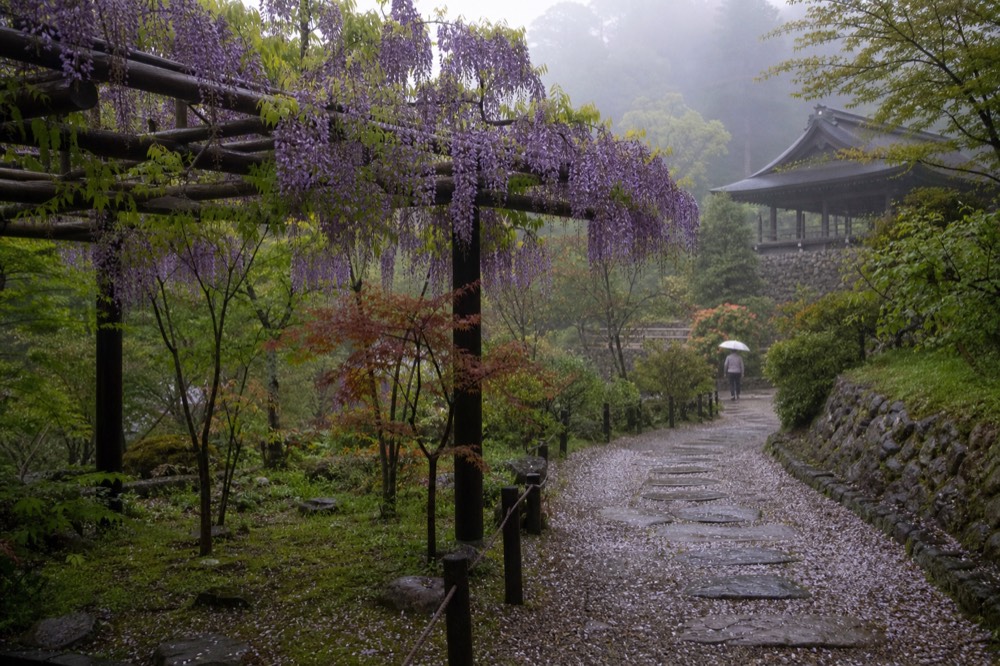
The Man'yo Botanical Garden lies a few hundred meters further along the path, on the lower slopes of Kasugayama. It was created to preserve the plants that appear in the Man'yoshu, Japan's oldest poetry collection, compiled in the 8th century. The garden is especially beautiful in spring when the wisteria, a Fujiwara clan symbol, hangs in purple cascades, and in autumn when the maples turn. The garden closes on Tuesdays from June through March unless a national holiday falls on that day, and the last entry is at 16:00.
| Facility | Adult fee | Hours | Last entry | Closed |
|---|---|---|---|---|
| Kasuga Taisha Museum | 700 yen | Main sanctuary: hours vary by season, set by the shrine itself | 30 min before closing | Open daily |
| Man'yo Botanical Garden | 700 yen | 09:00–16:30 | 16:00 | Tuesdays (Jun–Mar, except holidays) |
Neither the museum nor the garden is included in the special worship ticket, and neither is covered by the typical day tour itinerary. The Kyoto and Nara Day Tour focuses on the shrine's main sanctuary and the lantern-lined approach, giving you about 60 minutes on site. If you want to add the museum or garden, you will need to return independently, perhaps on a dedicated Nara day trip from Kyoto that gives you more free time.
How many lanterns are at Kasuga Taisha?
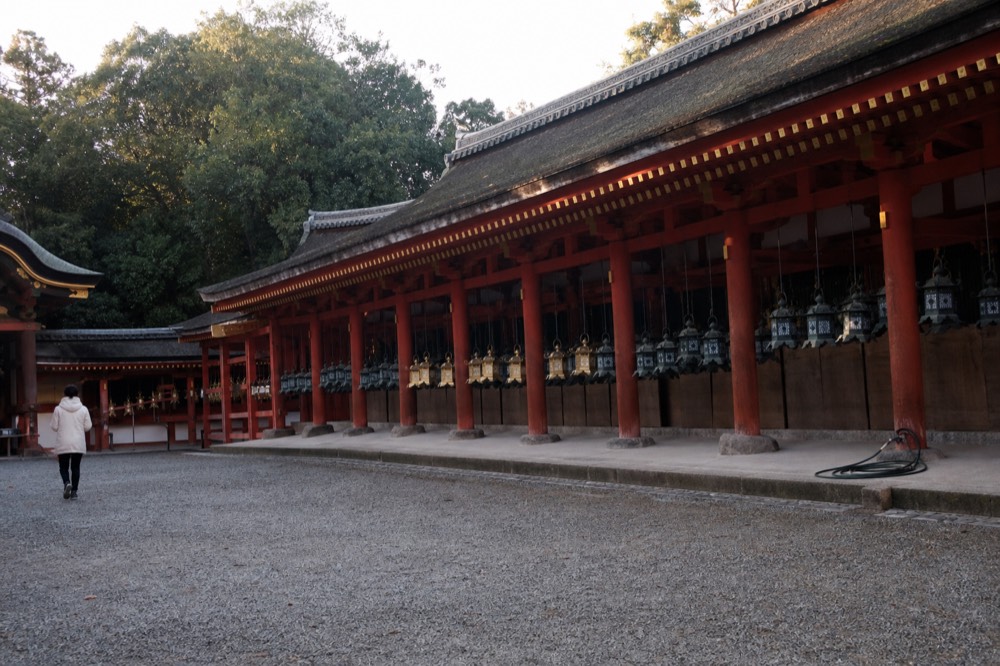
Kasuga Taisha is famous for its lanterns: roughly 2,000 stone lanterns line the paths, and another 1,000 hanging bronze lanterns adorn the corridors. Twice a year, during the Setsubun Mantoro in February and Chugen Mantoro in August, all the lanterns are lit, creating a hauntingly beautiful spectacle.
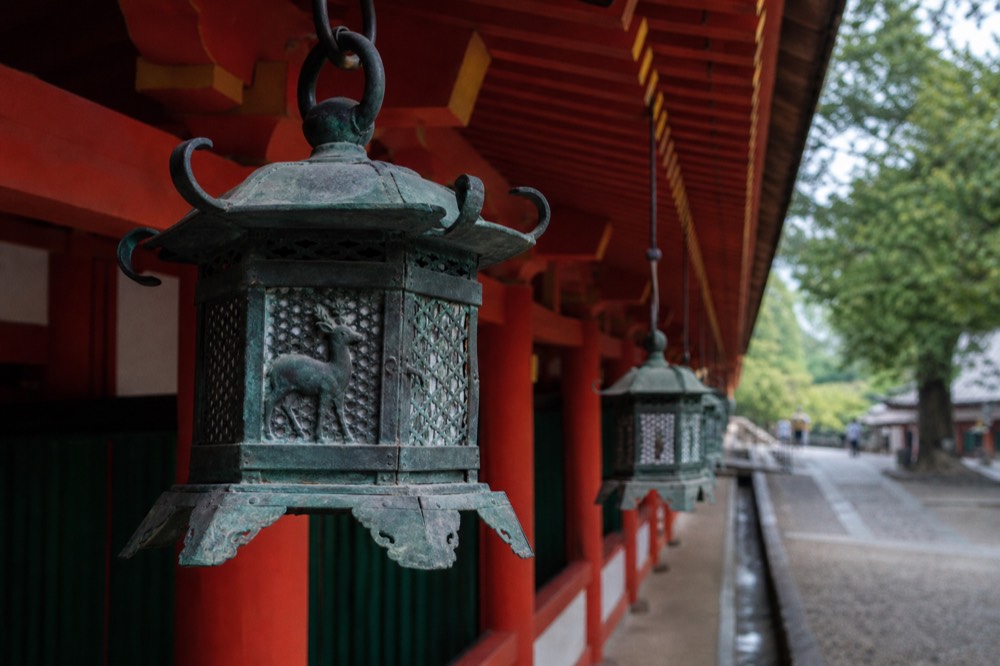
The stone lanterns, or ishi-doro, were donated by worshippers over centuries, each one bearing the name of the donor and a prayer. They range from simple moss-covered pillars to elaborate multi-tiered designs, and they line every approach to the shrine. The bronze hanging lanterns, or tsuri-doro, hang from the eaves of the corridors and the main hall, many decorated with deer, wisteria, or chrysanthemum motifs.
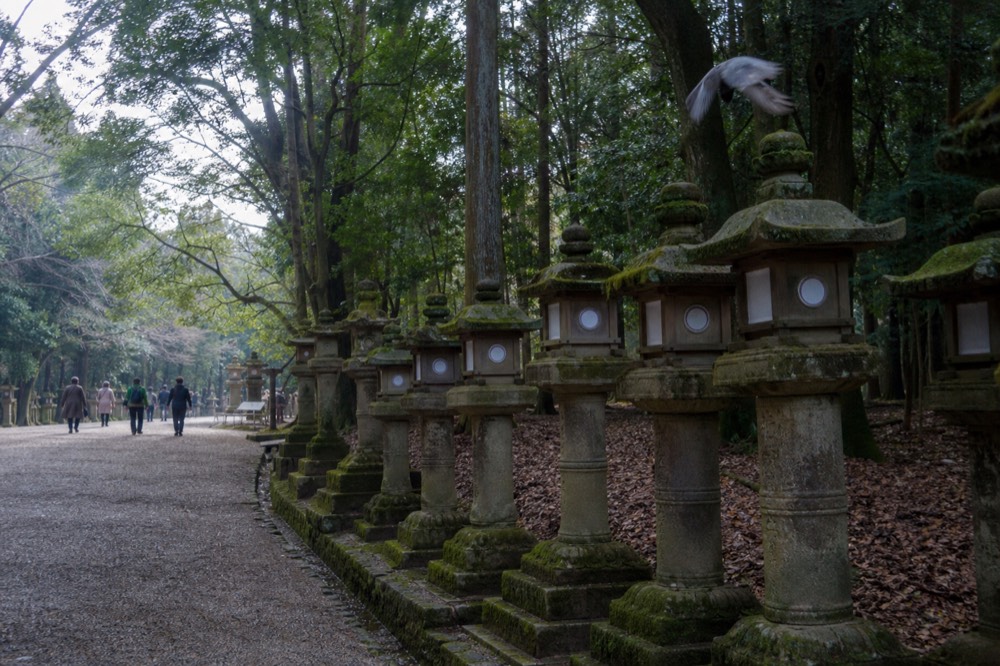
The two Mantoro festivals are the only times all the lanterns are lit simultaneously. Setsubun Mantoro falls on February 3, and Chugen Mantoro on August 14 and 15. The ceremonies begin at dusk, and the effect of thousands of candlelit lanterns reflecting off the vermilion buildings is unforgettable. The festivals draw large crowds, and the shrine's website publishes the exact lighting times closer to the date. If you are visiting in February or mid-August, checking the festival calendar before you book a tour is wise, as the shrine can be exceptionally busy on those evenings.
What is the connection between Kasuga Taisha and the deer?
The deer roaming Nara Park are considered sacred messengers of the gods at Kasuga Taisha, a belief rooted in the legend that Takemikazuchi-no-Mikoto rode a white deer from Kashima Shrine to Mount Mikasa. The deer are protected as a National Natural Monument, and the Nara Deer Preservation Foundation manages their welfare year-round.
The shrine's founding story ties the deer directly to the deity's arrival, and for centuries the animals have been treated with reverence. Today, the deer are habituated to visitors but remain wild, and the foundation designates June and November as official deer-protection months to coincide with calving and the rut. During the calving season from mid-May through June, does become aggressive around their newborns, and from September to November, stags, including de-antlered ones, must not be approached.
| Deer fact | Detail |
|---|---|
| Sacred status | National Natural Monument, a protected species |
| Population (2026 census) | 1,687 deer, up 222 on the year in the 2026 census |
| Calving season | Mid-May to June; does are aggressive near fawns |
| Rutting season | September to November; stags must not be approached |
| Feeding rule | Only shika senbei (about 200 yen for roughly 10 crackers) |
The foundation's 2026 census, conducted on July 15 and 16, counted 411 stags, 990 does, and 286 fawns, an increase of 222 deer from the previous year. The deer are an inseparable part of the Kasuga Taisha experience, and the walk from the park to the shrine through the lantern-lined path is one of the most memorable approaches to any sacred site in Japan.
How do you get to Kasuga Taisha from Nara Park or the train stations?
Kasuga Taisha sits at the eastern edge of Nara Park, a 5- to 8-minute walk from Kintetsu Nara Station to the park edge and 15 to 25 minutes from JR Nara Station. The walk takes you through the park, past the deer and the towering trees, and up the stone steps lined with moss-covered stone lanterns.
From Kintetsu Nara Station, exit the east gate and walk straight up the gentle slope through the park. You will pass the five-storied pagoda of Kofuku-ji on your left, then cross the small bridge over the pond, and continue past the deer toward the forested hillside. The path is paved and well-signed, and the first stone lanterns appear after about five minutes.
From JR Nara Station, the walk is longer but still pleasant. Head east along Sanjo-dori, then turn left into the park at the main entrance. The route takes you past the Nara National Museum and the open lawns where most of the deer congregate. Budget 20 to 25 minutes on foot, or take the city loop bus to the Kasuga Taisha Honden stop, which costs 230 yen for adults in the central zone.
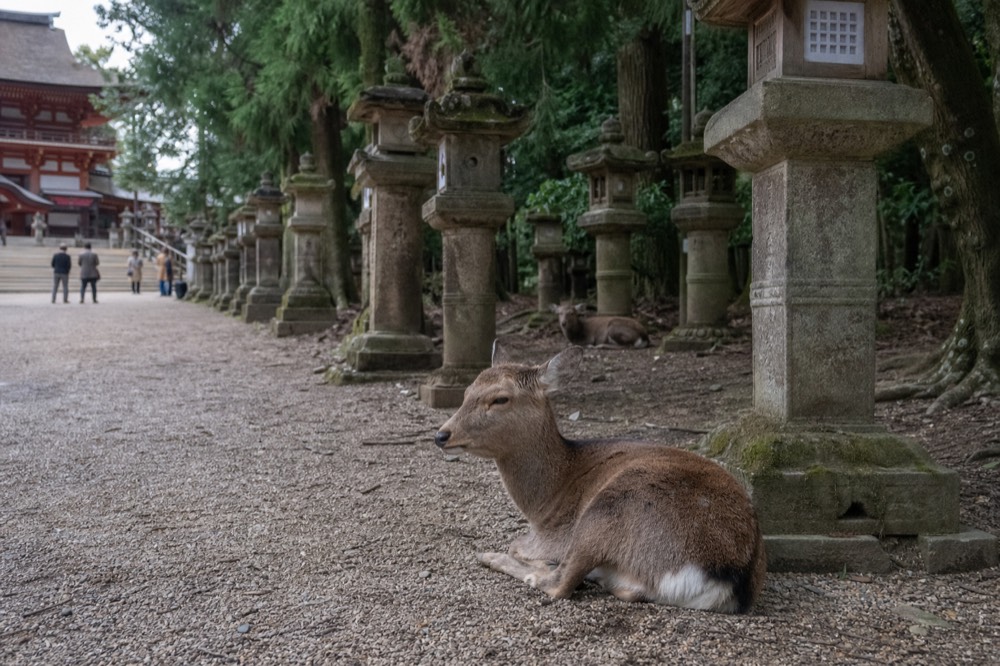
If you are arriving by coach on a day tour, the bus drops you at the designated sightseeing bus parking area near the base of the shrine's approach, a short walk from the first torii. The tour guide leads the group up the lantern-lined path and handles the special worship admission, so you do not need to find the ticket window on your own.
Can you visit Kasuga Taisha on a day tour from Kyoto or Osaka?
Yes, Kasuga Taisha is one of the six stops on the Kyoto and Nara Day Tour, a full-day coach tour operated by JTB Sunrise Tours. The tour includes the shrine's special worship fee, a licensed English guide, and transport from Kyoto or Osaka, making it the easiest way to see Kasuga Taisha without sorting out buses and tickets on your own.
The tour meets at Kyoto Avanti B1F across from Kyoto Station at 08:20, departing 08:30, or at Hotel Granvia Osaka 1F at 07:15, departing 07:25 for the Osaka option. The morning covers Nijo Castle, Kinkaku-ji, and the Kyoto Imperial Palace, followed by lunch, and then the coach drives to Nara for the afternoon. Kasuga Taisha is the first Nara stop, giving you about 60 minutes to walk the lantern-lined path and see the inner sanctuary. The tour then continues to Todai-ji and Nara Park before returning to Kyoto or ending at Osaka Namba.
The tour is rated 4.8 from 32 reviews on the operator's live listing, and the price starts from $191.65 per adult for the Kyoto departure without lunch. The included admissions cover all the major stops, so the only extra cash you need is for drinks, snacks, and any personal shopping.
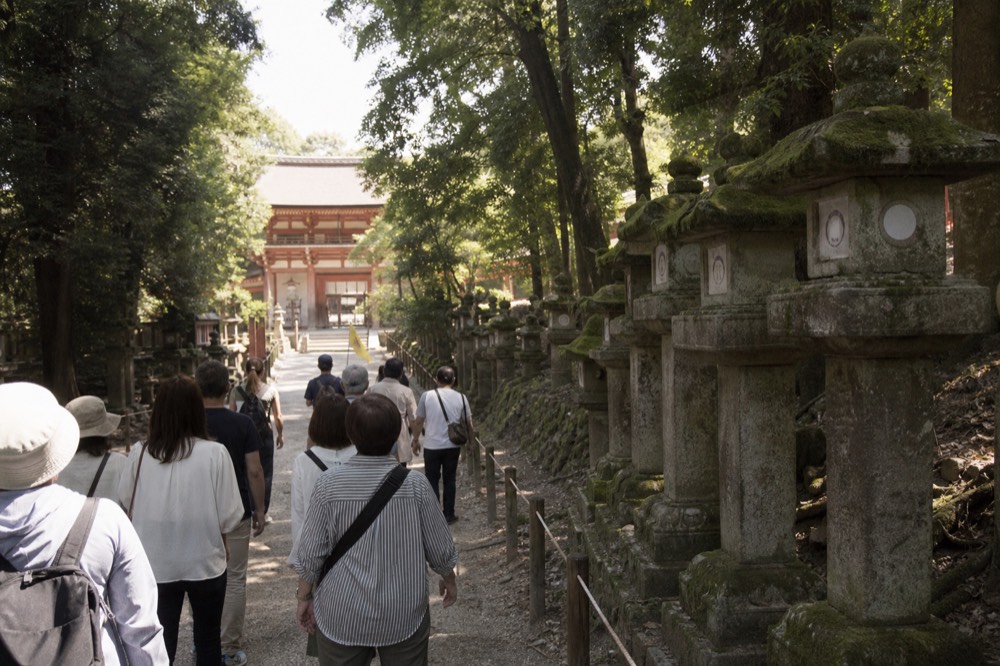
The standard Kyoto departure with Western set lunch is the most popular choice, but the tour also offers an Indian Thali lunch option at the same price for those who prefer a spicier meal. Both lunch options are served at a restaurant near the Imperial Palace stop, and the meal is included in the tour cost.
For visitors staying in Osaka, the tour offers a no-lunch departure that meets at 07:15 and ends at Osaka Namba, giving you the flexibility to eat on your own schedule. The Osaka departures do not return to Kyoto, so plan your evening accordingly.
The tour itself is the most efficient way to cover both cities in a single day, especially if you are short on time. The coach handles the 60- to 80-minute drive between Kyoto and Nara, and the guide keeps the group moving through the shrine's highlights without wasting time on logistics.
Planning your visit to Kasuga Taisha: hours and tips
Kasuga Taisha's grounds are open from 06:30 to 17:30 from March to October and 07:00 to 17:00 from November to February. The special worship desk operates from 09:00 to 16:00, and the shrine closes on certain festival days and during the New Year period, so check the official calendar before you go.
The best time to visit is early morning, right after the gates open. The light is soft, the deer are active, and the lantern-lined paths are nearly empty. By mid-morning, the tour groups arrive, and the approach can feel crowded, especially during cherry blossom season in late March and early April. The shrine's official website, Kasuga Taisha hours and admission, publishes the full calendar of closures and festival dates.
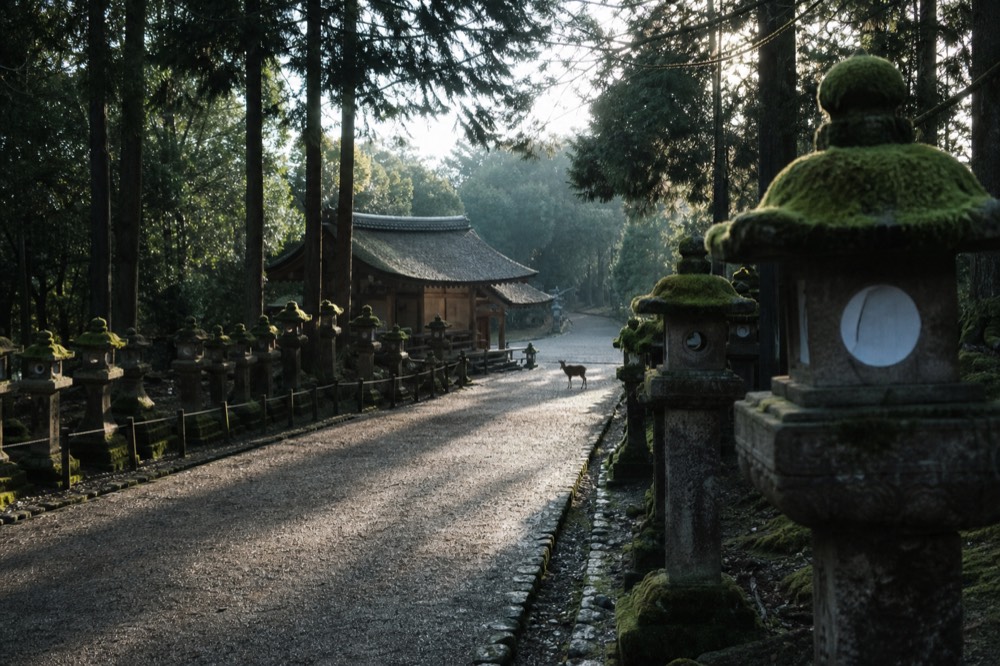
The shrine does not have a dress code, but the approach involves a gentle uphill walk on stone paths, so flat shoes are a good idea. The deer are habituated to people but remain wild animals; the Nara Deer Preservation Foundation advises against touching or provoking them, and feeding them anything other than shika senbei is prohibited. The deer crackers cost about 200 yen for a bundle of roughly ten crackers, sold at small stands throughout the park.
If you are visiting independently, bring cash. Todai-ji and Kofuku-ji in Nara are both cash-only for admissions, and while Kasuga Taisha's ticket desks accept cash, they may not take cards. The special worship fee notice on the shrine's website confirms the 700-yen rate and the closure dates.
For a day that covers the shrine along with Kyoto's highlights, the tour options below bundle everything into a single booking. The coach drops you at the shrine's entrance, and the guide walks you through the lantern corridors and into the special worship area.
Common questions about Kasuga Taisha
Is Kasuga Taisha free to enter?
The outer grounds and the lantern-lined approach are free. The inner sanctuary (special worship) costs 700 yen, and the museum and botanical garden are each 700 yen separately.
How much is the special worship fee?
The special worship fee is 700 yen for adults, raised from 500 yen on October 1, 2024. It allows entry inside the middle gate to view the four main halls.
When did the special worship fee increase?
The fee increased from 500 yen to 700 yen on October 1, 2024, after having been unchanged for many years.
What are the Kasuga Taisha lantern festivals?
Setsubun Mantoro on February 3 and Chugen Mantoro on August 14-15 are the two annual festivals when all roughly 3,000 lanterns are lit. The ceremonies begin at dusk and draw large crowds.
How do I get to Kasuga Taisha from Nara Park?
Walk east through the park from Kintetsu Nara Station (5-8 minutes) or JR Nara Station (15-25 minutes). The path is paved and passes through the deer park.
Is Kasuga Taisha included in the Kyoto and Nara Day Tour?
Yes, the tour stops at Kasuga Taisha for about 40 minutes, with the special worship fee included. The tour also covers Nijo Castle, Kinkaku-ji, the Imperial Palace, and Todai-ji.