What is Todaiji Temple famous for?
Todaiji is famous for the Great Buddha Hall, the largest wooden building of its kind, and the great bronze Buddha inside it, founded in 752 in the heart of Nara Park.
What is Todaiji Temple famous for?
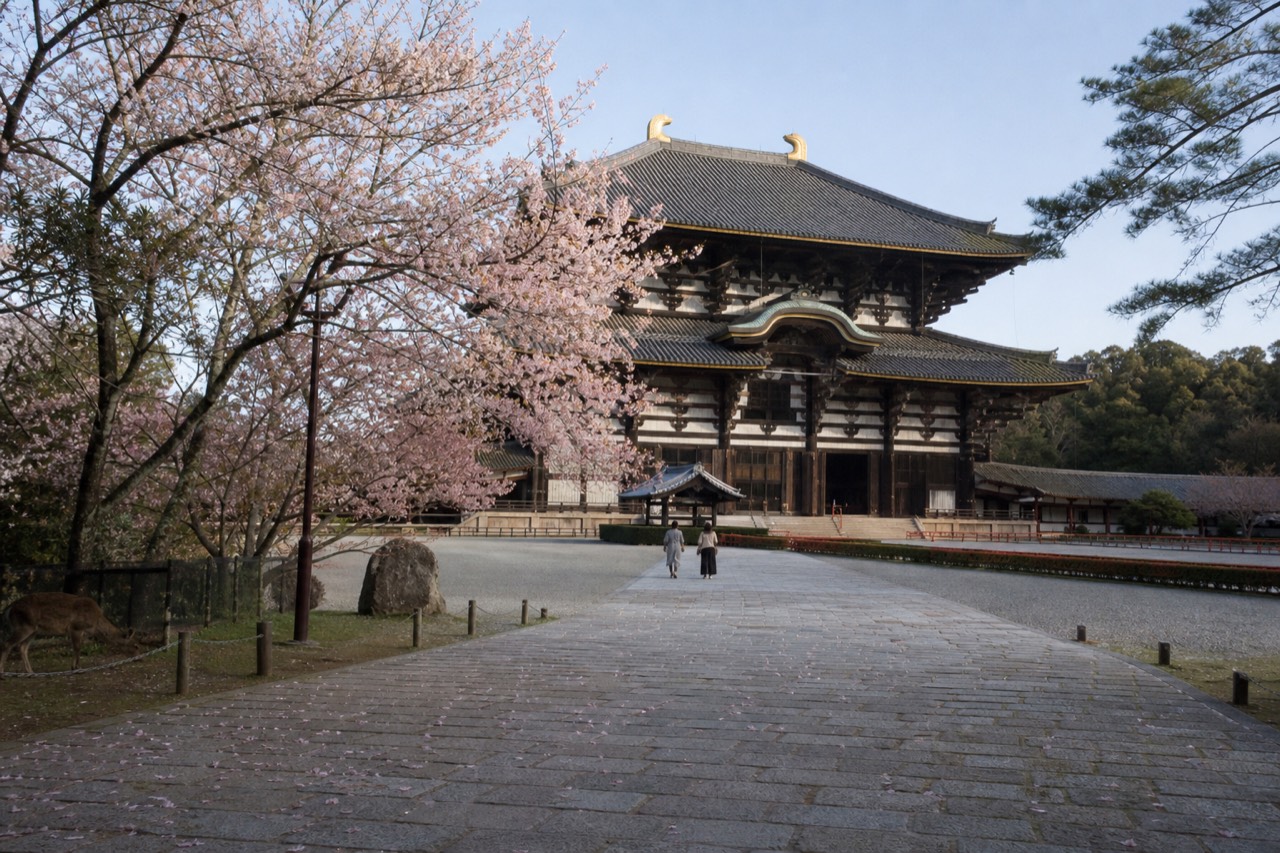
Todaiji is famous for three things at once: the Great Buddha Hall, one of the largest wooden buildings in the world; the Daibutsu, the monumental bronze Buddha seated inside it since 752; and the herds of sacred deer that roam the temple's grounds at the edge of Nara Park. Very few sites combine architecture, sculpture and living animals in one visit.
That is the short answer, and it is the reason Todaiji anchors almost every Nara itinerary ever written. The temple was founded in the eighth century as the head temple of all provincial Buddhist temples in Japan, a project of such scale that contemporary chronicles describe its construction as a national undertaking. The eye-opening ceremony for the Great Buddha took place in 752, an event attended by dignitaries from across the Buddhist world, and the temple has been rebuilt, burned and rebuilt again in the centuries since.
What survives today is still staggering. The present hall dates from 1709 and measures 57.012 metres east to west, 50.480 metres north to south and 48.742 metres high, figures the temple publishes on its own information page for the hall. Even reduced from its medieval predecessor, it remains among the largest timber structures on the planet, and walking toward it through Nara Park, with deer wandering the approach, is the single most photographed moment in the city.
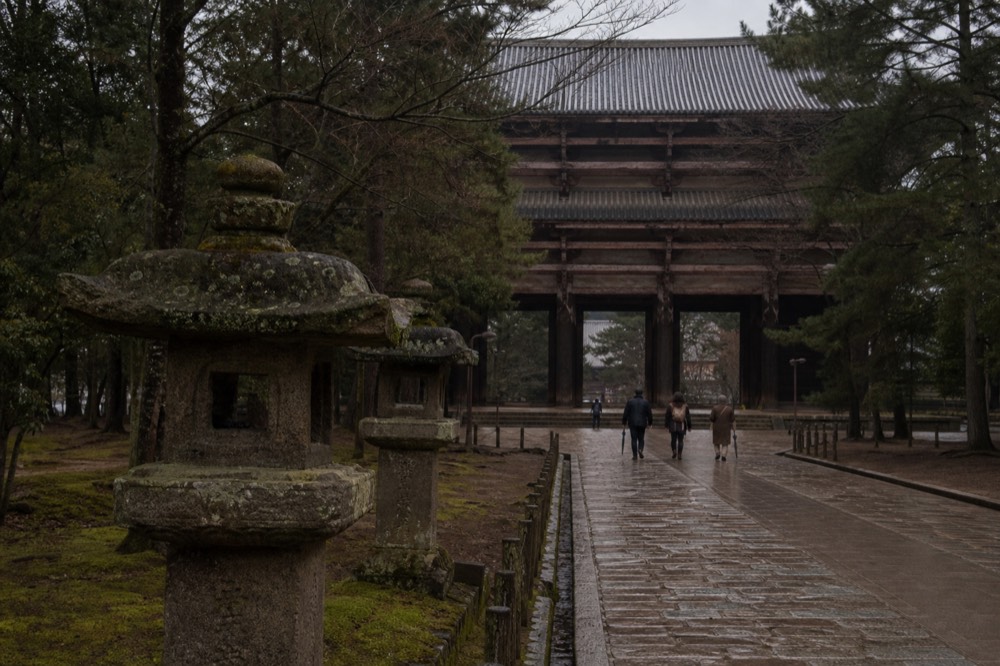
Todaiji is also famous for what it holds beyond the main hall. The temple complex includes the Hokke-do and Kaidan-do, two of the oldest surviving wooden buildings in Nara, and the Todaiji Museum, which displays treasures from the temple's collection. Nara's UNESCO listing, the Historic Monuments of Ancient Nara, inscribed in 1998, covers Todaiji alongside Kofuku-ji, Kasuga Taisha and the palace site, so the temple's fame is formally part of a World Heritage ensemble rather than a lone attraction.
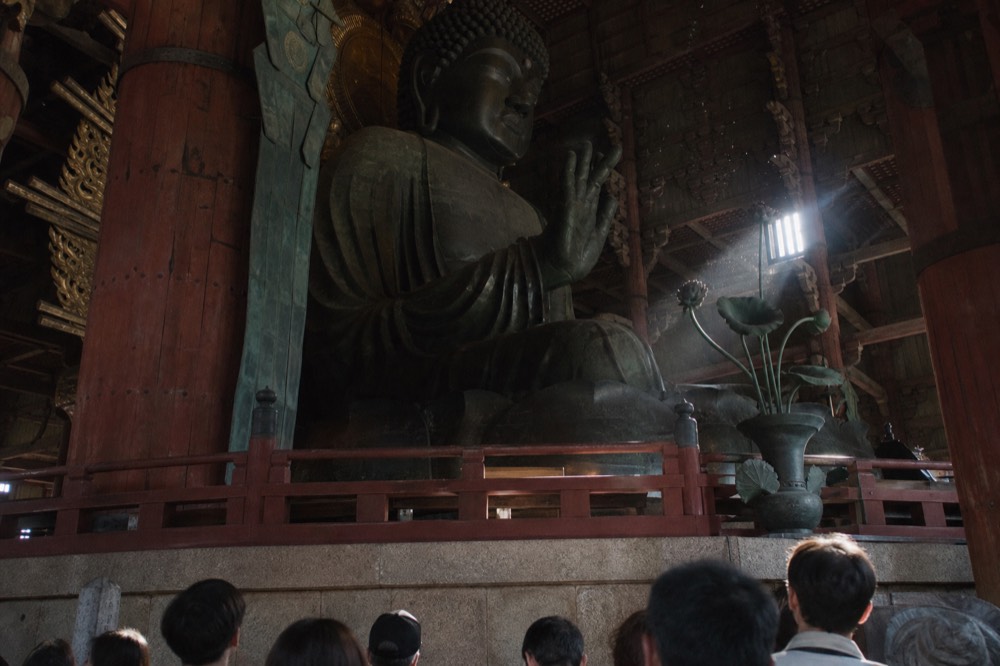
For most visitors the fame condenses into one view: the Daibutsu's face appearing through the hall's entrance as you climb the steps. The seated Buddha stands roughly 15 metres tall, and its calm, slightly asymmetrical expression has been the emotional centre of Japanese Buddhism for well over a millennium. If you are planning a broader trip, the question of how to fit Nara into a Kyoto visit usually resolves around how much time Todaiji deserves, and the honest answer is at least an hour.
If you would rather let someone else handle the trains, the buses and the walking, a guided coach tour covers the highlights in one long day.
How big is the Great Buddha Hall, really?
The Great Buddha Hall measures 57.012 metres wide, 50.480 metres deep and 48.742 metres tall, which makes it one of the largest wooden buildings in the world, and it holds a bronze Buddha about 15 metres tall seated on a lotus pedestal. The hall you see today was completed in 1709.
Numbers alone undersell it. The current building is a deliberate reconstruction at reduced scale: the original Nara-period hall and its medieval successor were each eleven bays wide, about 88 metres, and the 1709 rebuild cut the plan to seven bays to save money while keeping the original height and depth. So the visitor standing in the entrance courtyard is looking at the smaller version, and it is still enormous. For comparison, the famous Five-Storied Pagoda at nearby Kofuku-ji stands about 50 metres tall, and the Daibutsuden is nearly that measurement in height alone while stretching wider than it is deep.
The hall's survival is part of its fame. Fire, civil war and lightning claimed earlier versions, and the 1709 hall, dedicated under the priest Kokei, has now stood for over three centuries. Its scale is not a modern boast; it is the direct descendant of an eighth-century ambition to build a monument worthy of a state religion, and the fact that even a cost-reduced rebuild still ranks among the world's largest timber structures says something about the original.
Inside, the Daibutsu sits flanked by two bodhisattvas, and there is a pillar near the rear with a hole through its base said to match the Buddha's nostril, a detail children love and queues form for. A full circuit of the hall with the two side halls and a pause at the museum takes about ninety unhurried minutes.
What does it cost to go inside Todaiji?
Entry to the Great Buddha Hall costs 800 yen for adults, cash only, with a 1,200 yen set ticket covering the hall plus the Todaiji Museum. The temple charges separately for the Hokke-do and Kaidan-do, and no advance booking is accepted or required; you simply buy a ticket at the window.
The separate-fee structure surprises people. The same 800 yen adult scale applies individually to the Daibutsuden, the Hokke-do, the Kaidan-do and the museum, so a completist visit adds up, while the set ticket is the obvious saving if you want the hall and the museum. The temple's own admission page prints the full table of hours and fees, and one line on it matters more than any other: payment is cash only. Many temples in Kyoto and Nara remain cash-preferred, but Todaiji states it outright, so arrive with yen.
| Ticket | Adult price | Notes |
|---|---|---|
| Daibutsuden (Great Buddha Hall) | 800 yen | Cash only; groups of 30+ pay 700 yen |
| Daibutsuden + Museum set | 1,200 yen | Junior high and above; elementary 600 yen |
| Hokke-do and Kaidan-do | 800 yen each | Hours 08:30-16:00 all year |
| Audio guide | 500 yen | 9 languages, 30 minutes, collected just past the ticket gate |
Hours follow the seasons. The Great Buddha Hall opens 07:30 to 17:30 from April to October and 08:00 to 17:00 from November to March, with the museum keeping slightly shorter hours and a last-entry cutoff. The temple closes on no regular schedule, only for special rites or emergencies, which makes it one of the most reliable openings in Japanese temple tourism. If you are weighing a paid stop in Nara against the free ones, our rundown of Nara Park tickets and fees puts every price in one place.
The one soft spot worth flagging for tour takers is lunch rather than admission. On the guided day tours that include a meal, reviewers going back a decade have described the included lunch as the weakest part of the day, so the no-lunch option, which simply drops the meal and leaves you the time, is worth considering on its price alone.
Why is the hall smaller than the original?
The hall you see is the third Daibutsuden, completed in 1709 at seven bays wide instead of the original eleven, a cost-driven reduction from about 88 metres to the width published on the temple's own page today. The earlier halls, each eleven bays, were lost to fire across the centuries, and the Edo-era rebuild kept the height but shortened the footprint.
This is the piece of Todaiji history most guides skip, and it reframes the building entirely. The 752 original was arguably the largest wooden building in the world at the time, raised by a state that mobilized bronze casting, timber transport and labour on an imperial scale. It was destroyed by fire, rebuilt on the same grand plan, and destroyed by fire again. When the temple finally rebuilt under the Tokugawa shogunate, the money would not stretch to the full plan, so the carpenters kept the Buddha, the height and the depth, and narrowed the shell around them.
The result is a strange and beautiful honesty. The 1709 hall fits its statue tightly rather than grandly, and scholars note that the sense of compression inside, the Buddha seeming to fill the space to the rafters, is partly a consequence of the budget cut. Fame, in Todaiji's case, survived the downsizing: even the reduced hall outranks nearly every timber building built before or since, and the earlier halls survive only in fragments, paintings and foundation stones.
The Great Buddha itself has an equally patched history. The bronze figure has been recast at the head and other sections after earthquakes and fires across the centuries, which is why its proportions shift subtly as your eye moves from the face to the body. None of this diminishes the object; a statue that has been repaired, melted and restored repeatedly since 752 and still commands a hall 48 metres high is exactly the kind of survival story that makes a temple famous.
What about the deer around Todaiji?
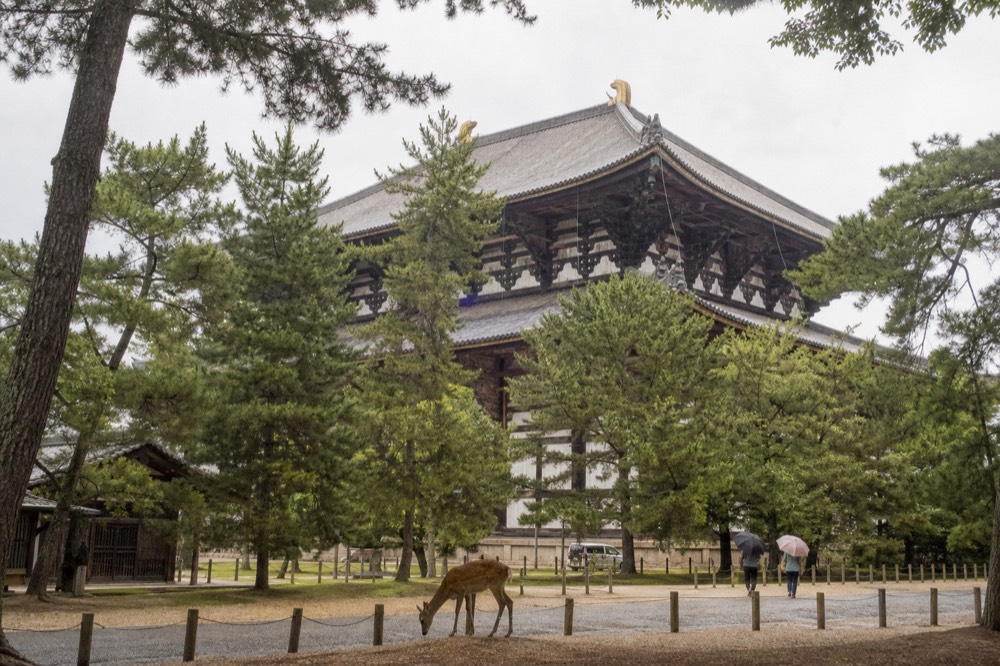
Todaiji sits at the edge of Nara Park, where 1,687 free-roaming deer were counted in the July 2026 census, a rise of 222 on the previous year. The deer are wild, protected as a National Natural Monument, and the approach to the Great Buddha Hall runs straight through their territory.
The animals are inseparable from the temple's fame, and they are the reason a Todaiji visit feels like no other temple visit in Japan. The count comes from the Nara Deer Preservation Foundation, which has run the July census with volunteers and partner institutions for decades; the 2026 survey was conducted over the mornings of 15 and 16 July. The deer are habituated to people but not tame, and the foundation's own guidance is blunt: they bite, butt and charge, feed them nothing except the dedicated shika senbei crackers sold for about 200 yen a bundle, and hand the cracker over quickly rather than teasing.
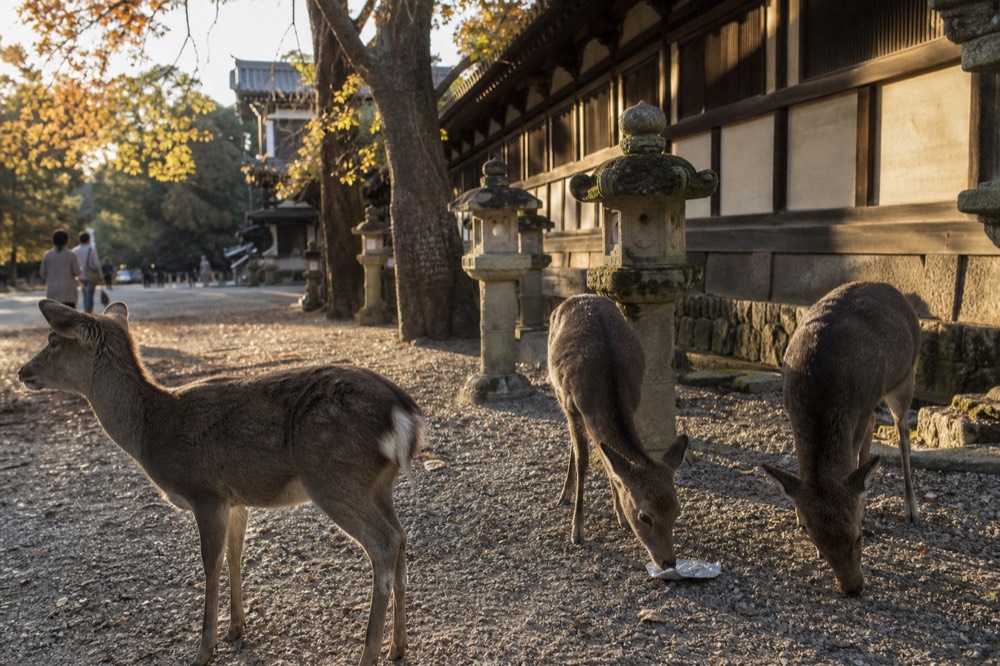
Timing changes the experience. June and November are the foundation's designated protection months, because calving runs mid-May to June and the rut runs September to November; in those windows does with fawns and stags in rut can be genuinely aggressive, and the guidance is to keep distance, full stop. Outside them, the deer around the Daibutsuden approach are at their most docile, bowing for crackers and lounging on the grass. If the animals are your main reason for coming, our longer piece on why Nara Park is so famous covers the etiquette and the background in detail.
One planning note ties the two halves of the visit together. The deer cluster where the food is, so the busiest animal encounters happen between Kofuku-ji and the Daibutsuden approach, and the grounds nearest the hall itself are calmer. Walk the park first, then let the temple be the quiet finish.
How should you fit Todaiji into a day from Kyoto?
Most visitors reach Todaiji on a day trip from Kyoto, spending about an hour at the temple itself and two to four hours in Nara overall, whether by train in roughly 45 minutes or on a guided coach tour running about 10.5 hours from Kyoto, door to door with a licensed English guide and admissions arranged.
Both approaches work, and the choice is really about how much of Kyoto you want to keep for the same day. Independent travel means a JR or Kintetsu train from Kyoto to Nara and a walk of roughly five to eight minutes from Kintetsu Nara station to the park edge, longer from JR Nara; it is cheap, fast and leaves you free to linger. The trade is that you plan every leg yourself, carry your own cash for the cash-only admissions, and miss the commentary that turns a big hall into a story about an eighth-century state project.
The guided option bundles Todaiji with a fixed Kyoto-and-Nara circuit. This site exists around one such product, the Kyoto and Nara Day Tour operated by JTB Sunrise Tours, rated 4.8 from 32 reviews and priced from $191.65 per adult for the no-lunch Kyoto departure. It covers Nijo Castle, Kinkaku-ji, the Kyoto Imperial Palace, Kasuga Taisha and Todai-ji with Nara Park, with lunch on the options that include it, and a licensed English-speaking guide throughout. This site, Kyoto Nara Day Tour, exists to document that one product and the places it stops in detail.
Note what the tour does not include, because it matters: Fushimi Inari, Kiyomizu-dera and Arashiyama are not stops, and those need separate time in Kyoto. If your day must contain both the Daibutsu and the torii tunnels, you are planning two days, not one. For travelers basing themselves in Osaka rather than Kyoto, the Osaka departures cover the same Nara ground but end at Osaka Namba rather than returning to Kyoto, which suits a Kansai loop itinerary.
Whichever way you go, protect the temple time. The single most common regret in Nara is arriving mid-afternoon, spending the daylight on the deer, and reaching the Daibutsuden steps with the hall about to close. Give the hall the first hour after you arrive, then let the park have the rest.
These are the questions visitors ask most often about the temple, answered with figures from Todaiji's own published pages and the Nara Deer Preservation Foundation's records. Between the fees, the hours, the hall's dimensions and the deer census, everything below is a number you can plan a day around.
Common questions about Todaiji Temple
What is Todaiji Temple famous for?
Todaiji is famous for the Great Buddha Hall, one of the largest wooden buildings in the world, and the colossal bronze Buddha inside it, consecrated in 752. Its grounds adjoin Nara Park, so the free-roaming deer of Nara form part of the experience. The temple complex sits within the UNESCO-listed Historic Monuments of Ancient Nara, inscribed in 1998.
How much does it cost to enter the Great Buddha Hall?
Adult admission to the Daibutsuden is 800 yen, cash only. A set ticket covering the hall and the Todaiji Museum costs 1,200 yen for junior high age and above. The Hokke-do and Kaidan-do are ticketed separately at the same 800 yen adult rate.
How tall is the Great Buddha Hall?
The present hall, completed in 1709, measures 57.012 metres east-west, 50.480 metres north-south and 48.742 metres in height, per the temple's own figures. The original eighth-century hall was wider, about 88 metres across eleven bays, but burned and was rebuilt at the smaller scale for cost.
Do you need to book Todaiji in advance?
No. The temple accepts no advance bookings and requires none for individuals or groups; tickets are bought at the window on arrival. Bring cash, since the temple states that admission payment is cash only.
Can you see Todaiji and Kyoto in one day?
Yes, and it is the standard pattern. A train from Kyoto to Nara takes roughly 45 minutes, and many guided coach tours combine Kyoto sights such as Nijo Castle and Kinkaku-ji with Todai-ji and Nara Park in a single day of about 10.5 hours from Kyoto.
Are the deer inside Todaiji's grounds?
The deer of Nara Park roam freely up to the temple approach, and you will meet them on the path toward the Great Buddha Hall. They are wild animals protected as a National Natural Monument: feed them only the official shika senbei crackers, hand them over promptly, and keep distance from does with fawns and stags during the September-to-November rut.