Nara Day Trip from Osaka: Trains, Coaches and How to Choose Your Base
Osaka sits closer to Nara than most visitors realise, and two railway companies plus a handful of coach tours connect them every day. Here is what each option costs, what it covers, and how to decide whether Osaka or Kyoto should be your base.
Short answer
Kintetsu runs express trains from Osaka-Namba to Kintetsu Nara in about 40 minutes, and the station sits a 5 to 8 minute walk from Nara Park, which makes it the practical choice for most day-trippers. A coach tour from Osaka meets at 07:15, costs more than the Kyoto departure, and finishes at Namba rather than returning to Kyoto.
Nara is Japan's first permanent capital, home to a Great Buddha hall that has stood in some form since 752, and a park where more than 1,600 deer roam freely. Most international visitors reach it from Kyoto, because Kyoto dominates the guidebooks. But Osaka is a major hub in its own right, and for anyone based there, a Nara day trip from Osaka is arguably easier: the fastest trains cover the distance in around 40 minutes, and the best-connected station on the Nara end drops you a short walk from the park.
This guide lays out the two railway routes out of Osaka, explains what the Osaka-departure coach tours include and why they finish at Namba instead of returning to Kyoto, prices out the sights you will actually pay for in Nara, and closes with the question that shapes a lot of Kansai itineraries: which city should you sleep in when Nara is the target?
How far is Nara from Osaka, and how long does the trip take?
The rail distance from Osaka to Nara is short enough that the journey rarely dominates the day: Kintetsu express trains cover it in roughly 40 to 55 minutes, JR Yamatoji Line rapid trains take about 45 to 50 minutes, and a coach needs about an hour to an hour and a half depending on traffic and pickup routing. That puts Nara comfortably inside day-trip range from any Osaka base.
Those times come from operator schedules and itinerary listings rather than a single published timetable, and they vary by service type. The headline point is that the fastest rail options from Osaka are quicker than the equivalent run from Kyoto, where the Miyakoji Rapid takes about 45 minutes over a longer line. Osaka's advantage compounds at the Nara end if you choose the right station: Kintetsu Nara sits about 5 to 8 minutes on foot from the park edge and Kofuku-ji, while JR Nara means a 15 to 25 minute walk or a short bus ride.
A reasonable plan is to leave Osaka between 08:00 and 09:00, arrive in Nara before 10:00, and give the town five or six hours. If you are weighing whether that window is enough, our piece on four hours versus a half day in Nara breaks the timing down sight by sight.
Road traffic around both cities peaks on weekends and public holidays, so a coach tour's schedule has more slack built into it than the train timetable does. That is one reason coach itineraries build in a lunch stop and run to roughly about 10.5 hours from Kyoto, door to door.
What are the train options from Osaka to Nara?
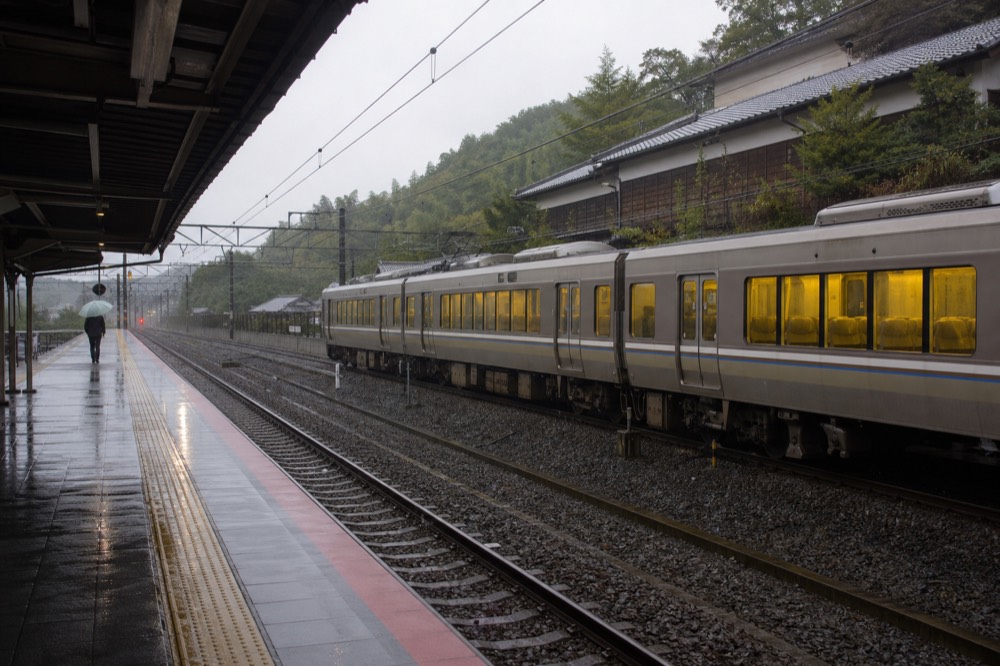
Two companies run Osaka to Nara: Kintetsu, from Osaka-Namba station, with express trains taking about 40 to 55 minutes and a station that lands you 5 to 8 minutes from Nara Park; and JR West, from Osaka Station via the Yamatoji Line, taking about 45 to 50 minutes and arriving at JR Nara, a 15 to 25 minute walk from the park. For pure convenience, Kintetsu wins; for Japan Rail Pass holders, JR is the covered option.
Fares change over time, so confirm the current price at the ticket machine or fare chart before you ride at the ticket machine: fares on this corridor change over time. What is stable is the trade-off between the two. Kintetsu's big edge is geography. Kintetsu Nara station faces the modern end of the town, with Kofuku-ji's pagoda visible within a few minutes' walk and the park beyond it. JR Nara station sits on the opposite side of the commercial district, which means either a longer walk or a bus connection before the sightseeing starts.
Kintetsu also runs a small number of limited express trains on the corridor, which add a reserved-seat surcharge to the base fare and shave the journey down to around 35 to 40 minutes. For a day trip where you arrive at 09:30 either way, the surcharge buys comfort more than time.
| Route | Operator and line | Typical journey time | Arrival station | Walk to Nara Park |
|---|---|---|---|---|
| Osaka-Namba to Kintetsu Nara | Kintetsu Nara Line express | about 40 to 55 minutes | Kintetsu Nara | about 5 to 8 minutes |
| Osaka-Namba to Kintetsu Nara | Kintetsu limited express | about 35 to 40 minutes | Kintetsu Nara | about 5 to 8 minutes |
| Osaka to Nara | JR Yamatoji Line rapid | about 45 to 50 minutes | JR Nara | about 15 to 25 minutes |
If you are stringing Nara together with Kyoto rather than treating it as a standalone run, the Kyoto to Nara transport guide covers the JR Nara Line and Kintetsu options from that side, including how the Japan Rail Pass interacts with each. One note for pass holders: the pass covers JR lines but not Kintetsu, so the covered routing out of Osaka is the Yamatoji Line even though Kintetsu is the more convenient arrival.
The Japan Rail Pass itself rose in price on 1 October 2026, per the official pass site: the ordinary 7-day pass went from 50,000 to 53,000 yen and the 14-day from 80,000 to 84,000 yen for purchases made from that date, with the purchase location's local date deciding which price applies. Even with the rise, a single Osaka-Nara return is a small fraction of a pass, so the pass should never be the reason you choose this particular day trip.
If you are doing the trip independently and want the full picture on which company to pick, the best way to get to Nara compares every option, including buses.
For travellers who would rather someone else handle the timetable, there is also a guided route from Osaka, and it is worth comparing against the train before deciding.
What does a Nara coach tour from Osaka include, and why does it cost more?
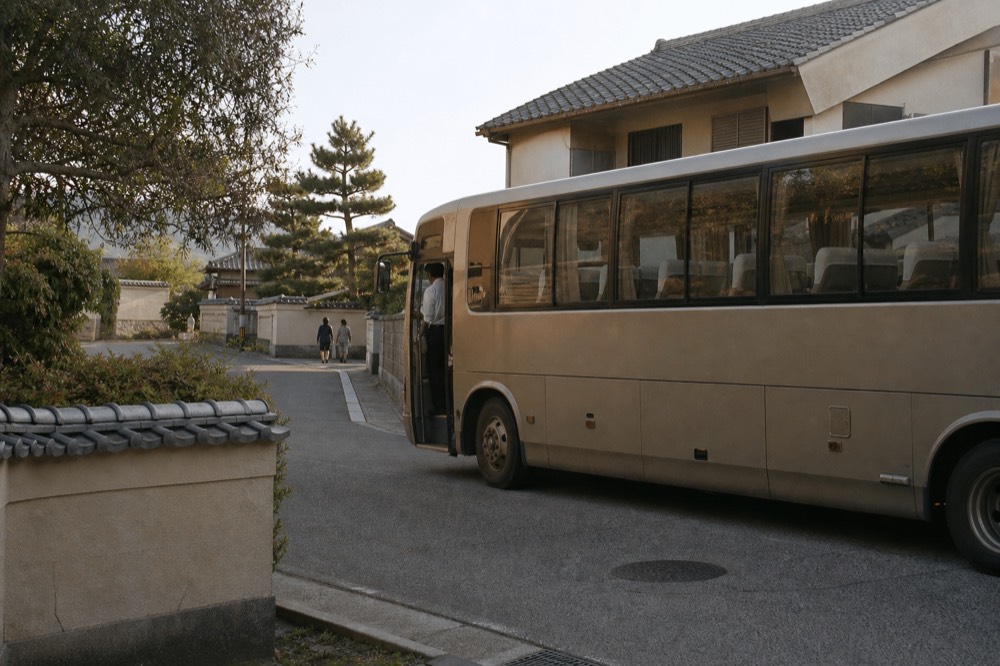
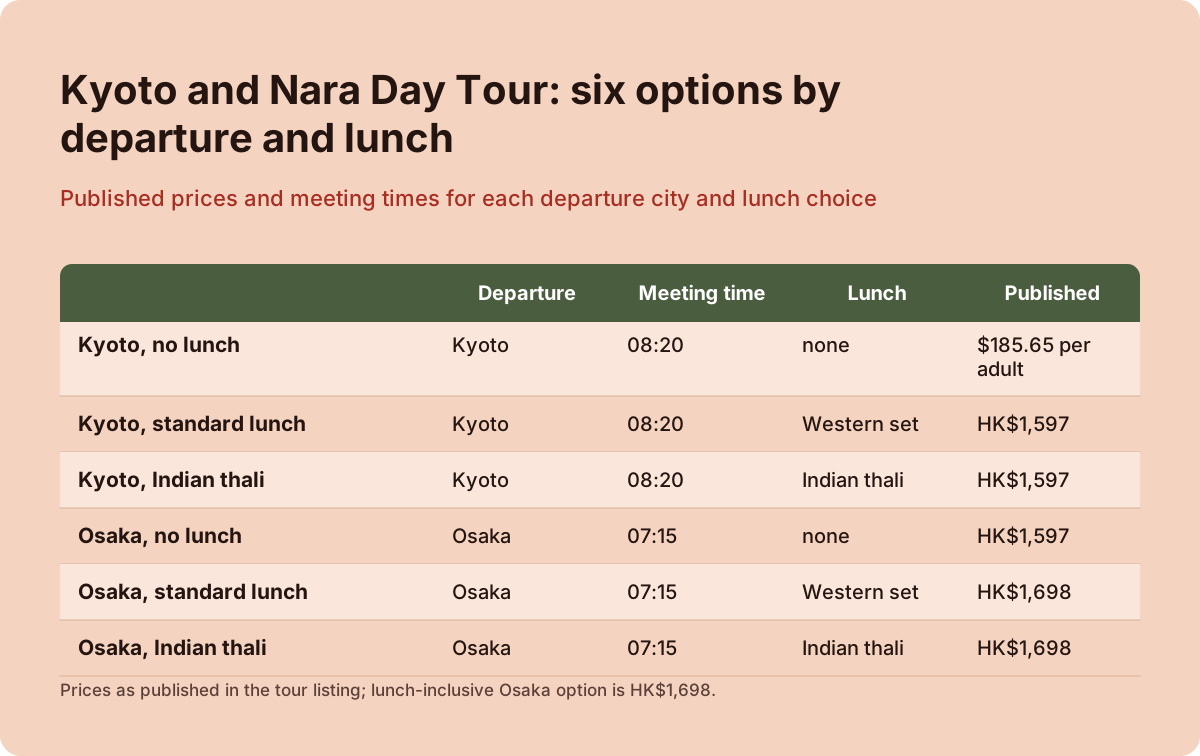
The Osaka departure of the Kyoto and Nara day tour meets at 07:15, roughly an hour earlier than the Kyoto meeting time of 08:20, and the lunch-inclusive Osaka option is published at HK$1,698 against HK$1,597 for the same option without lunch. The price gap against the Kyoto departure reflects the extra pickup routing; every Osaka option ends the day at Osaka Namba and does not return to Kyoto.
The tour is operated by JTB Sunrise Tours under the listing title "Kyoto and Nara Day Tour", rated 4.8 from 32 reviews, and the Kyoto no-lunch option is the one published in US dollars at $191.65 per adult. The roster runs to six options in total: three departing Kyoto and three departing Osaka, each with a choice of no lunch, a Western set lunch, or an Indian thali lunch. What the fare covers is consistent across all six: the coach, a licensed English-speaking guide, and the admissions at the stops.
The itinerary itself takes in Nijo Castle, Kinkaku-ji, and the Kyoto Imperial Palace on the Kyoto side, then crosses to Nara for Kasuga Taisha, Todai-ji, and Nara Park with its deer. It does not visit Fushimi Inari, Kiyomizu-dera, or Arashiyama, which are the sights most first-time visitors expect; those need separate time in Kyoto. The crossing from Kyoto to Nara by road runs about 60 to 80 minutes each way depending on traffic.
| Option | Departure | Meeting time | Lunch | Published price |
|---|---|---|---|---|
| Kyoto, no lunch | Kyoto | 08:20 | none | $191.65 per adult |
| Kyoto, standard lunch | Kyoto | 08:20 | Western set | HK$1,597 |
| Kyoto, Indian thali | Kyoto | 08:20 | Indian thali | HK$1,597 |
| Osaka, no lunch | Osaka | 07:15 | none | HK$1,597 |
| Osaka, standard lunch | Osaka | 07:15 | Western set | HK$1,698 |
| Osaka, Indian thali | Osaka | 07:15 | Indian thali | HK$1,698 |
One honest caveat, straight from the tour's own reviewers: the included lunch is the weakest element of the day. Reviews from 2015, 2017, and again in 2025 describe it as functional rather than memorable. The no-lunch options cost less and free you to eat in Nara itself, where the food scene around Naramachi is one of the town's quieter pleasures, and our guide to what to eat in Nara maps the dishes worth ordering.
If the morning schedule and the Namba finish suit your plans, the Osaka no-lunch option is the leanest version of the day.
For travellers who want the midday stop handled and are happy with a set menu, the standard-lunch version adds the meal for the difference in price.
Either way, the coach handles the part of the day that tires independent travellers out: the Kyoto-to-Nara leg, the parking, and the queue management at four paid sites. For more on what the guided format gets you versus the train, the Nara Park tours compared guide sets the options side by side.
What should you actually see in Nara on a day trip?
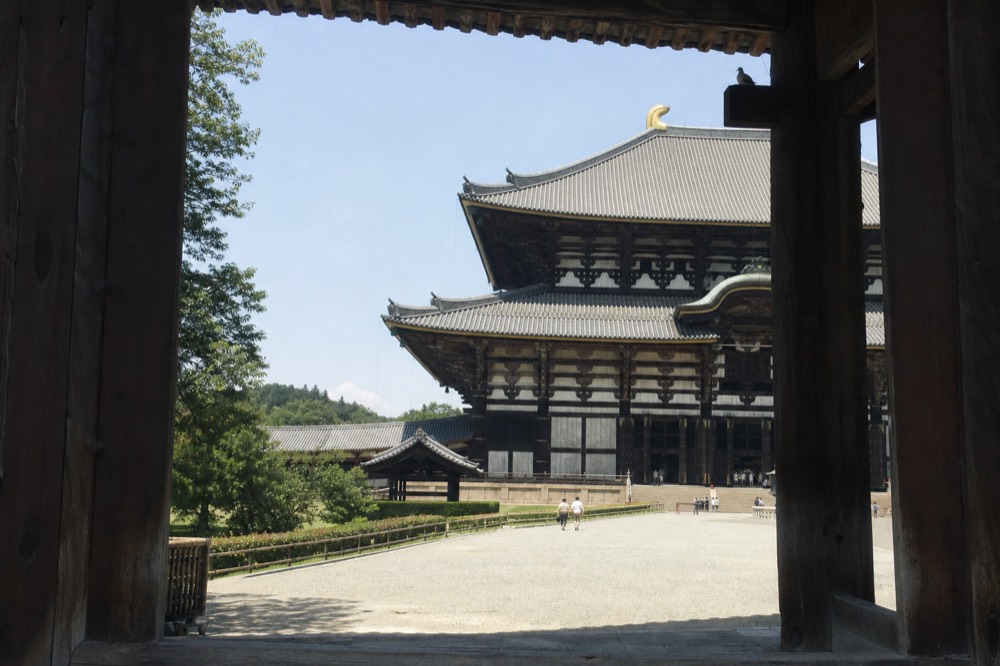
Three sights anchor every Nara day: Todai-ji's Daibutsuden, the Great Buddha hall, at 800 yen adult admission; Kasuga Taisha, whose grounds are free and whose special inner worship costs 700 yen; and Nara Park itself, which is free to enter and where the deer are the attraction. Add Kofuku-ji's halls if time allows, at 500 yen each or 1,600 yen for a combined ticket.
Todai-ji is the headline. The present hall dates from 1709 and measures 57.012 metres east to west and 48.742 metres high, making it one of the largest wooden buildings in the world, yet it is a scaled-down rebuild: the original Tenpyo-era hall was about 88 metres wide, and the reconstruction cut it to seven bays to save cost while keeping the height. Admission is 800 yen for adults, with a set ticket covering the hall and the museum for 1,200 yen. Hours run 07:30 to 17:30 from April to October and 08:00 to 17:00 from November to March. Note that payment is cash only, a rule the temple states plainly on its own admission page.
Kasuga Taisha, a 15 minute walk deeper into the park, is the shrine of roughly 2,000 stone lanterns and 1,000 hanging lanterns, though those totals are estimates rather than a published count. The precinct and the famous lantern-lined approach cost nothing. The special worship area inside the middle gate costs 700 yen, a fee raised from 500 yen on 1 October 2024, and it closes for the morning on the 1st, 11th, and 21st of each month and across stretches of March and late December to early January, per the shrine's own basic information page.
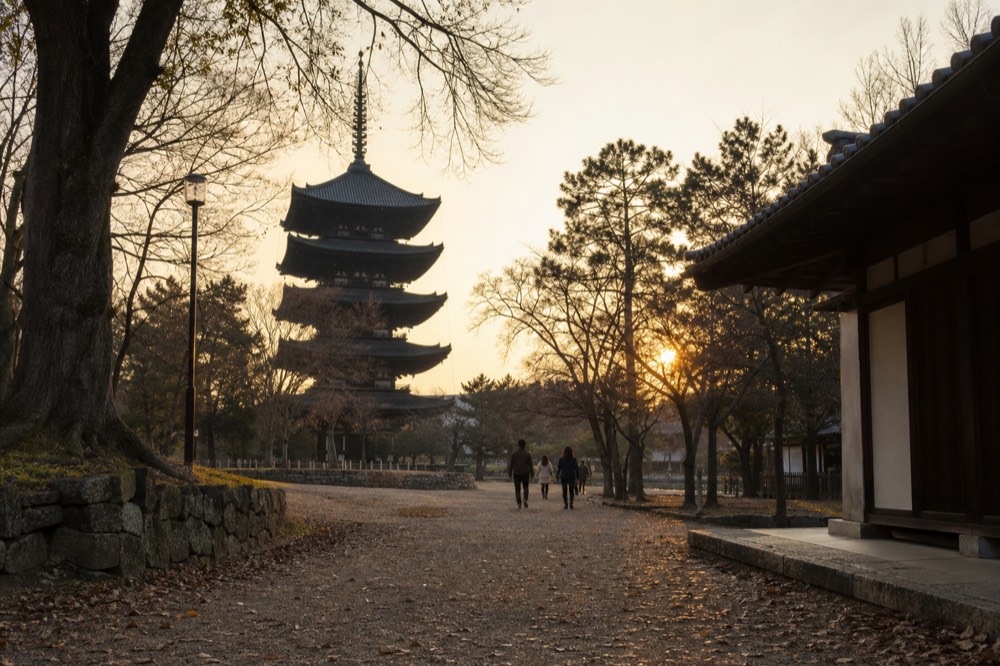
Kofuku-ji sits closest to Kintetsu Nara station, which matters if you arrived by Kintetsu and want one last hall before the train home. Its Central Golden Hall, rebuilt in 2018, and Eastern Golden Hall each cost 500 yen, the National Treasure Museum 900 yen, and a combined ticket 1,600 yen, sold only between 09:00 and 16:00. The temple's famous Five-Storied Pagoda, about 50 metres tall and Japan's second-tallest wooden pagoda, has been completely enclosed in a roughly 60 metre steel weather cover since March 2025 for a full conservation repair scheduled to finish in March 2034, so anyone visiting before then should expect a shrouded scaffold rather than the postcard silhouette. Kofuku-ji admissions are also cash only.
| Sight | Adult admission | Hours | Payment |
|---|---|---|---|
| Todai-ji Daibutsuden | 800 yen (set with museum 1,200 yen) | Apr-Oct 07:30-17:30, Nov-Mar 08:00-17:00 | cash only |
| Kasuga Taisha grounds | free | Mar-Oct 06:30-17:30, Nov-Feb 07:00-17:00 | - |
| Kasuga Taisha special worship | 700 yen | 09:00-16:00, morning closures some days | cash preferred |
| Kofuku-ji combined ticket | 1,600 yen | 09:00-17:00, ticket sales end 16:00 | cash only |
| Nara Park | free | always open | - |
Bring yen. Between two temples stating cash only and a park full of cracker vendors, a day in Nara runs largely on paper money, and the 7-Eleven and Japan Post ATMs that accept foreign cards are clustered around the stations, not inside the park.
How many deer are in Nara Park, and what are the rules?
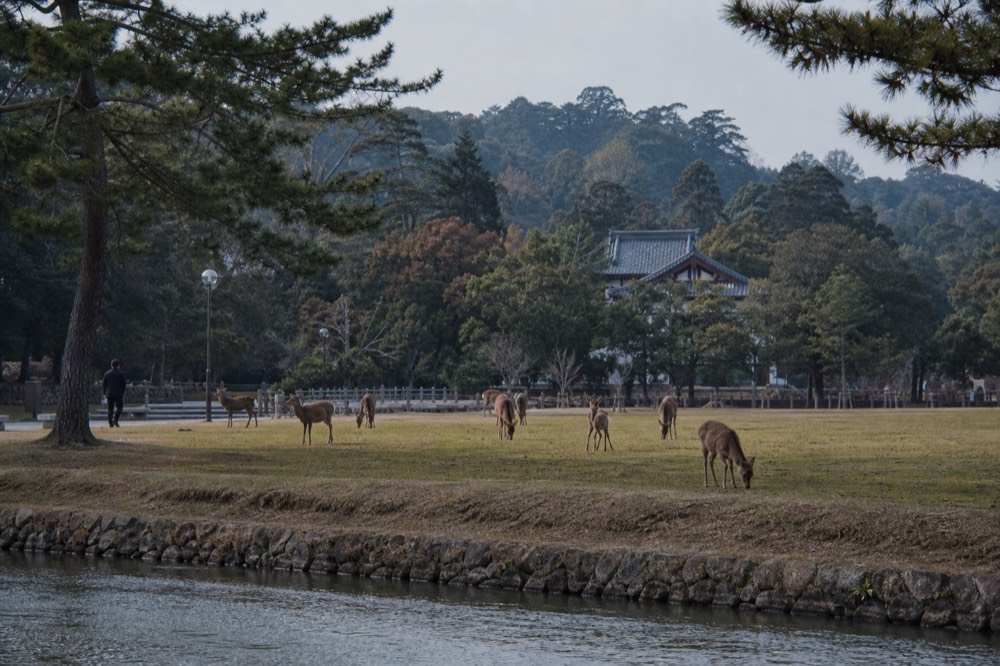
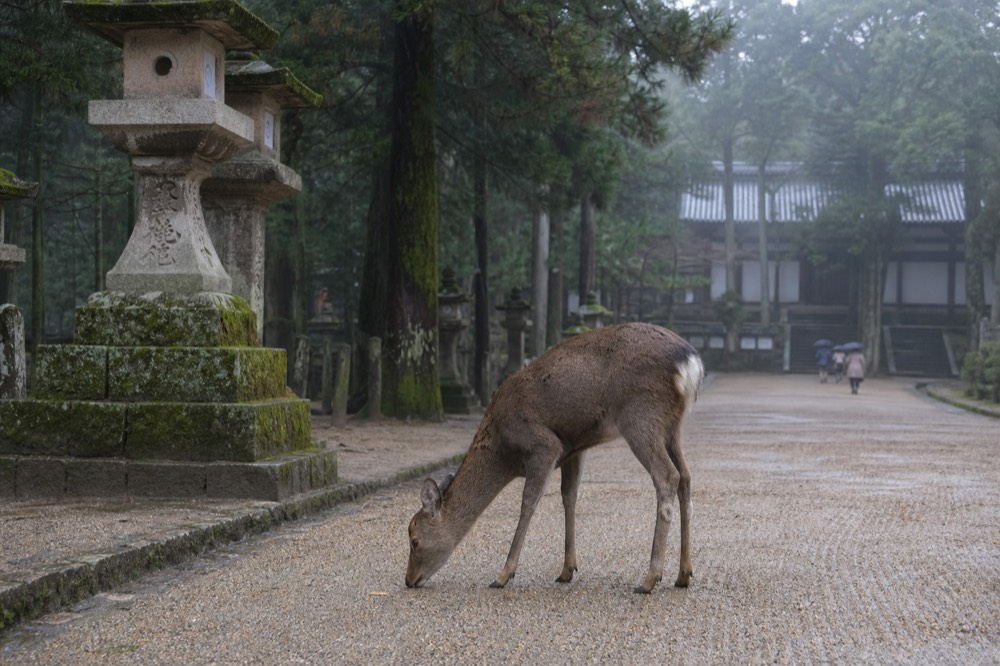
The Nara Deer Preservation Foundation counted 1,687 deer in its July 2026 census, up 222 on the previous year: 411 stags, 990 does, and 286 fawns. The deer are a designated National Natural Monument, protected by law, and feeding them anything except the official shika senbei crackers, about 200 yen a bundle, is forbidden.
The census is a real headcount, not an estimate: foundation staff and volunteers, joined by Kasuga Taisha, Nara Prefecture, and three local universities, walked the park over the mornings of 15 and 16 July 2026 between 05:30 and 08:00. The full breakdown is published on the foundation's own numbers page.
The behaviour rules matter more than most visitors expect, because the deer are wild despite their confidence. The foundation designates June, calving season, and November, the rut, as deer-protection months: does with newborns turn aggressive if approached, and stags from September to November, even those whose antlers have been cut, must not be approached at all. The standard advice is to hand over a cracker quickly rather than teasing the deer or holding it in a closed fist, which teaches the animal to follow and press. Older visitors and small children need particular care, since the deer bite, butt, and charge.
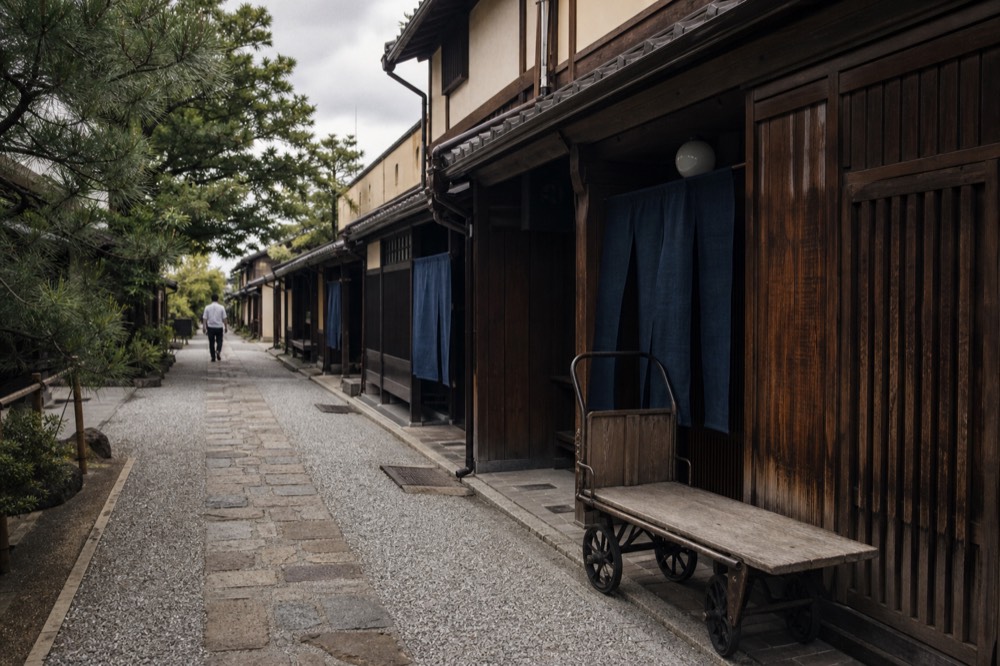
Beyond the park itself, Nara rewards a slower loop: Naramachi's machiya shopfronts, the Nara National Museum's Buddhist sculpture, and the lane of traditional houses near the old merchant quarter. Our things to do in Nara guide covers the full list, and Naramachi old town does a deep dive on the district closest to Kintetsu Nara station.
What does a Nara day from Osaka cost in total?
An independent day by Kintetsu costs the train fare both ways plus 800 yen for Todai-ji, up to 700 yen for Kasuga Taisha's special worship, and about 200 yen for deer crackers, with lunch and any Kofuku-ji tickets on top. A guided coach day is a single fixed published price that already includes admissions, transport, and the guide, and adds Kyoto's sights to the Nara set.
Neither operator publishes a readable fare table, so budget roughly 720 yen on JR or 760 yen plus a 520 yen limited-express surcharge on Kintetsu, and expect fares to change; budget using the ticket machine or a planner on the day or a route planner on the day. Everything else in Nara is fixed and published. The table below assumes the full sightseeing set, so a visitor who skips the optional extras pays less than one who enters every hall.
| Item | Cost | Notes |
|---|---|---|
| Train, Osaka return | fare varies, check on the day | Kintetsu express or JR Yamatoji rapid |
| Todai-ji Daibutsuden | 800 yen | cash only, set with museum 1,200 yen |
| Kasuga Taisha special worship | 700 yen | grounds free |
| Deer crackers | about 200 yen | bundle of roughly 10 |
| Kofuku-ji combined ticket | 1,600 yen | optional, sold to 16:00 |
| Coffee or snack in Naramachi | varies | wide range |
Comparing that independent total with the guided day is not quite apples to apples. The coach tour adds Kyoto's Nijo Castle, Kinkaku-ji, and the Imperial Palace to the Nara sights, so it is a two-city day rather than a Nara-only day. If Nara alone is the goal, the train wins on cost and on schedule freedom. If you want both cities in one long day and are starting from Osaka, the guided option is the only realistic way to do it, since the coach handles the 60 to 80 minute road crossing and the parking while you are still eating breakfast.
Should you base yourself in Osaka or Kyoto for a Nara trip?
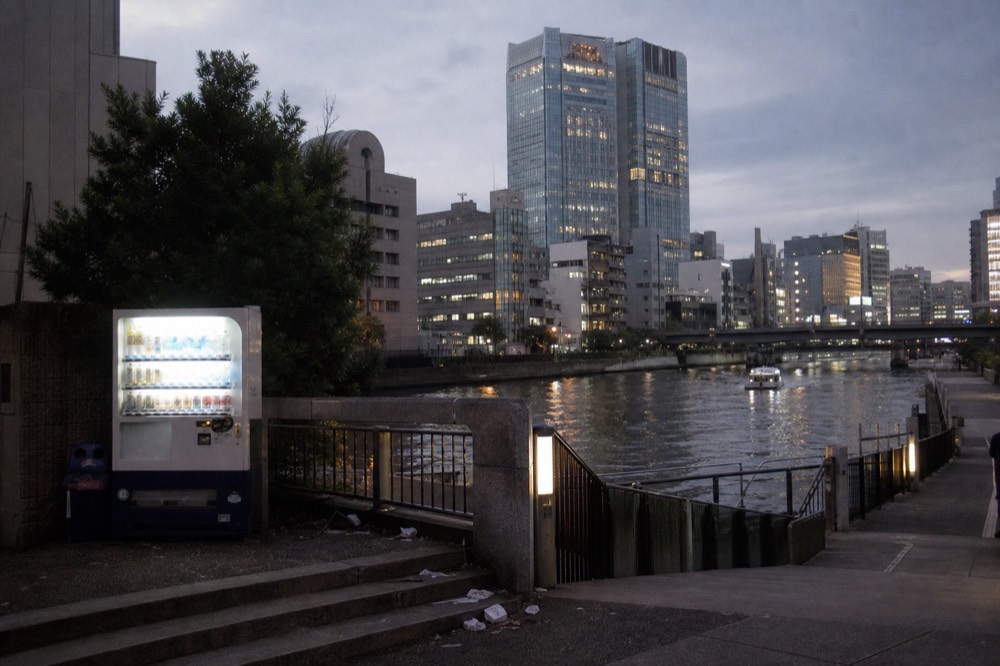
Base yourself in Osaka if Nara is your priority and you want the shortest, cheapest logistics: Kintetsu gets you from Namba to the park edge in under an hour and back for the evening in Dotonbori. Base yourself in Kyoto if the trip is really a Kyoto trip with Nara attached, since most of the region's marquee temples sit there and a Nara add-on from Kyoto costs only a little more time.
The honest framing is that Osaka is a transport and food city, and Kyoto is the sightseeing city. A visitor who sleeps in Osaka and does Nara as a day trip gets a cheaper hotel, Japan's best-known street food district, and a 40 minute train to the deer. A visitor who sleeps in Kyoto wakes up inside the sights, but pays Kyoto prices, and now also pays the city's accommodation tax, which was restructured on 1 March 2026 into five bands rising from 200 yen per person per night for rooms under 6,000 yen to as much as 10,000 yen for rooms at 100,000 yen and above.
There is a third pattern worth naming: base in Osaka, and let a guided coach day absorb Kyoto on the one day you need it. The tour that this site follows offers exactly that shape, an Osaka departure that covers Kyoto's castle, the Golden Pavilion, and the Imperial Palace before crossing to Nara for Kasuga Taisha, Todai-ji, and the deer, then ends at Osaka Namba in the evening so you are back at your own hotel district without a second transfer. For a first visit to Kansai with limited days, that structure squeezes more sightseeing out of a single daylight block than any train itinerary can.
The choice also depends on season. Kyoto's cherry blossoms flowered on 23 March 2026 and hit full bloom on 30 March, against a 1991 to 2020 normal of 26 March and 4 April, so the blossom window is a late-March event, and Nara's opened a couple of days later. Autumn colour is a December story in Kyoto, not a mid-November one: the official maple colouring date has a normal of 5 December, and it fell on 10 December in 2025. Anyone planning a foliage trip around the folkloric mid-November date is likely to arrive at green trees. Our best time to visit Nara guide runs the calendar month by month.
Is one day in Nara enough from Osaka?
One day is enough to see Todai-ji's Great Buddha hall, walk the Kasuga Taisha approach, feed the deer, and still fit lunch in Naramachi, provided you leave Osaka by about 09:00 and stay until the late afternoon; what one day does not allow is the Nara National Museum at a relaxed pace, the outlying temples such as those in the western hills, or a second visit at dusk when the lanterns are lit.
The mistake to avoid is arriving at midday. Nara's sights cluster within a 20 minute radius of the park, but they are numerous, and the best hours are the quiet ones: the deer are most active in the morning, Todai-ji opens as early as 07:30 in the summer half of the year, and the tour coaches from both Kyoto and Osaka pour in between 11:00 and 15:00. An early train out of Namba puts you ahead of all of them.
A sample shape for an independent day: Kintetsu express from Osaka-Namba around 08:30, Kofuku-ji and its pagoda first since the station is opposite, then the park and the deer while the morning is cool, Kasuga Taisha's approach before the special worship area, lunch in Naramachi, and Todai-ji mid-afternoon when the coach crowds begin to thin, walking back to the station through the park as the deer settle. The last express trains back to Namba run well into the evening, so there is no rush to cut the day short.
Whichever way you assemble the day, the resources on Kyoto Nara Day Tour cover each piece in depth, from the transport arithmetic to the deer rules, and the tour options below are the guided versions of the same itinerary.
A Nara day trip from Osaka raises a handful of practical questions about stations, fares, tour endings and lunch, and the answers below are short: which train to catch, where it lands, what the coach day includes, and what the park and its temples cost once you arrive.
Common questions about a Nara day trip from Osaka
How long is the train from Osaka to Nara?
Kintetsu express trains from Osaka-Namba to Kintetsu Nara take about 40 to 55 minutes, Kintetsu limited express trains about 35 to 40 minutes with a reserved-seat surcharge, and JR Yamatoji Line rapid trains from Osaka Station about 45 to 50 minutes, arriving at JR Nara on the far side of town.
Which station is better for Nara Park, Kintetsu Nara or JR Nara?
Kintetsu Nara. It sits about 5 to 8 minutes on foot from the park edge and Kofuku-ji, while JR Nara means a 15 to 25 minute walk or a short bus ride before you reach the sights.
Does the coach tour from Osaka return to Kyoto?
No. The three Osaka options of the Kyoto and Nara day tour end the day at Osaka Namba and do not return to Kyoto, which suits travellers sleeping in Osaka.
Is Nara Park free to enter?
Yes, the park itself is free and open at all hours. The paid items are the temples and shrine inside and around it: Todai-ji's Daibutsuden at 800 yen, Kasuga Taisha's special worship at 700 yen, and Kofuku-ji's halls from 500 yen each.
Can you do Kyoto and Nara in one day from Osaka?
Yes, but realistically only with a guided coach tour, since the two cities sit on opposite sides of the corridor and the road crossing takes 60 to 80 minutes each way. The guided day covers Nijo Castle, Kinkaku-ji, the Kyoto Imperial Palace, Kasuga Taisha, Todai-ji, and Nara Park before finishing at Namba.
Is the included lunch on the coach tour any good?
By the tour's own reviewers' accounts, the lunch is the weakest part of the day, in reviews from 2015, 2017, and again in 2025. The no-lunch options cost less and leave you free to eat in Nara, where the food around Naramachi is one of the town's quiet strengths.