Things to Do in Nara: A Ranked One-Day Plan with Real Times and Fees
Nara's sights cluster tightly enough that one well-ordered day covers the essential five, but each one has a published fee, fixed hours and a real time cost that most itineraries quietly ignore.
Short answer
The five essentials are Todai-ji (800 yen, allow an hour), Nara Park's deer (free, 30 to 60 minutes), Kasuga Taisha (grounds free, special worship 700 yen), Kofuku-ji (combined ticket 1,600 yen) and Naramachi (free to wander). Arranged from Kintetsu Nara Station, the whole circuit is walkable in a day.
What are the best things to do in Nara in one day?
The five best things to do in Nara, in walking order, are the Great Buddha hall at Todai-ji, the free-roaming deer of Nara Park, the lantern-lined approaches of Kasuga Taisha, the temple cluster at Kofuku-ji, and the merchant houses of Naramachi, with the Nara National Museum as the weather backup. Every one of them sits inside a compact zone you can cross on foot in about fifteen minutes.
Nara rewards ranking rather than listing. The city was Japan's capital in the eighth century, and the temples that survived from that era sit at the eastern edge of a small modern town, backed by the wooded hill of Mount Wakakusa. Nothing on the essential list requires a bus, a taxi or a bicycle. From Kintetsu Nara Station the whole route runs about five to eight minutes to the park edge, then along a gentle corridor of gravel paths and souvenir streets.
That compactness is also the trap. Because everything looks close together on the map, a lot of itineraries allot fifteen minutes to Todai-ji and discover, standing in front of one of the largest wooden buildings on earth, that the number was fantasy. Each sight has a real time cost, and the admissions add up in cash, because two of the major temples take cash only. The sections below give each of the five its fee, its published hours and an honest estimate.
If you are coming from Kyoto or Osaka rather than staying in Nara, the calculus changes a little, and a coach tour can make sense as transport plus admissions in one price. This site covers that trade-off in detail elsewhere, starting with the Nara day trip from Kyoto guide and the question of whether four hours in Nara is enough.
How much time does each Nara sight honestly need?
A realistic full day in Nara runs six to seven hours on the ground: up to two hours for Todai-ji with the deer on the approach, an hour for Kasuga Taisha, forty-five minutes for Kofuku-ji, an hour for lunch away from the tour-bus belt, and an hour or two for Naramachi or the museum depending on energy. Compress it below four hours and you will be choosing between the deer and the lantern paths.
These estimates assume you arrive at Kintetsu Nara Station, which is the closer of the city's two stations. The walk to the park edge takes about 5 to 8 minutes. From JR Nara Station, allow about 15 to 25 minutes on foot or a short bus ride first, which is one reason most day-trippers choose the Kintetsu line. The full comparison of lines and fares is in the Kyoto to Nara transport guide.
| Sight | Honest time needed | Best time of day |
|---|---|---|
| Todai-ji Daibutsuden | 60 minutes to 2 hours | Opening time, before tour groups |
| Nara Park deer | 30 to 60 minutes | Any daylight hour |
| Kasuga Taisha | 45 to 60 minutes | Mid-morning, lantern light through the trees |
| Kofuku-ji precinct | 30 to 45 minutes | Afternoon, it is the closest to the station |
| Naramachi | 60 minutes to 2 hours | Late afternoon, shops begin closing around 17:00 |
| Nara National Museum | 60 minutes to 2 hours | Rain, heat or a spare final hour |
The one thing people consistently underestimate is the walk from Todai-ji to Kasuga Taisha. It is short in distance and slow in practice, because the deer, the crackers vendors and the souvenir stalls sit directly on the route. Budget the transitions, not just the sights, and the day stops feeling rushed.
How much does a day in Nara cost in admission fees?
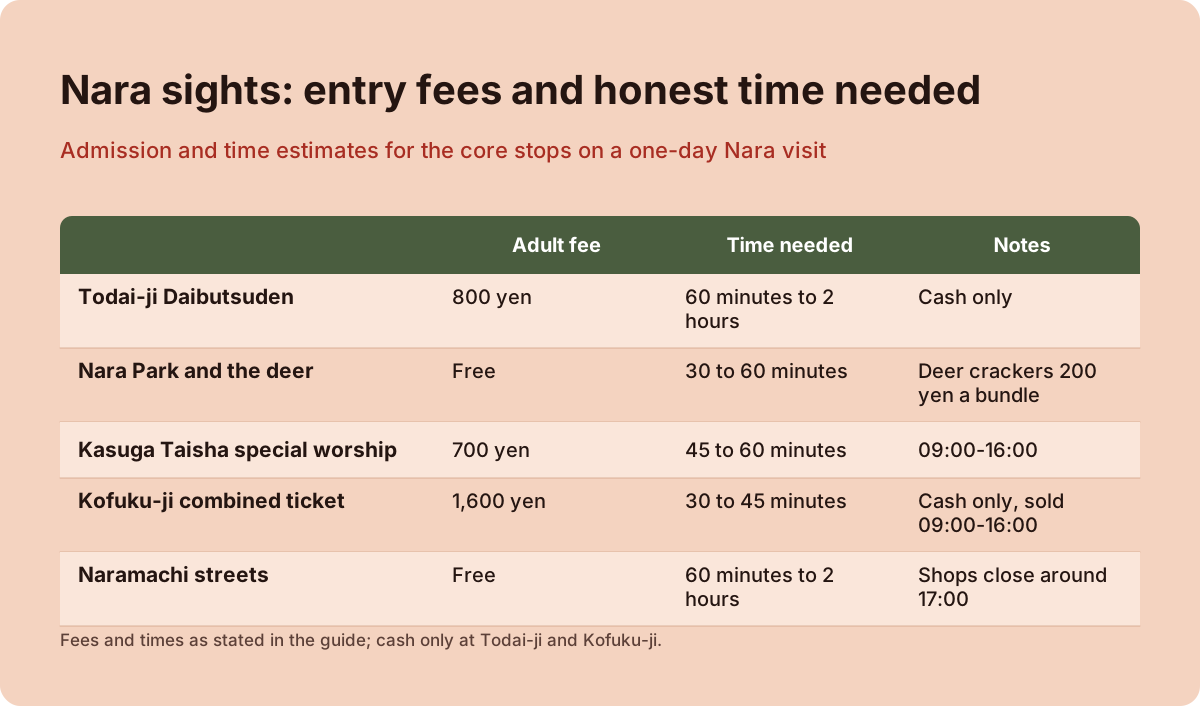
Paid entries for the three core sights total 3,100 yen per adult, that is 800 yen at Todai-ji, 700 yen for Kasuga Taisha's special worship and 1,600 yen for Kofuku-ji's combined ticket, while the park itself, the deer and Naramachi cost nothing. Add the Todai-ji set ticket, the Kasuga museum or the botanical garden and the total climbs further.
| Sight | Adult fee | Notes |
|---|---|---|
| Todai-ji Daibutsuden | 800 yen | Cash only |
| Todai-ji Daibutsuden + Museum set | 1,200 yen | Cash only |
| Kasuga Taisha grounds | Free | Open dawn to dusk |
| Kasuga Taisha special worship | 700 yen | Inside the middle gate, 09:00-16:00 |
| Kasuga Taisha museum | 700 yen | |
| Kasuga Taisha Man'yo Botanical Garden | 700 yen | Closed Tuesdays June to March |
| Kofuku-ji combined ticket | 1,600 yen | Cash only, sold 09:00-16:00 |
| Nara Park and the deer | Free | Deer crackers about 200 yen a bundle |
| Naramachi streets | Free | Individual houses and shops may charge |
Two practical points sit behind those numbers. First, Todai-ji and Kofuku-ji both state on their own pages that admission is cash only, and Kofuku-ji stops selling its combined ticket at 16:00, after which only single-hall tickets remain. Carry yen. Second, the fees are per building, not per temple: Todai-ji charges 800 yen separately for each of its four visited buildings, with the Daibutsuden-plus-Museum set as the only bundled option.
For anyone tallying a Kyoto-plus-Nara budget, these Nara fees stack on top of the Kyoto side, which is one argument for a coach day tour where admissions are already inside the price. The no-lunch Kyoto departure of the Kyoto and Nara day tour is published from $191.65 per adult, and the other departure and lunch options are published in Hong Kong dollars on the operator's listing. On the Kyoto side the coach calls at Nijo Castle, Kinkaku-ji and the Kyoto Imperial Palace, then continues to Nara for Kasuga Taisha, Todai-ji and Nara Park.
Is Todai-ji worth paying to enter?
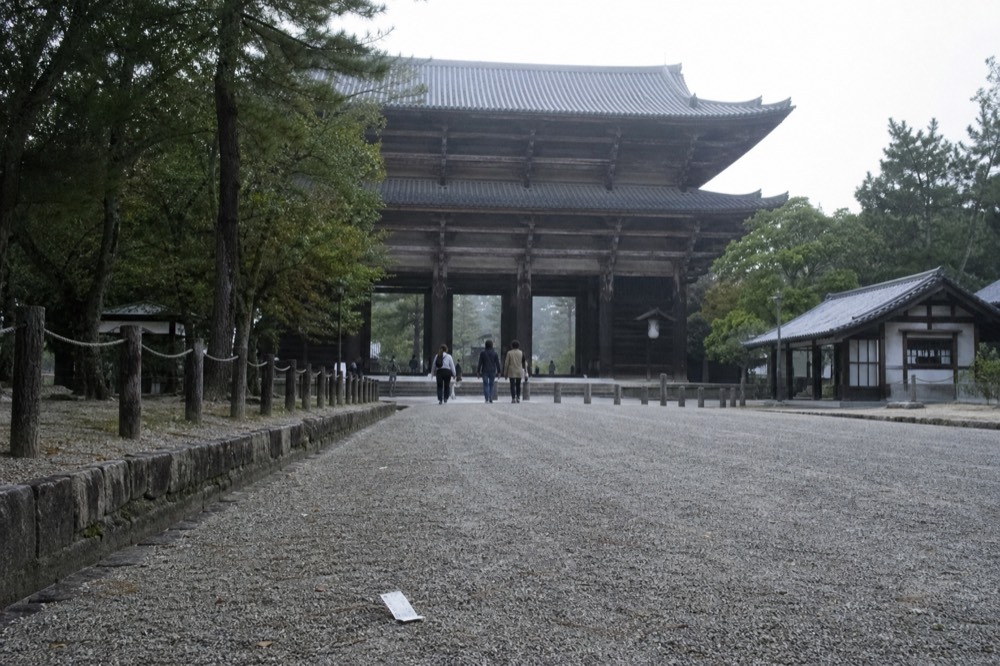
Yes, unambiguously, if the point of your trip is to see Japan's largest bronze Buddha in a hall that is itself one of the largest wooden buildings on earth: the 800 yen entry buys you the scale, the famous wooden pillar with the hole, and the museum option on the set ticket. What it does not buy is solitude, because this is Nara's single busiest interior.
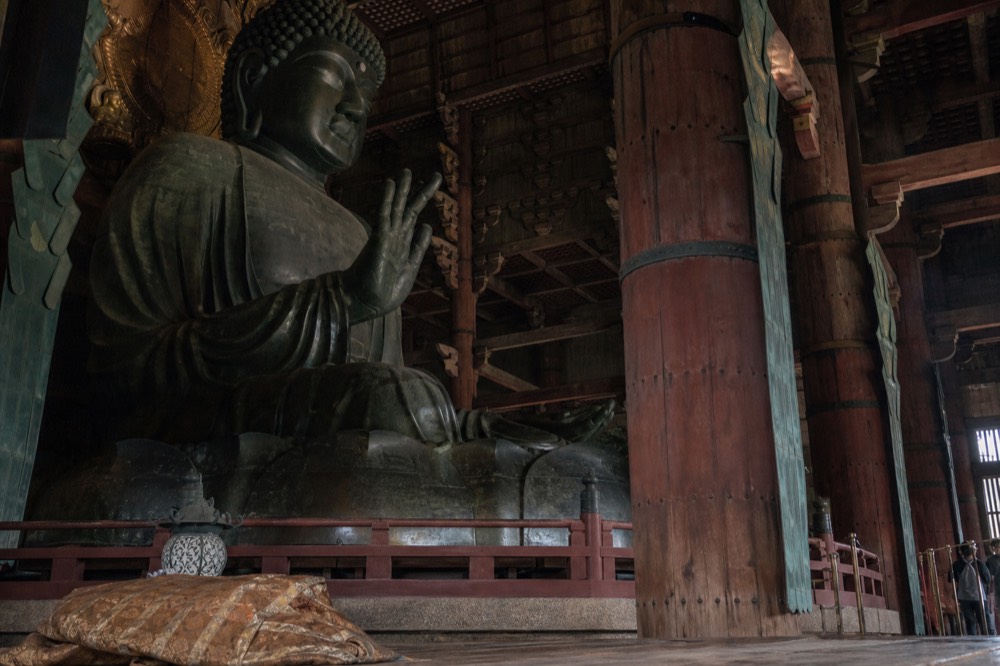
The hall opens at 07:30 from April to October and 08:00 from November to March, closing at 17:30 and 17:00 respectively. The temple takes no advance bookings and states none are needed, which sounds promising but means everyone queues. Arriving within the first hour of opening is the single most effective crowd tactic in Nara. The current hall dates from 1709, and it was deliberately built two-thirds the width of its Tenpyo-era predecessor to save money while keeping the original height, a fact the temple explains on its own pages at todaiji.or.jp.
Give the interior an hour. The Buddha's eye-opening ceremony was held in 752, and the statue's sheer presence makes photography almost beside the point. The temple publishes its full admission and hours table at its official information page, worth a glance before you go because the set ticket and the separate buildings trip people up.
What does Kasuga Taisha cost, and what is open?
Kasuga Taisha's grounds and its famous lantern-lined approach are free and open from 06:30 in summer and 07:00 in winter until 17:30 or 17:00, while the paid special worship inside the middle gate costs 700 yen and runs 09:00 to 16:00 with a long list of closure mornings and festival-day interruptions. Most visitors only need the free part, and the free part is the memorable part.
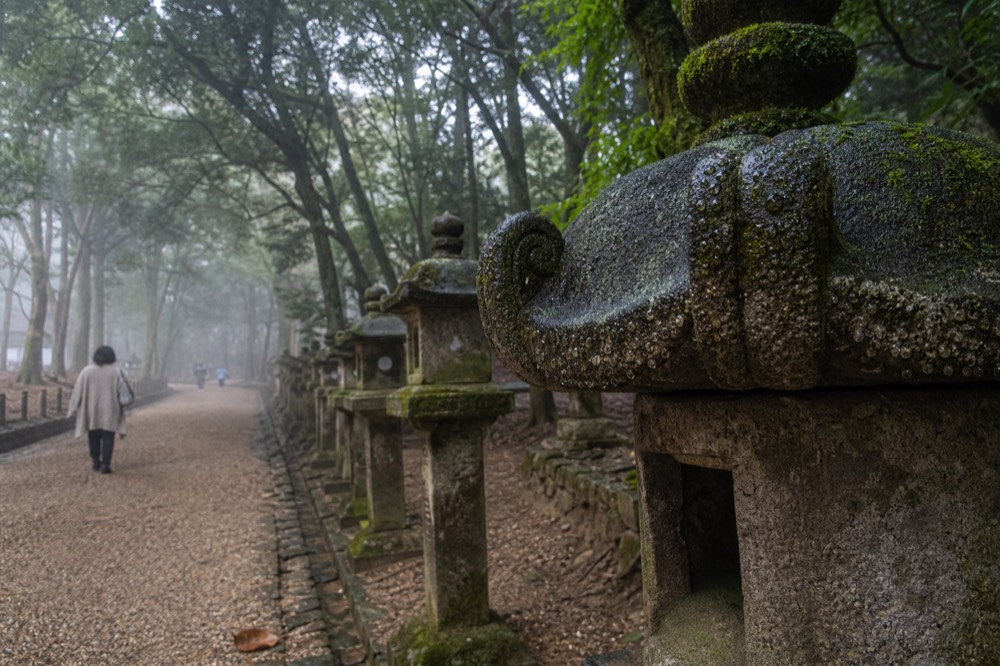
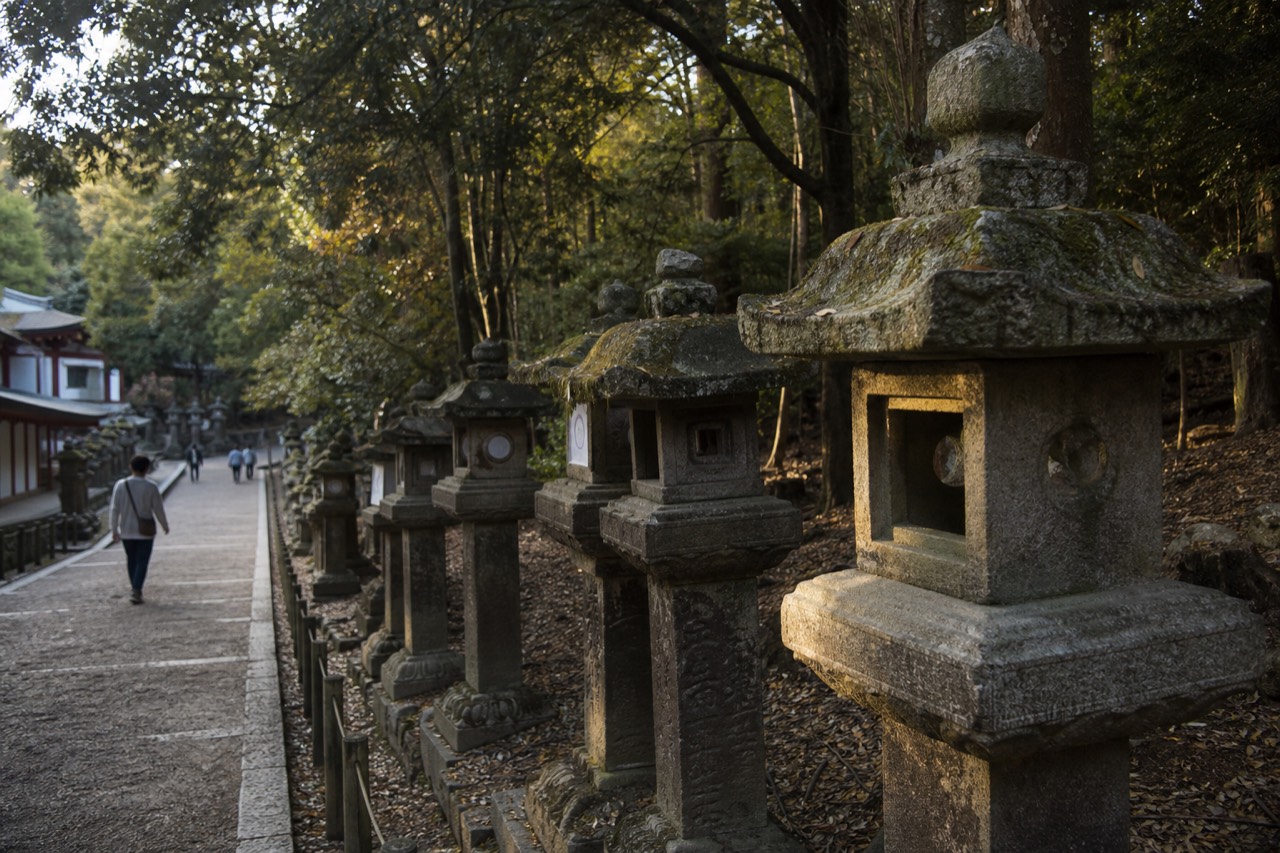
The shrine raised its special worship fee from 500 to 700 yen on 1 October 2024, a change many guidebooks still have wrong. Roughly 2,000 stone lanterns and 1,000 hanging lanterns stand across the precinct, though those totals are shrine-lore rather than an official published count, so treat them as approximations. Twice a year, in early February and mid-August, hundreds of them are lit at dusk for the Mantoro festivals, and those two evenings are the shrine at its absolute best if your dates happen to align.
The shrine's own museum holds 354 National Treasures and 2,528 Important Cultural Properties, an extraordinary concentration for a single site, and the adjacent Man'yo Botanical Garden, founded in 1932, grows about 300 species named in Japan's oldest poetry anthology. Both charge 700 yen. If you are choosing between the three paid Kasuga options on a tight day, the special worship gets you closest to the architecture, and the garden is the quiet one.
What is happening at Kofuku-ji and its pagoda?
Kofuku-ji's Five-Storied Pagoda, Nara's iconic skyline silhouette, has been completely enclosed in a roughly 60-metre steel weather shroud since March 2025 for its first full conservation repair in about 120 years, and the work is scheduled to run to March 2034, so any visit in the next several years sees the cover, not the pagoda. The halls themselves remain open, and the combined ticket is 1,600 yen.
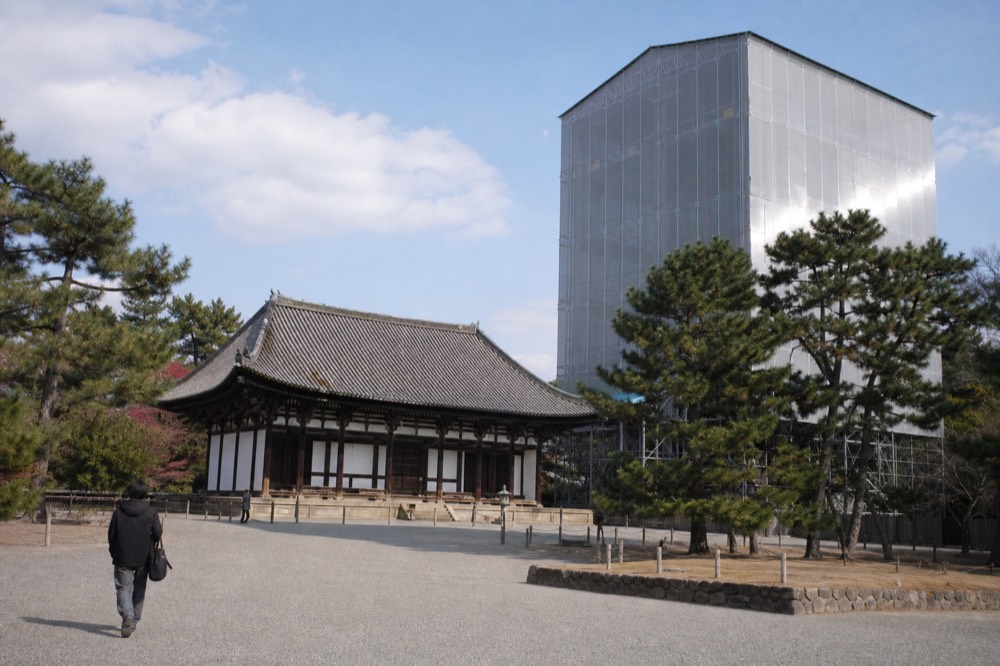
This is the single most out-of-date fact in most Nara coverage. Photographs showing the pagoda against the sky are simply no longer current. The temple's restoration project site explains the trigger: a 2020 survey by the Nara Prefecture cultural property office found displaced and broken roof tiles. The pagoda, about 50 metres tall, is the second-tallest surviving wooden pagoda in Japan after To-ji in Kyoto. Its own project pages describe it in detail at kohfukuji-project.jp.
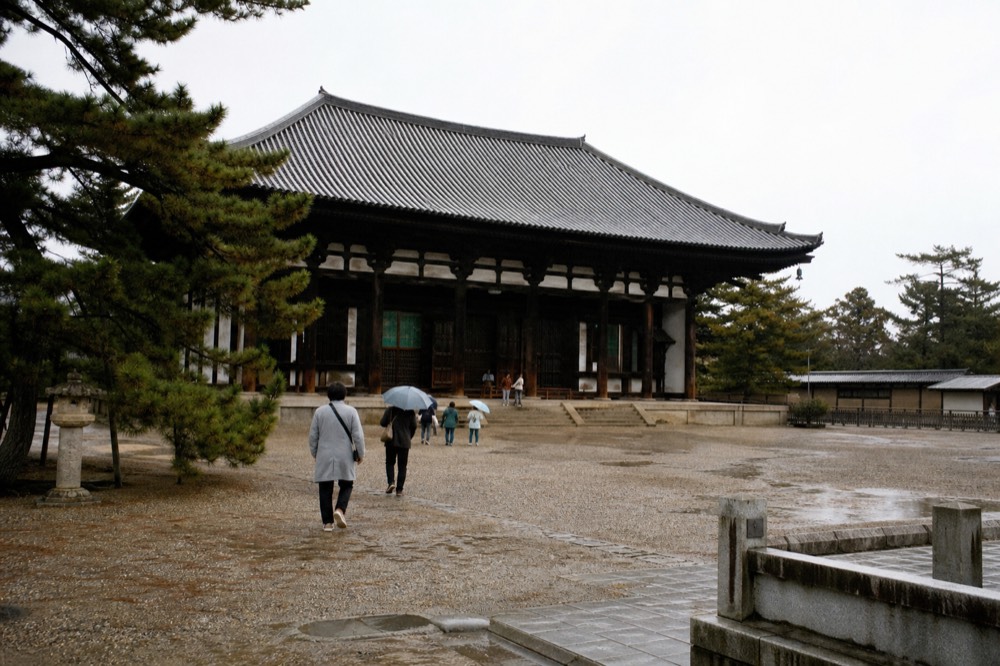
What you can still see: the Central Golden Hall, rebuilt in 2018, and the Eastern Golden Hall, each 500 yen, and the National Treasure Museum at 900 yen, home to the temple's celebrated guardian statues. All three open 09:00 to 17:00 with last entry at 16:45, every day, cash only. The combined ticket, at 1,600 yen, undercuts buying the three separately and is the obvious choice if you are entering more than one hall, but remember the 16:00 sales cutoff.
What is there to do in Naramachi and the Nara National Museum?
Naramachi, the old merchant quarter just south of the temple zone, is a free grid of narrow lanes, restored townhouses, small shops and a famous protective monkey charm, best given the last hour or two of daylight; the Nara National Museum next to the park holds one of Japan's great Buddhist art collections and works as the day's bad-weather or extra-energy option. Neither needs booking and neither pressures a schedule.
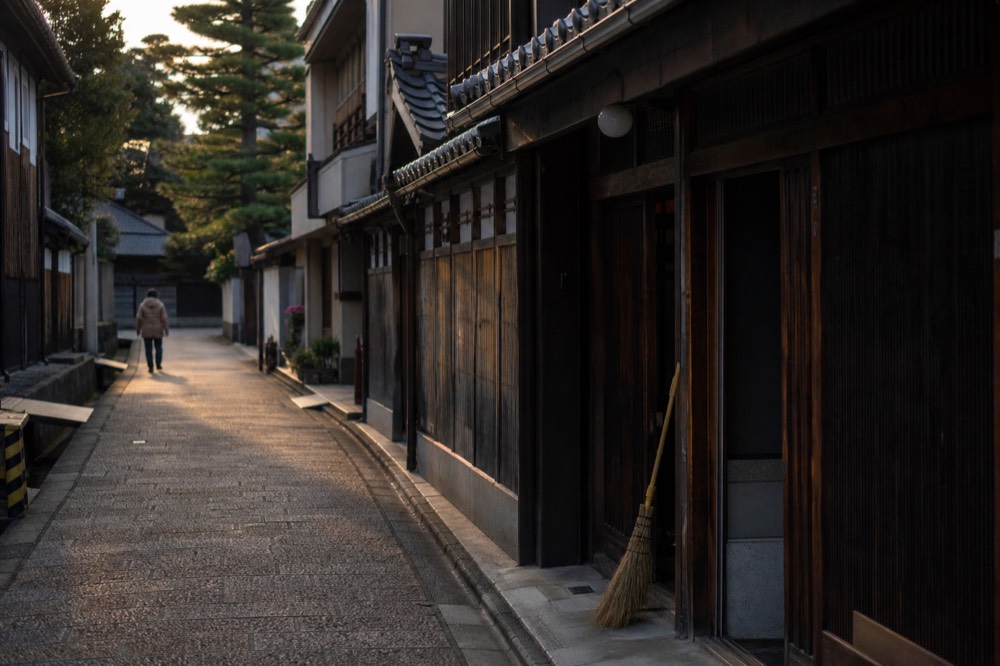
Naramachi was the town that grew up around the great temples, and a handful of its machiya survive as shops, cafes and a small museum house. The district rewards slow walking rather than ticking. Shops begin closing around 17:00, so a late-afternoon arrival is better than an evening one. The food side of the district, from kakigori to Nara's pickles, has its own write-up in what to eat in Nara.
The Nara National Museum sits between Kofuku-ji and the park, so it slots anywhere in the route. Its Buddhist sculpture hall alone justifies an hour for anyone with even passing interest, and the building itself is a Meiji-era piece. In autumn the museum hosts the annual Shuni-e exhibition tied to Todai-ji's spring rites, which is worth checking dates for.
How should you handle the Nara deer?
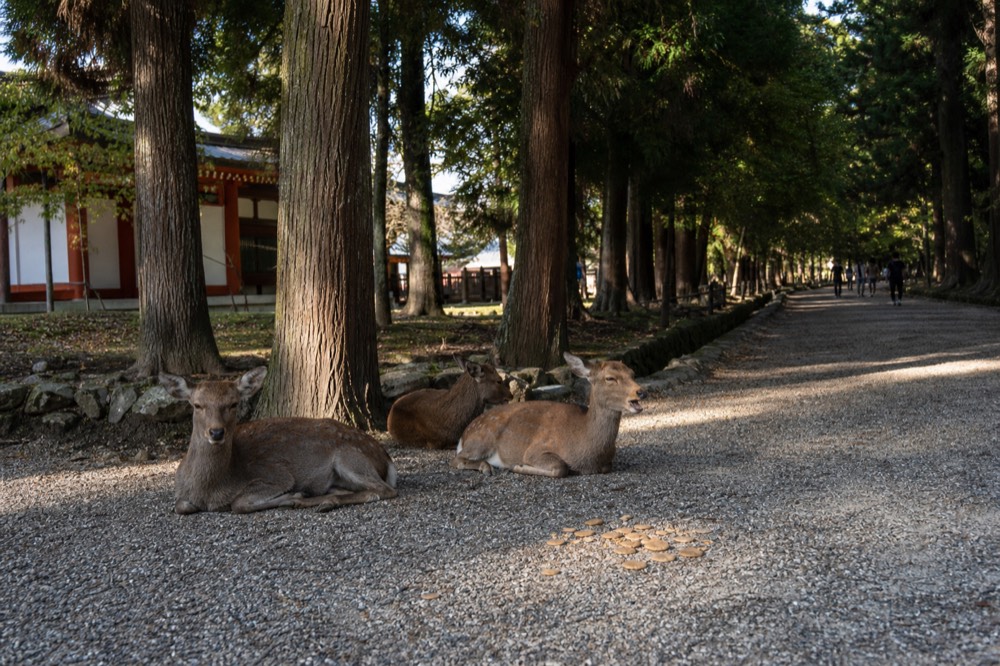
Treat the deer as wild animals that are protected, national Natural Monuments, and habituated to people: feed them only shika senbei crackers, about 200 yen a bundle, hand the cracker over fast rather than teasing, give stags distance from September to November and does distance from mid-May to June, and never leave food, paper or plastic within reach. The July 2026 census counted 1,687 deer, up 222 on the previous year.
The count is published annually by the Nara Deer Preservation Foundation, whose census page at naradeer.com breaks the figure down into 411 stags, 990 does and 286 fawns, counted by staff and volunteers over two early mornings in mid-July. The foundation's guidance is specific: the deer bite, strike, butt and charge, older visitors and small children need extra care, and a closed fist around a cracker will earn you a very persistent follower.
| Period | What is happening | What to do |
|---|---|---|
| Mid-May to June | Calving; does turn aggressive near newborns | Keep well clear of does and never approach a fawn |
| June | Designated deer-protection month | Extra caution, follow foundation guidance |
| September to November | Rut; stags aggressive, even de-antlered ones | Do not approach stags; feed quickly and move on |
| November | Second protection month, lantern season | Distance first, photos second |
| All year | Deer are wild and habituated | Feed only shika senbei, nothing else, ever |
The crackers sell out on busy days, which is a real phenomenon rather than a scare story, so buy early if feeding the deer matters to you. And the deeper story, including the foundation's protection work and the controversy around deer that leave the park, is covered in the Nara deer park guide.
What is the best walkable order from each station?
From Kintetsu Nara Station, the optimal order is Kofuku-ji first (it is five minutes away), then Naramachi if shops matter to you, then north through the park with the deer, then Todai-ji before the tour-group peak, then Kasuga Taisha, finishing back along the lantern approach; from JR Nara Station, reverse it by heading straight to Todai-ji first while your legs are fresh, since the walk there is about 15 to 25 minutes.
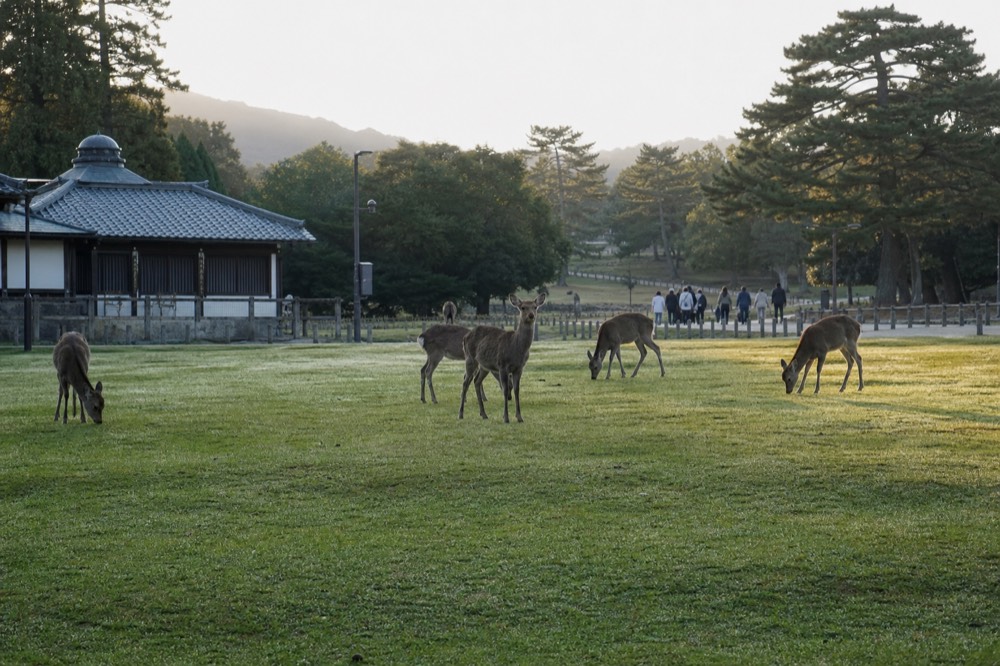
The direction matters more than people expect. Tour coaches, including the one used by the Kyoto and Nara day tour, arrive from the Kyoto side in the early afternoon, so the crowds at Todai-ji build from midday. An independent visitor starting at Kofuku-ji at 09:00 reaches the Great Buddha hall before that peak and reaches Kasuga Taisha when the tree-filtered light on the stone lanterns is at its best. A fuller treatment of the timing question, including whether a half day suffices, sits in the half-day Nara discussion.
The reverse trap is doing Naramachi last on a winter day: the shops close around 17:00 and the district loses most of its charm in the dark. In December, with sunset near 16:40, Naramachi works better second, straight after Kofuku-ji, with the temples filling the afternoon.
Where does a guided tour fit into a Nara day?
A guided coach tour fits best when Nara is one half of a Kyoto-plus-Nara day rather than the whole plan: the tour operated by JTB Sunrise Tours, rated 4.8 from 32 reviews, spends its Nara hours at Kasuga Taisha, Todai-ji and Nara Park after morning stops at Nijo Castle, Kinkaku-ji and the Kyoto Imperial Palace, with a licensed English-speaking guide, the coach and the admissions included in the price from $191.65 per adult.
For a visitor with two or more days in Kansai, doing Nara independently with the walking order above is usually the better experience: you control the timing at Todai-ji, skip nothing, and pay only the entry fees listed earlier. For a visitor with a single day who wants both cities, the tour is close to the only arithmetic that works, since a full independent Kyoto-plus-Nara day needs two station transfers, queue time at four paid entries and a strict clock. The full comparison of guided and independent options, including the coach arrival times that shape the crowd rhythm described above, is laid out across Kyoto Nara Day Tour.
The tour comes in six departure and lunch combinations. The no-lunch Kyoto departure is the from-price at $191.65, and skipping the included lunch is worth considering on its own merits: the lunch is the listing's weakest element by its own reviewers' accounts, criticised in reviews from 2015, 2017 and again in 2025, and eating independently in Nara's streets near the park is both cheaper and better. The standard lunch option from Kyoto pairs the same itinerary with a Western set lunch, and the Indian thali option suits travellers who want a fixed meal without the standard menu.
The Osaka departures start earlier, meeting around 07:15 versus the 08:20 Kyoto meetup, because the Osaka pickup adds roughly 30 to 60 minutes of routing each way. Two Osaka facts matter more than the clock: the Osaka no-lunch option pairs the earliest start with the cheapest eat-what-you-like freedom in Nara, and all three Osaka options end at Osaka Namba rather than returning to Kyoto, which suits travellers whose hotel is in Osaka but would strand anyone staying in Kyoto.
One more pairing note for spice-averse and vegetarian travellers: the Indian thali lunch option exists on both the Kyoto and Osaka departures, published in Hong Kong dollars on the operator's listing, and it is the tour's answer to the repeatedly criticised standard set lunch.
Whichever way you build the day, the bones of it stay the same: cash for the temple tickets, an early start at the Great Buddha hall, the free lantern approach at Kasuga Taisha, patience with the deer, and a final slow hour in Naramachi before the shops close. Nara is small, but it is not shallow, and it repays the ordering.
Common questions about things to do in Nara
What are the best things to do in Nara in one day?
Todai-ji's Great Buddha hall, Nara Park's deer, Kasuga Taisha's lantern approaches, Kofuku-ji's halls, and Naramachi's merchant lanes, with the Nara National Museum as backup. All five sit in a walkable zone reached in about 5 to 8 minutes from Kintetsu Nara Station.
How much do Nara's main sights cost?
Todai-ji is 800 yen with a 1,200 yen set ticket including the museum, Kasuga Taisha's special worship is 700 yen, and Kofuku-ji's combined ticket is 1,600 yen. The park, the deer and Naramachi's streets are free, and deer crackers cost about 200 yen a bundle.
Can you see Nara's sights on foot?
Yes. The whole essential circuit from Kintetsu Nara Station to Todai-ji, Kasuga Taisha, Kofuku-ji and Naramachi is walkable, with the station-to-park walk taking about 5 to 8 minutes. From JR Nara Station, allow about 15 to 25 minutes on foot.
How many hours do you need in Nara?
Six to seven hours on the ground covers all five essentials without rushing. Four hours forces a choice between the deer and the lantern paths, and the museum drops off first.
Do Nara's temples take credit cards?
No. Todai-ji and Kofuku-ji both state on their own pages that admission is cash only, and Kofuku-ji stops selling its combined ticket at 16:00. Carry yen for the day's entries.
Is the Kofuku-ji pagoda visible?
Not at present. The Five-Storied Pagoda has been fully enclosed in a steel weather cover since March 2025 for a conservation repair scheduled to finish in March 2034, but the temple's halls and museum remain open.