Are the Nara deer dangerous or diseased?
A fact-checked answer to whether Nara Park's deer are dangerous or diseased, using the Nara Deer Preservation Foundation's own census, death records and safety guidance.
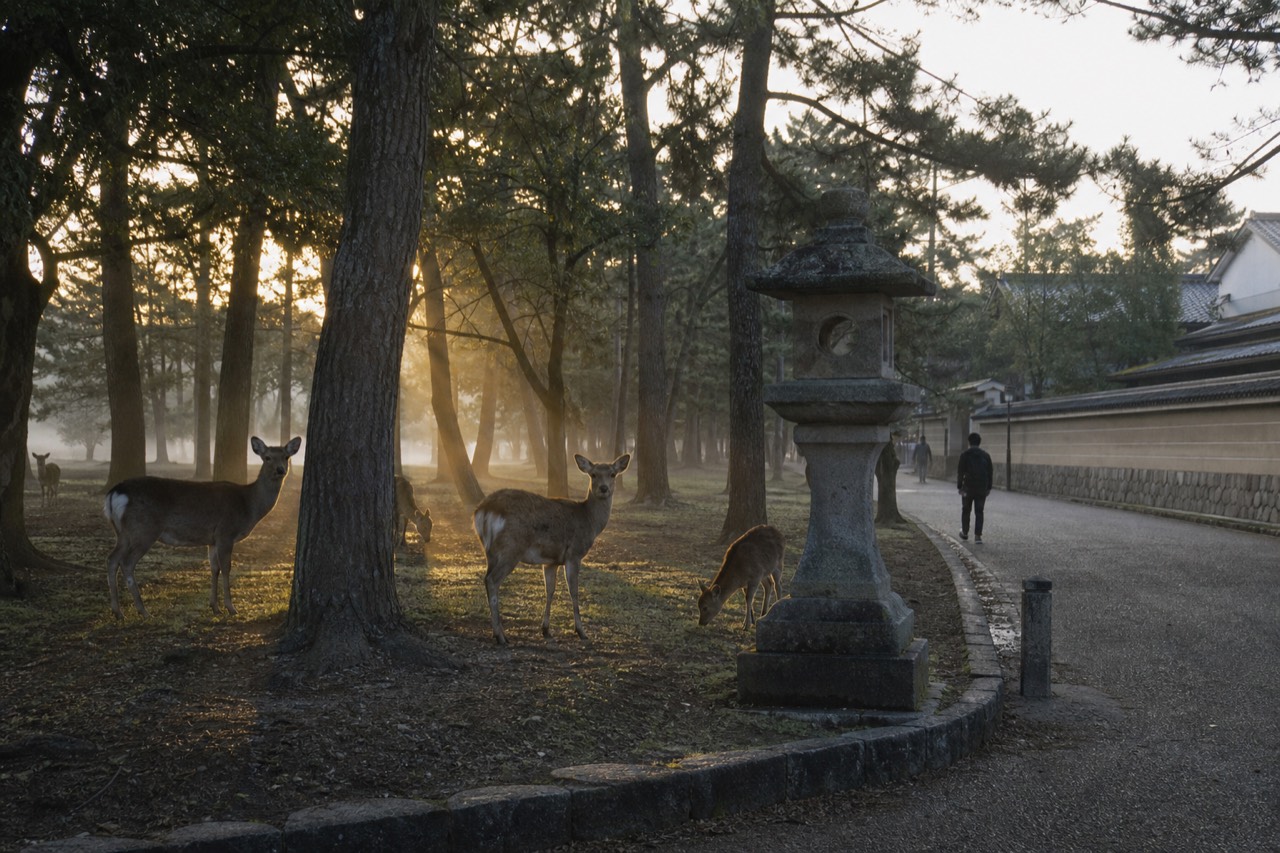
Nara Park's deer bow for crackers, chase tourists who tease them, and crop up in headline after headline about injuries and disease. Almost none of those headlines cite the organisation that actually keeps the records. The Nara Deer Preservation Foundation has counted the herd every July for decades, publishes the causes of every deer death, and posts its safety rules in three languages. This longread answers the question from those primary sources.
Are the Nara deer dangerous or diseased?
They are dangerous in a specific, manageable way, and the disease record points at the deer, not at visitors. The herd are wild animals, protected as a National Natural Monument, that bite, butt and charge when provoked or fed wrongly. The foundation logged 140 deer deaths in fiscal 2025, of which 30 were disease, and it publishes no evidence of deer-to-human infection. Danger at Nara Park is a behaviour problem with published rules, not a health hazard.
The honest framing comes from the foundation itself. Its guidance page states plainly that the deer are habituated but wild, that they bite, strike, butt and charge, and that older visitors and small children need extra care. That is a stronger warning than most travel content gives, and it comes from the body that has managed the herd since its incorporation in 1934.
What the foundation does not publish is any record of deer passing disease to visitors. Its "learning" pages, aimed at schools and the public, cover road accidents, injury to the deer from plastic bags and litter, and seasonal aggression. Anyone writing about zoonotic risk at Nara Park is speculating beyond the available record.
The practical takeaway for a day trip is simple. Follow the feeding rules, keep distance during the rut and the calving window, and the deer are a highlight rather than a hazard. Ignore the rules and you meet a 100-kilo wild animal with antlers or hooves, which is exactly as dangerous as it sounds.
For visitors who want the deer, the temples and the logistics handled in one day, the six options below cover the same itinerary from Kyoto or Osaka, with or without lunch.
How many deer live in Nara Park, and who counts them?
The July 2026 census counted 1,687 deer, a rise of 222 on the previous year. The breakdown was 411 stags, 990 does and 286 fawns, counted by foundation staff and volunteers over the mornings of 15 and 16 July, between 05:30 and 08:00. The count is the work of the Nara Deer Preservation Foundation, with Kasuga Taisha, Nara Prefecture and three local universities, not the city or the tourist board.
A rising herd is the context for every "aggressive deer" story. More animals, more hungry animals around the cracker stalls, more encounters at the park's edges. The foundation's own numbers show the direction of travel: 222 more deer in a single year, with the doe population up 174.
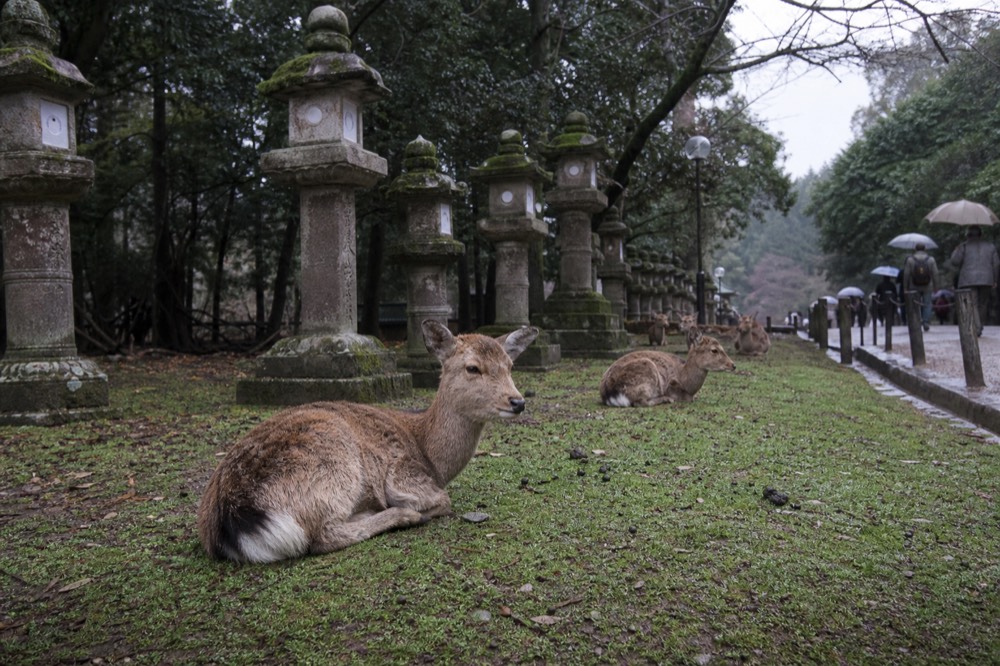
The census matters for another reason: it is the only deer statistic at Nara Park with a named, checkable publisher. Park area figures float around the internet with three different values, injury counts circulate without any primary source at all, and the designation year of the deer's Natural Monument status is repeated without confirmation. The herd size is the number you can actually stand behind.
| Census figure, July 2026 | Count | Change on 2025 |
|---|---|---|
| Total deer | 1,687 | +222 |
| Stags (males) | 411 | +96 |
| Does (females) | 990 | +174 |
| Fawns | 286 | -48 |
If a full day in Kyoto and Nara with a licensed English-speaking guide, the coach and the admissions covered sounds easier than self-managing a park of 1,687 deer with children in tow, the day tour below spends its afternoon at Kasuga Taisha, Todai-ji and Nara Park.
What do the deer die of, and what does that say about disease?
The foundation recorded 140 deer deaths in fiscal 2025, up 10 on the year before: 36 from road accidents, 30 from disease, and 74 from other causes, with zero from stray dogs and zero from poaching. Disease killed 21 percent of the deer that died. Those figures describe the herd's own health, and the foundation publishes nothing about disease transmission to the park's visitors.
This is the honest answer to the "diseased" half of the question. Disease is real in the herd, it is tracked, and it accounts for roughly one death in five among deer that die in a given year. Fawns are the most vulnerable class: 69 of the 140 deaths in fiscal 2025 were fawns, against 41 does and 30 stags.
But a disease that kills deer is not automatically a disease that infects people, and no primary source at Nara Park claims it does. The foundation's published problem list for the deer is led by road accidents and by litter, plastic bags in particular, which deer swallow. The health warning the foundation actually issues to humans is behavioural: do not touch, do not provoke, feed nothing but the official crackers.
The full death record is on the foundation's own census and statistics page, which is worth reading in full before any visit with young children.
When are the deer most dangerous?
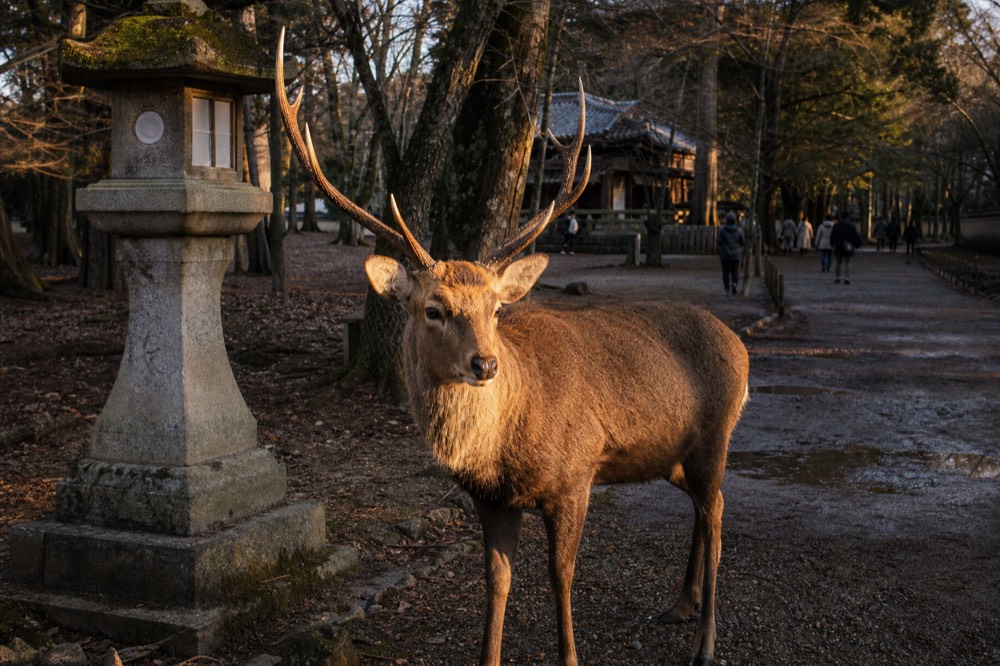
Two windows carry the risk. The rut runs September to November, when stags, including ones whose antlers have been cut, turn aggressive and must not be approached. Calving runs mid-May through June, when a doe near a birth is dangerous and approaching a newborn fawn provokes the mother. The foundation designates June and November as deer-protection months, its highest-alert periods of the year.
The timing is not folklore. It comes from the foundation's season-by-season safety guidance, which is the closest thing Nara Park has to an official rulebook for visitors.
During the rut, the advice is distance. A stag in September is a different animal from the placid bowing deer of an April afternoon, and the foundation says so explicitly. Stags are de-antlered each year precisely because of this season, and the guidance stresses that the surgery does not make them safe: a de-antlered stag can still charge and strike.
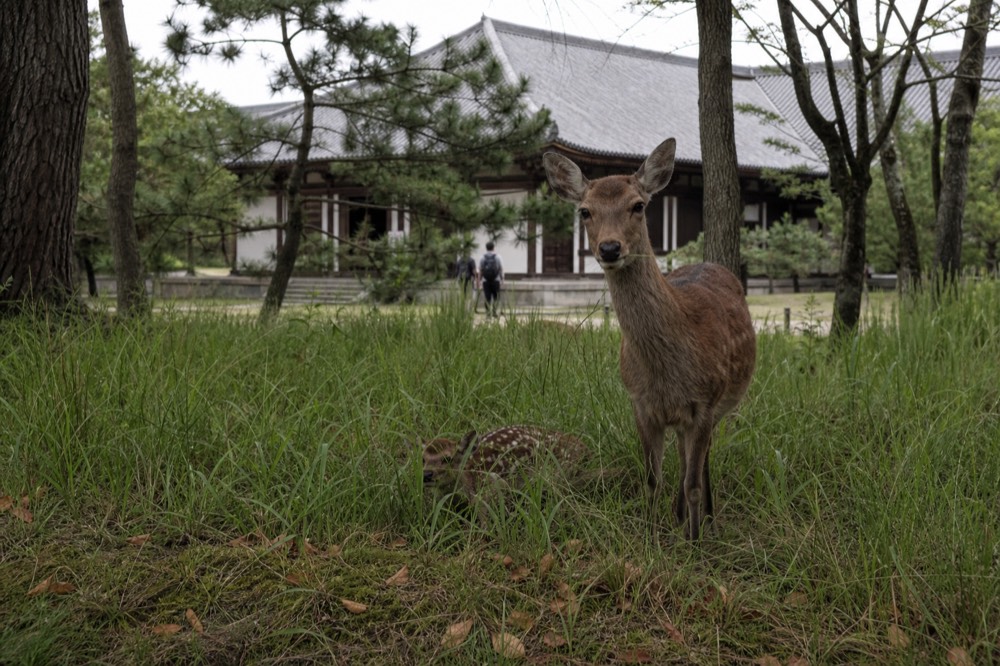
During calving, the danger is the animal you did not notice. Does give birth in the park's quieter corners, and a mother with a hidden fawn treats approach as a threat. Newborn fawns lie still in undergrowth, which makes them easy for a curious child to stumble onto.
Outside those windows, the record points to feeding mistakes as the main cause of incidents. Deer that follow visitors, press them against railings or nip at clothing are almost always deer that were teased, or fed from a closed fist, or chased for a photo.
What are the rules for feeding the deer?
Feed the deer nothing except shika senbei, the crackers sold in the park for about 200 yen a bundle of roughly 10, and hand each cracker over fast. Do not tease, do not hold crackers in a closed fist, and do not wave food you are unwilling to surrender. A deer that is teased or made to beg will follow you and press you, and the cracker stalls exist so that proceeds support the herd's welfare.
The crackers are not a tourist gimmick. They are produced under licence from the foundation, and the revenue funds the protection work, the enclosure where pregnant does and fawns are sheltered, and the education programme. Buying senbei is the one sanctioned way to interact with the herd.
The technique matters more than most visitors expect. Show the cracker flat on an open palm, let the deer take it, and show both empty hands afterwards. The foundation's guidance is blunt about the alternative: hide the cracker, and the deer will follow, press and nip until it gets what it was promised.
Equally, feed the deer nothing from your bag. Human food harms them, and plastic bags kill them, which is why the park's bins are deer-proof and why the foundation asks visitors to carry litter out.
| Situation | Foundation guidance |
|---|---|
| Everyday feeding | Shika senbei only, about 200 yen per bundle, handed over quickly |
| Closed fist or teasing | The deer follows and presses; do not do it |
| Rutting season, September to November | Keep distance from stags, de-antlered or not |
| Calving, mid-May to June | Never approach a fawn; the mother will defend it |
| Small children and older visitors | Extra care advised; the deer are wild and can charge |
Are the deer safe for children?
Safe with supervision, and the foundation says so in its own words: older visitors and small children need extra care because the deer are habituated but wild. A toddler at cracker-stall eye level is exactly the visitor the guidance is written for. The workable rule for families is that an adult hands over every cracker, stands between child and stag during the autumn rut, and treats any deer that approaches as a large wild animal rather than a pet.
Families manage this successfully every day of the year, and the herd's protected status means the encounter is genuinely unlike anything else in Japan. The failure mode is always the same: treating a 100-kilo animal as a prop for photographs.
The foundation's protected status explains the whole arrangement. The deer are a National Natural Monument, so they cannot be fenced off, removed or managed like a zoo population. They roam a public park and cross roads that carry real traffic, sharing the paths with the crowds that come to see them. Thirty-six of them were killed by vehicles in fiscal 2025, which is why the driving guidance around the park matters as much as the feeding rules.
Does the herd's growth change anything for visitors?
Yes, in three ways. More deer means more encounters, more pressure on the cracker supply, which has sold out by midday in peak periods, and more herding operations to push deer back inside the park boundary as animals range further for food. A record 1,687 deer in a public park with rising road-accident deaths is a management problem the foundation is visibly working, and visitors see the edges of it.
The population trend is the quiet story behind the loud ones. A herd that grows by 222 in a year, with does up 174, will produce more fawns, more roadside grazing and more of the "deer chased me" videos that fuel the danger narrative. The foundation's answer has been shelter, patrol signage in three languages, and herding operations reported in Japanese national media.
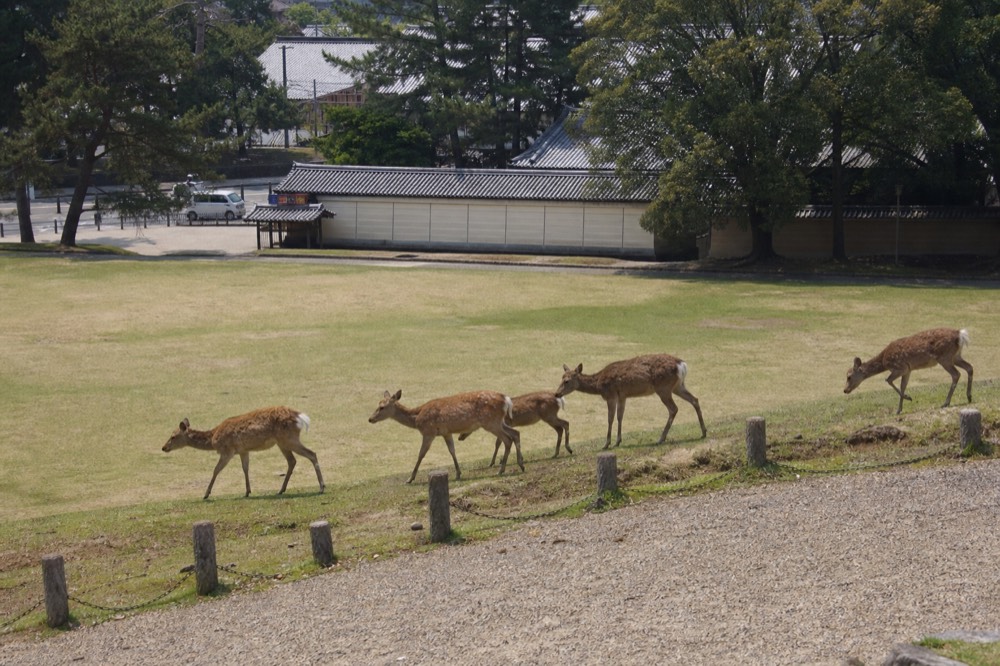
None of that makes the park unsafe. It makes the park a place with rules worth reading, which is the real difference between the visitor who leaves with photographs and the one who leaves with a bruise. Our longer piece on the debate around managing the herd goes deeper on the numbers.
Can a guided day trip reduce the risk?
Partly, yes. A licensed guide who visits the park daily knows where the stags gather in autumn, where the cracker stalls are, and when the herd is at its calmest, and the fixed itinerary means the Nara Park visit lands in a planned window rather than at the end of an exhausting self-directed day. The risk that remains, the feeding and the distance rules, is behavioural and stays with the visitor either way.
The Kyoto and Nara Day Tour, operated by JTB Sunrise Tours and rated 4.8 from 32 reviews, spends its afternoon at Kasuga Taisha and Todai-ji with Nara Park, after mornings at Nijo Castle, Kinkaku-ji and the Kyoto Imperial Palace. The from-price of $191.65 per adult covers the licensed English-speaking guide, the coach and the admissions, which is the part independent travellers most often misjudge in Nara, where Todai-ji and Kofuku-ji both take cash only.
On lunch: the included set lunch is the tour listing's weakest element by its own reviewers' accounts, in 2015, 2017 and again in 2025, so the no-lunch options are worth a look for anyone who would rather eat in Nara. For more on timing and approach, see our guide to visiting Nara Park.
Departing from Osaka instead of Kyoto adds roughly 30 to 60 minutes each way to the day, and the Osaka options end at Osaka Namba rather than returning to Kyoto. Travellers already staying in Osaka save the double-back.
Whether a guide or a solo visit suits you better, the deer themselves answer the original question the same way: respect the rules and they are safe, respect the seasons and they are safer still, and read the foundation's own pages before believing any headline about disease. This site, Kyoto Nara Day Tour, keeps to the primary sources on every page about the park.
The short answers, drawn from the Nara Deer Preservation Foundation's own census, death records and guidance, are that the deer are dangerous only when provoked or mishandled, that no primary source records disease passing from deer to visitors, and that the risk concentrates in two seasonal windows, the autumn rut and the late-spring calving period. The questions below cover the specifics.
Common questions about the Nara deer
Are the Nara deer dangerous or diseased?
Dangerous in a limited, rule-bound way, and the disease record concerns the deer rather than visitors. The herd are wild animals that bite, butt and charge when provoked, and the foundation recorded 30 disease deaths among 140 total deer deaths in fiscal 2025, with nothing published about transmission to humans.
Can you catch a disease from the Nara deer?
No primary source at Nara Park, including the Nara Deer Preservation Foundation's own statistics and guidance pages, records deer-to-human disease transmission. The verified health guidance is behavioural: feed only the official crackers, hand them over quickly, and keep your distance during the rut and calving seasons.
When should you avoid the Nara deer?
Be most careful from September to November, the rut, when stags turn aggressive, and from mid-May through June, when does defend hidden newborn fawns. June and November are the foundation's designated deer-protection months.
Why do the Nara deer bow?
Bowing is learned behaviour that gets rewarded with crackers. The foundation permits feeding only with shika senbei, about 200 yen a bundle, and warns that a deer teased with food will follow and press the person holding it.
How many deer are in Nara Park?
The July 2026 census counted 1,687 deer: 411 stags, 990 does and 286 fawns, a rise of 222 on the previous year. The count is carried out by the Nara Deer Preservation Foundation with partner institutions over two early mornings.
Do you need to book Nara Park in advance?
Nara Park is a public park with no entry gate and no booking. The paid sites around it, such as Todai-ji at 800 yen cash only, take no advance reservations and require none.