What to Eat in Nara: A Day-Tripper's Food Guide
Nara's food identity is older than Kyoto's restaurant scene and far more specific: pressed sushi wrapped in persimmon leaves, vegetables pickled for years, and sweets made from kuzu root. Here is what to actually eat on a day trip, where to find it, and how to fit it around the deer.
Short answer
Eat kakinoha-zushi, narazuke pickles, mochi pounded fresh, and kuzu sweets or noodles, all sold in the compact area between Kintetsu Nara Station and Nara Park. Budget about 200 yen for deer crackers, carry cash because Todai-ji and Kofuku-ji take nothing else, and consider the no-lunch tour option so you can eat in Nara itself.
Nara was Japan's capital before Kyoto was, and its food traditions date from that eighth-century era rather than from the restaurant culture that grew up later. That shows on the plate. What Nara is known for is preserved and pressed and slow: sushi wrapped in persimmon leaves because there was no refrigeration, vegetables pickled in sake lees for months at a time, and starches drawn from kuzu root in the mountains to the west. None of it requires a reservation or a guide, and almost all of it sits within a fifteen-minute walk of the deer park.
This guide covers the five foods that are genuinely Nara's own, where a day-tripper realistically eats between the park and the station, how much cash to carry, and one honest warning about the included lunch on organised coach tours, which the tours' own reviewers have consistently rated as the weakest part of the day. If you are planning the wider day, our Nara day trip from Kyoto itinerary covers the sights this page deliberately leaves out.
What food is Nara famous for?
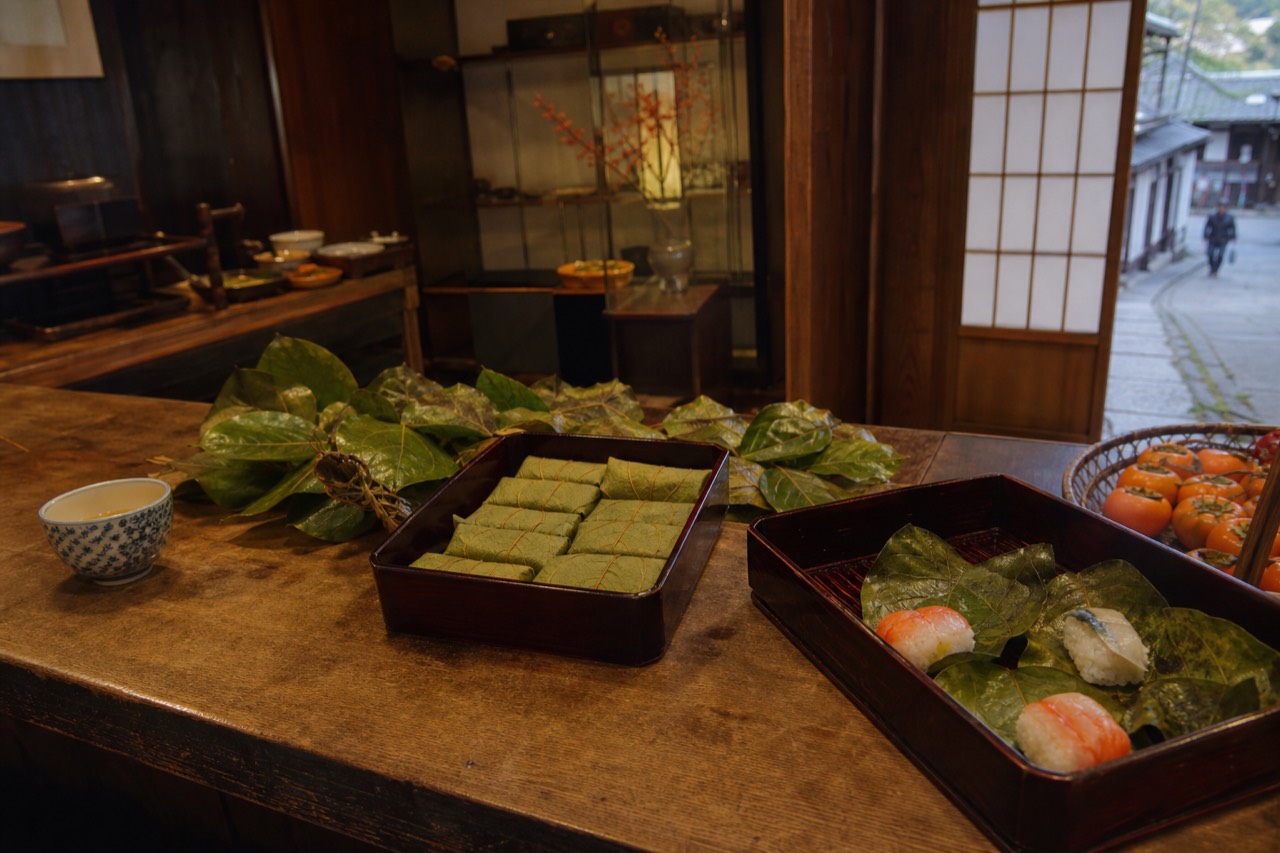
Nara is best known for kakinoha-zushi, pressed sushi wrapped in a persimmon leaf, and narazuke, vegetables pickled for years in sake lees. The city is also famous for fresh-pounded mochi, stretched and beaten before your eyes, and for kuzu, an arrowroot starch turned into sweets, noodles and a thick dessert soup. Together these four foods give Nara a distinct local identity that sets it apart from nearby Kyoto and Osaka. Each of these traces back to the Nara period or to the temple kitchens that surrounded it, and each is sold within a short walk of Nara Park. None of them is a Kyoto or Osaka dish that drifted east, and none requires a reservation: kakinoha-zushi began as a preservation method in the Yoshino river country south of the city, and narazuke is named for Nara outright.
The reason the list is short is geographic. Nara is a basin city ringed by mountains, historically a stop on pilgrimage routes rather than a merchant port, so its food tradition leans on what keeps well and travels well: cured, pressed, pickled and powdered. That is good news for a visitor on a schedule, because the same qualities that made these foods survive a journey to Edo make them easy to carry home in a bag.
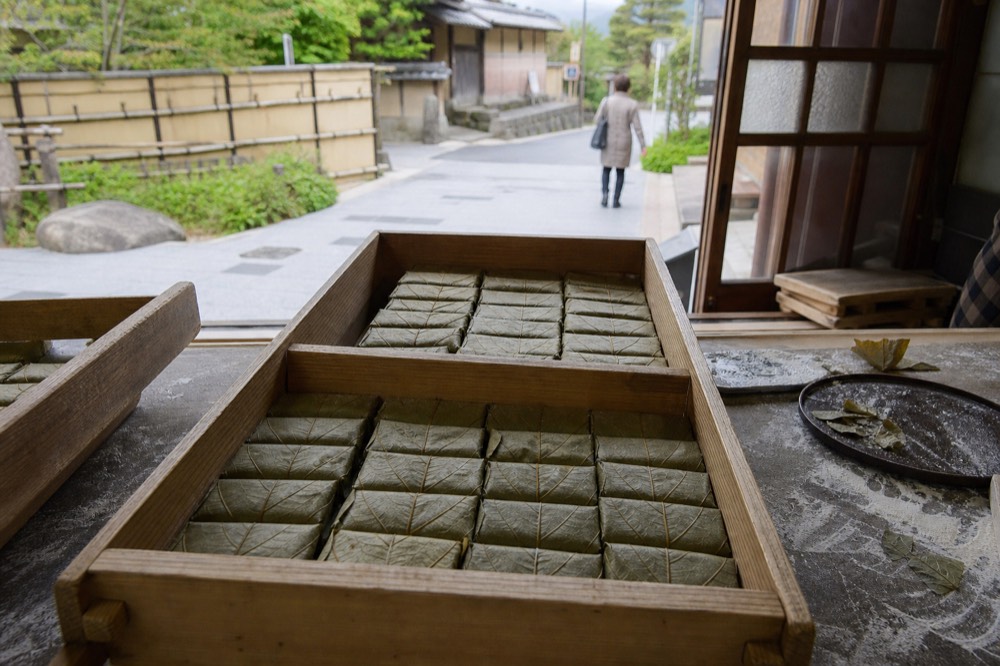
If you only try two things, make them kakinoha-zushi and a bowl of something kuzu-based. The sushi is eaten with the leaf on, unwrapped at the table, and the faint tannin from the persimmon leaf is part of the flavour rather than packaging. Kuzu, by contrast, is Nara's contribution to Japanese dessert culture: the root is washed, crushed and settled in cold mountain water for weeks, and the resulting starch sets into a translucent jelly that appears in sweets shops all over the old town. Our longer piece on what food is famous in Nara goes deeper on the history.
Where should you eat between Nara Park and the station?
Eat in the band of streets between Kintetsu Nara Station and the park's southern edge: the Higashimuki arcade, Sanjo Dori, and the lanes around Naramachi, all within a ten-minute walk of each other, and all close enough to the deer that no meal costs you the afternoon. This is where nearly every food shop in the city centre sits, and because Kintetsu Nara Station is about five to eight minutes on foot from the park, you are never more than a quarter of an hour from the deer whichever end you start from. Visitors arriving at JR Nara Station should budget about 15 to 25 minutes of walking to reach the same streets.
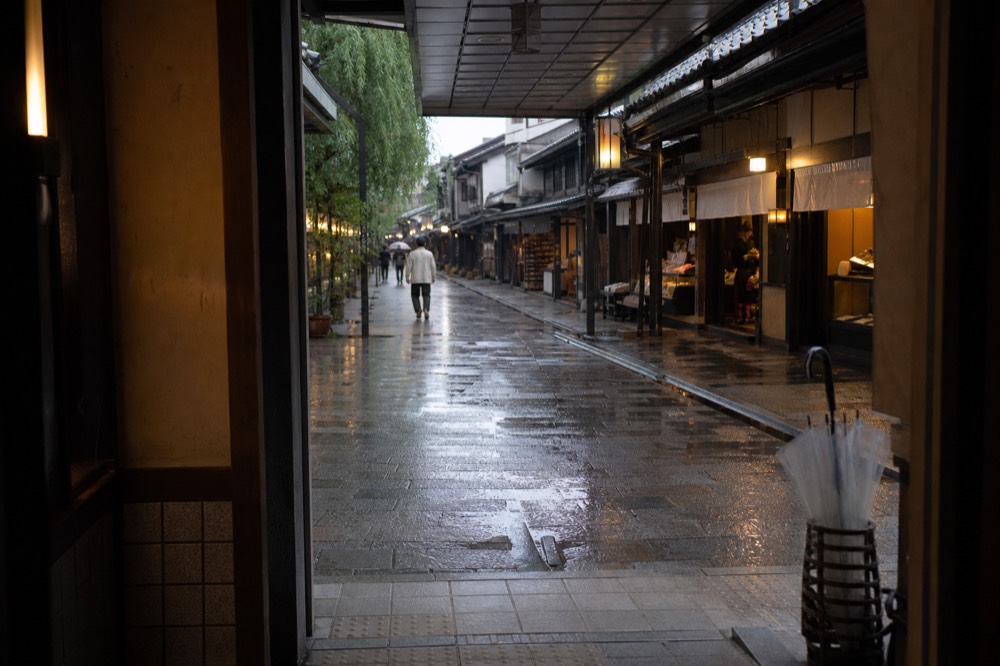
The arcade and Sanjo Dori carry the practical eats: standing soba counters, coffee shops that open early for tour groups, confectioners, and the food floors of the station buildings themselves, which are better than most guidebooks admit. Naramachi, the old merchant quarter a few blocks south, is where the traditional producers cluster, and it rewards slow browsing. The streets between Kofuku-ji and the park are thin on food and heavy on ice cream stands, so treat that stretch as scenery rather than lunch territory.
The geography matters if your day is run by a coach. The standard guided day arrives in Nara in the early afternoon, gives you time around Todai-ji, Kasuga Taisha and the park, and then drives back, which means your eating window in Nara is the length of the free time, not the whole afternoon. The Kyoto departure with no lunch included meets at 08:20 and is the from-price option at $191.65 per adult, and skipping the set lunch deliberately leaves that free window open for the city's own food rather than a banquet hall.
Planning the wider route, including where the coach drops you and how the six stops fit together, is covered in our guide to things to do in Nara, which pairs well with this page when you are deciding how much of the day to give to eating.
Kakinoha-zushi and narazuke: the two tastes that are actually Nara's own
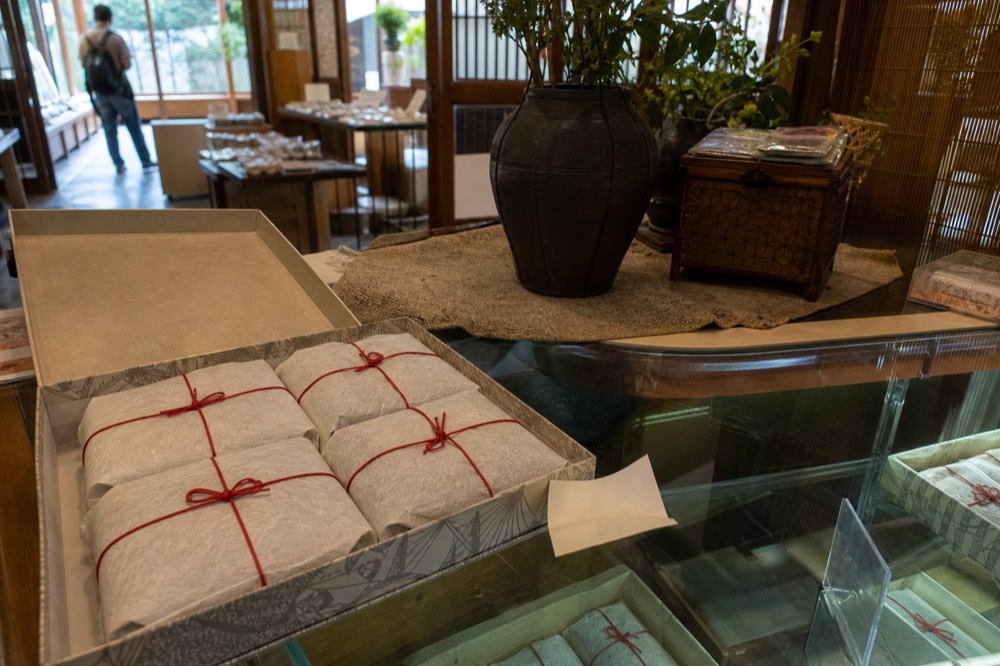
Kakinoha-zushi is pressed mackerel or salmon sushi wrapped in a persimmon leaf, and narazuke is vegetables such as uri melon and ginger cured in sake lees for anything from months to several years: together they are the two foods Nara has produced continuously for the longest, and both are sold within a few blocks of the deer park. The leaf-wrapped sushi was a preservation technique from the Yoshino region, where the tannin in the persimmon leaf helped the fish keep through a journey, and the pressing gives it a dense, clean texture unlike the hand-formed nigiri of Tokyo or Osaka. Narazuke is older still in spirit: temple pickles, made by monks who had surplus sake lees and time.
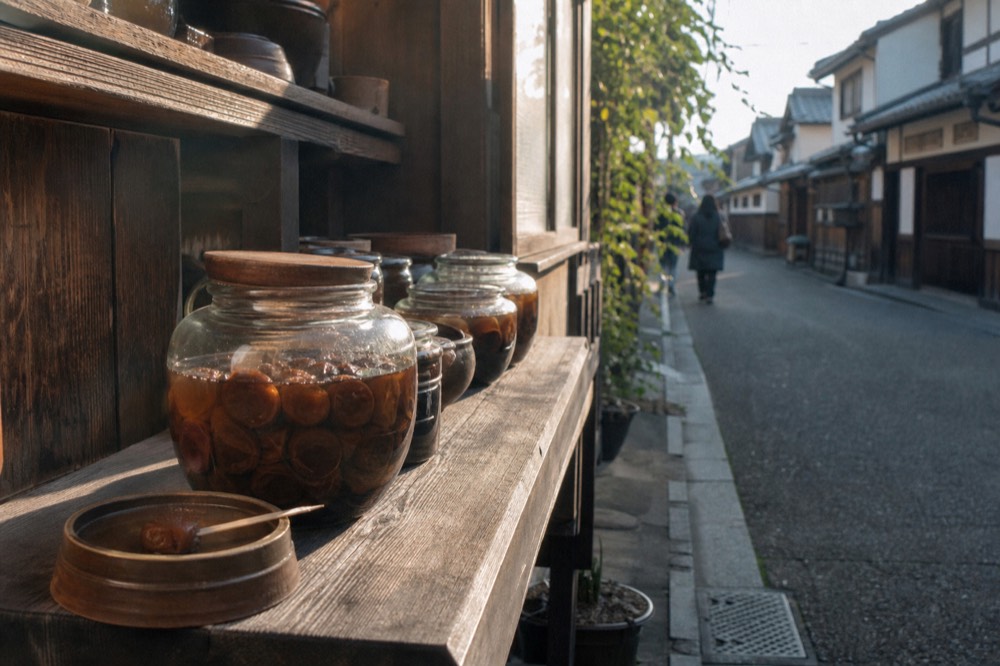
Both travel, which is the point. A box of kakinoha-zushi keeps for a day without refrigeration, and shops in Naramachi sell it by the piece or in gift boxes for the train home. Narazuke comes in the same shops, cut in thick slabs, pungent and salty and very much an acquired taste that most people acquire halfway through the second slice. Ask for a tasting slice before buying a vacuum pack; the good producers expect it.
| Food | What it is | How it is sold | Eat on the spot or take home |
|---|---|---|---|
| Kakinoha-zushi | Pressed sushi wrapped in a persimmon leaf | By the piece or in boxes, Naramachi and station food floors | Both; keeps a day unrefrigerated |
| Narazuke | Vegetables cured in sake lees for months or years | Cut to order or vacuum-packed | Take home; tastes deepen for weeks |
| Yamato beef and local vegetables | A modern addition, not a historic one | Restaurant set meals in the centre | Eat on the spot |
A note on timing: the traditional producers in Naramachi often close mid to late afternoon, well before the temples do. If kakinoha-zushi boxes are the souvenir you want, buy before you visit the park, not after. The station buildings are the fallback and stay open later, at the cost of a shorter, more tourist-facing range.
Mochi, kuzu and the sweets worth stopping for
Nara's sweets scene runs on two staples: mochi pounded fresh in front of you, and kuzu, the arrowroot starch that sets into translucent jelly for sweets, thick soups and even noodles, and both are at their best within minutes of being made, which suits a day-tripper's timetable almost too well. The mochi tradition here is tied to the temples, with priests pounding rice cakes for festivals, and the kuzu trade grew up in the Yoshino mountains where the root was settled in cold stream water. Both are best eaten immediately, which is exactly what a visitor can do.
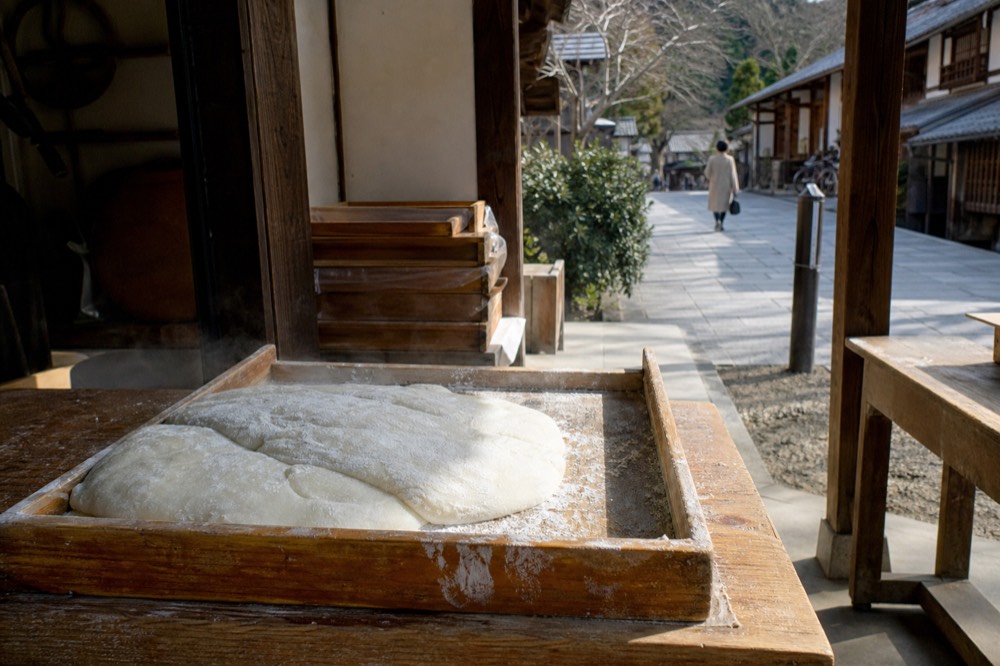
Fresh mochi is a fifteen-second food. The moment it is turned out and dusted, it is at its softest, and ten minutes later it has begun to firm. Shops that pound to order, rather than to a schedule, will have a small crowd at exactly the moment the mortar is struck, and joining that crowd is the correct decision. Kuzu works differently: kuzumanju, a sweet bean paste wrapped in kuzu jelly, and kuzuyu, a thick warm starch drink, are both items to eat sitting down with a cup of tea, and the shops around Naramachi and the arcade specialise in them.
Kuzu is also the starch in the savoury side of Nara cooking, thickening sauces and forming the chewy kuzu-kiri noodles that appear on set menus in the old town. If your day includes a proper lunch rather than grazing, a set meal built around kuzu-kiri with local vegetables is the most Nara thing you can sit down to eat. The Kyoto Nara Day Tour site's wider coverage, including our free things to do in Kyoto and Nara guide, helps if you are balancing a food budget against entry fees, which this page turns to shortly.
Shika senbei: the cracker that is for the deer, not for you
Shika senbei, the deer crackers sold by vendors inside Nara Park, are made for the deer, sold only by licensed vendors of the Nara Deer Preservation Foundation, and cost about 200 yen for a bundle of roughly ten crackers, with the proceeds going to the foundation's welfare work. They are baked deliberately plain, they are not human food however rustic the packaging looks, and the deer know the sound of the cracker stack before you have paid. Buying a bundle is one of the small rituals of a Nara visit.
The rules are strict and worth following, because the deer are habituated but wild, and the foundation is explicit that they bite, butt and charge. Feed nothing except shika senbei. Hand the cracker over quickly, do not tease, and never hold one in a closed fist, or the deer will follow and press; the foundation's own guidance, at naradeer.com, sets out the full etiquette. Hold the empty hands up and open to show you are finished, and the deer lose interest.
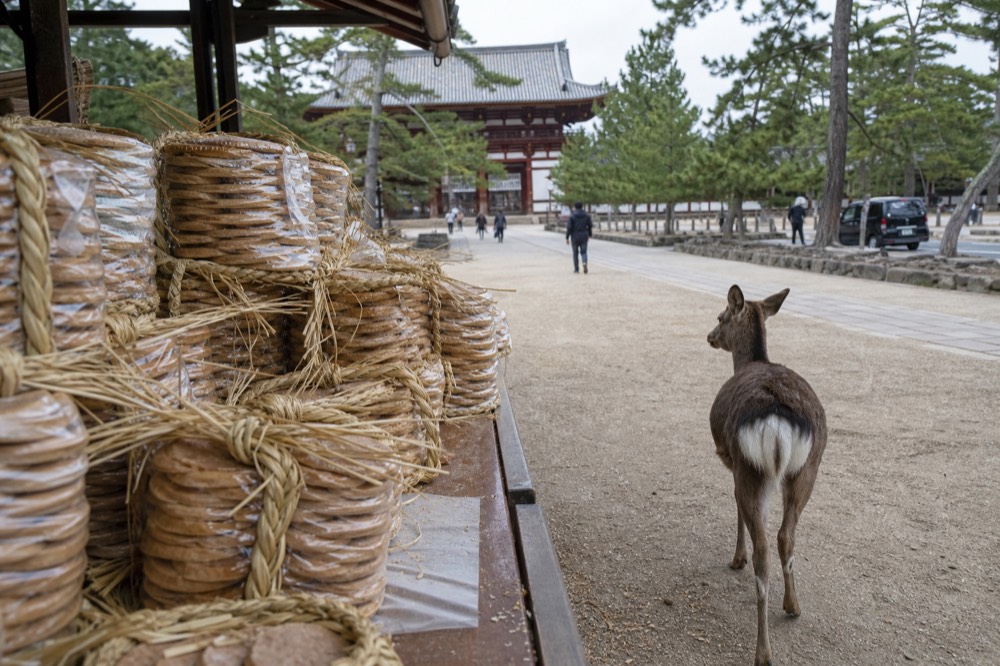
Two seasonal cautions come from the same source. Calving runs from mid-May through June, and does around a birth turn aggressive, so keep distance from any fawn you encounter. The rut runs September to November, and stags, including ones whose antlers have been cut, must not be approached; June and November are the foundation's designated deer-protection months. For the deeper background on the herd, which reached a census count of 1,687 in July 2026, see our Nara deer park guide.
What about lunch on an organised day tour?
The included lunch on the standard Kyoto and Nara coach tours is, by the tours' own reviewers' accounts in 2015, 2017 and again in 2025, the weakest element of the day, and most reviewers point to a set banquet meal rather than anything recognisably Nara. That is not a reason to skip the tour; the coach, the guide and the admission bundle are the product. It is a reason to look hard at the lunch options before you book, because the tour that skips lunch entirely is also the cheapest one.
The Kyoto and Nara day tour, operated by JTB Sunrise Tours, is rated 4.8 from 32 reviews and runs from $191.65 per adult. The six options split into Kyoto and Osaka departures, and into no-lunch, Western set lunch and Indian thali lunch versions. Only the Kyoto no-lunch option has a published US dollar price; the others are published in Hong Kong dollars, with the Kyoto lunch options at HK$1,597 and the Osaka lunch options at HK$1,698. Note that the three Osaka options end at Osaka Namba and do not return to Kyoto.
If eating in Nara is a priority for your day, the arithmetic favours the no-lunch option twice over: it is the cheapest departure, and it leaves your free time in Nara open for kakinoha-zushi, a kuzu-kiri set meal, or fresh mochi, rather than committing you to a set lunch that reviewers have consistently rated below the rest of the day.
For travellers weighing the two cities against each other, our piece on whether you can see Kyoto and Nara in one day works through the timing in detail.
Cash, timing and how much to budget for a food day
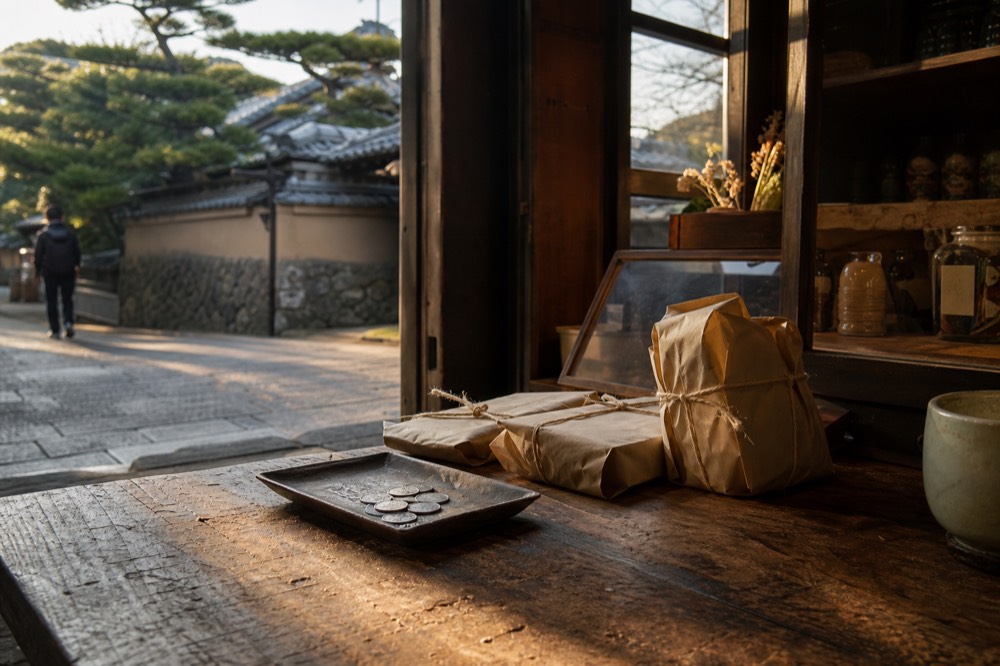
Carry cash in Nara: Todai-ji and Kofuku-ji both state on their own pages that admission is cash only, many of the older food producers in Naramachi are the same, and the only firm food figure you can rely on is about 200 yen for a bundle of deer crackers. Convenience-store ATMs in the station buildings take foreign cards, but the queue on a busy afternoon is not where you want to spend your eating window. Withdraw before you leave Kyoto, or on arrival at the station, and you will not think about it again.
The timing constraints are the ones people underestimate. The Daibutsuden at Todai-ji is open 07:30 to 17:30 from April to October and 08:00 to 17:00 from November to March, per the temple's own site at todaiji.or.jp, and the Naramachi producers begin closing in the mid to late afternoon. The Kofuku-ji halls are open 09:00 to 17:00 with last entry at 16:45, and their combined ticket, at 1,600 yen, stops selling at 16:00, a detail the temple's own guide page at kohfukuji.com is clear about. Food shopping therefore comes before temple-going if you want both.
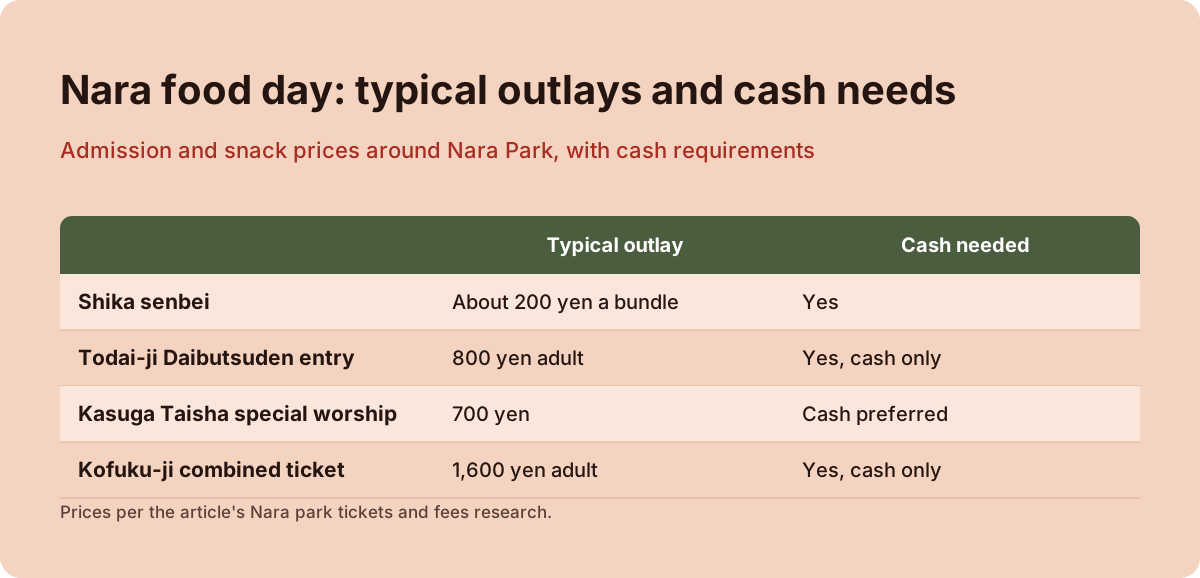
| Item | Typical outlay | Cash needed | Notes |
|---|---|---|---|
| Shika senbei | About 200 yen a bundle | Yes | Licensed park vendors only |
| Todai-ji Daibutsuden entry | 800 yen adult | Yes, cash only | Set ticket with the museum 1,200 yen |
| Kasuga Taisha special worship | 700 yen | Cash preferred | Raised from 500 yen in October 2024 |
| Kofuku-ji combined ticket | 1,600 yen adult | Yes, cash only | Sold 09:00 to 16:00 only |
| Grazing lunch in Naramachi | Varies by shop | Mostly cash | Kakinoha-zushi by the piece, mochi to order |
The same logic applies to the tour side of the budget. The no-lunch Kyoto departure at $191.65 covers the coach, the licensed English-speaking guide and the admissions on the itinerary, and every yen you spend on food in Nara is then a choice you make in Nara rather than a set meal you paid for in a different currency. Our Nara park tickets and fees page itemises every admission so there are no surprises.
A realistic food-focused half day in Nara
A food-focused half day works best in this order: arrive at Kintetsu Nara Station, buy kakinoha-zushi and narazuke in Naramachi while the producers are open, walk up through Kofuku-ji to the park, feed the deer mid-morning before the crowds thicken, eat a kuzu-kiri or mochi-based lunch, then finish at Todai-ji and Kasuga Taisha in the afternoon. The logic is simple: the shops close earlier than the temples, so shopping comes first, and the deer are calmer before the coaches arrive.
Starting from Kyoto, the JR Nara Line's Miyakoji Rapid Service covers the trip in about 45 minutes and runs roughly every half hour, and the Kintetsu express takes a similar time for a similar fare; both fares are in the several-hundred-yen range and change over time, so treat any figure you see as approximate. Kintetsu Nara Station drops you about five to eight minutes from the park, which is why the food route above starts there. If you are deciding between the two cities as a base, our Nara from Kyoto or from Osaka comparison may settle it.
| Time | Stop | What you are doing |
|---|---|---|
| Morning arrival | Kintetsu Nara Station | Withdraw cash, coffee in the station building |
| First hour | Naramachi and Sanjo Dori | Kakinoha-zushi, narazuke, kuzu sweets while producers are open |
| Late morning | Nara Park via Kofuku-ji | Deer crackers, the five-storied pagoda (under its restoration cover until 2034) |
| Lunch | Arcade or a Naramachi set-meal shop | Kuzu-kiri noodles or a mochi-based set meal |
| Afternoon | Todai-ji and Kasuga Taisha | The Daibutsuden and the lantern approaches, both open into the late afternoon |
Two things to keep in view on the walk. Kofuku-ji's famous five-storied pagoda, about 50 metres tall and the second-tallest wooden pagoda in Japan, has been completely enclosed in a roughly 60-metre steel weather cover since March 2025 and will remain so until the restoration's scheduled completion in March 2034, so do not plan photographs of it. And if four hours is all you have, our is four hours in Nara enough piece gives the compressed version of exactly this route.
What to bring home from Nara
The best edible souvenirs from Nara are a boxed set of kakinoha-zushi, vacuum-packed narazuke, kuzu starch for making kuzuyu at home, and sweet boxes from the Naramachi confectioners, in roughly that order of how well they travel, and all four can be picked up on a single morning walk through the old town. Kakinoha-zushi keeps a day without refrigeration and is designed for exactly this: it was invented to travel. Narazuke improves in its pack. Kuzu starch is inert and lasts indefinitely, and it is the one souvenir that lets you reproduce a Nara dessert in your own kitchen.
Buy in the morning. The producers around Naramachi close earlier than the attractions, and the station food floors, while reliable, carry the shorter end of the range. If your day is a guided one, tell the guide you are shopping rather than lingering at the last stop; the free time in Nara is your window, and it is generous enough for both a temple and a purchase if you plan it that way.
A last practical point for anyone booking the organised day rather than travelling independently: the tour's itinerary covers Nijo Castle, Kinkaku-ji, the Kyoto Imperial Palace, lunch on the lunch options, Kasuga Taisha, and Todai-ji with Nara Park, and it does not include free rein of Nara's food streets, only the free time around the park. Travellers who want to eat their way through Naramachi should weigh the no-lunch option against the set-meal versions with that in mind.
The short answers: eat kakinoha-zushi, narazuke, fresh mochi and kuzu sweets between the park and Kintetsu Nara Station; carry yen because the temples and many producers take nothing else; and skip the set tour lunch if local food is the point of your day. The details below cover each question in full.
Common questions about what to eat in Nara
What food is Nara famous for?
Nara is famous for kakinoha-zushi, persimmon-leaf-wrapped pressed sushi; narazuke, vegetables pickled in sake lees; fresh-pounded mochi; and kuzu, an arrowroot starch used in sweets, soups and noodles. All four are sold within a short walk of Nara Park and the stations.
Can you eat the deer crackers in Nara?
No. Shika senbei are baked for the deer and sold only by licensed vendors of the Nara Deer Preservation Foundation, for about 200 yen a bundle of roughly ten crackers. They are not human food; feed them to the deer, quickly and with an open hand, and never anything else.
Is the lunch included on Kyoto and Nara day tours good?
It is the weakest element of the day by the tours' own reviewers' accounts, in 2015, 2017 and again in 2025: a set banquet meal rather than local Nara food. The no-lunch option is the cheapest departure, from $191.65 per adult, and leaves you free to eat in Nara itself.
Do restaurants and food shops in Nara take credit cards?
Increasingly the larger ones do, but the older producers in Naramachi are often cash only, and Todai-ji and Kofuku-ji both state on their own pages that admission is cash only. Carry yen; station ATMs accept foreign cards.
Where should I eat if I only have a few hours in Nara?
Stay in the band between Kintetsu Nara Station and the park: the Higashimuki arcade and Sanjo Dori for quick eats, and the Naramachi lanes for kakinoha-zushi, narazuke and kuzu sweets. Kintetsu Nara Station is about five to eight minutes on foot from the park, so nothing in this area costs you much walking time.
What food souvenirs travel well from Nara?
Kakinoha-zushi keeps a day unrefrigerated and was designed to travel; narazuke and kuzu starch last indefinitely in their packs. Buy in the morning, because the Naramachi producers close earlier than the temples and the station food floors carry a shorter range.