Is it worth going inside Todaiji?
Whether the 800 yen Todai-ji Daibutsuden ticket is worth it, what you see inside, and what you miss by staying at the gate.
Is it worth going inside Todaiji?
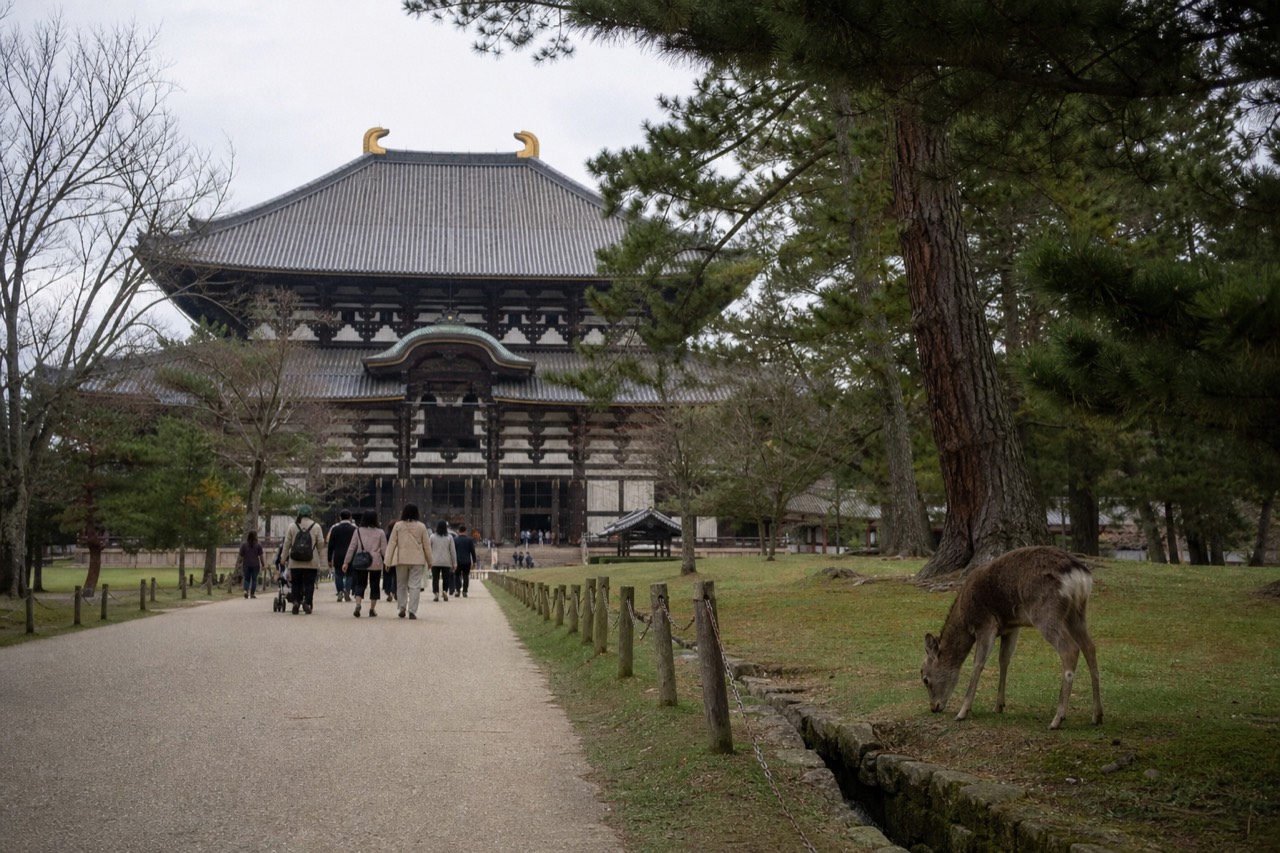
Yes, for almost every visitor. The Daibutsuden is one of the largest wooden buildings on earth, it holds a bronze Buddha, about 15 metres tall, seated since 752, and the adult ticket is 800 yen, cash only. The view from the outside lawn is free and genuinely superb, but it is a view of a wall; the scale, the pillars and the statue only exist on the paid side of the gate.
That is the short answer. The longer answer depends on what you already know about the building, because Todai-ji rewards context in a way few temple tickets do. A visitor who walks in cold sees a very big statue in a very big room. A visitor who arrives knowing that the hall standing today is a deliberately shrunken 1709 rebuild, two-thirds the width of the original, reads the same room completely differently.
Todai-ji publishes its hours and dimensions plainly, so the figures below are easy to check: the admission and hours come straight from the temple's information page, and the hall's dimensions and history from its page on the Great Buddha Hall.
There is also a practical reason the question comes up so often. Todai-ji sits inside Nara Park, where the headline attraction, the free-roaming deer, costs nothing at all. That framing makes any temple ticket feel like an upsell, and it is exactly the wrong frame: the park and the hall are not competing products, they are two halves of the same visit. The deer are outside, wandering and free; the hall is the still centre that explains why the deer, the shrine and the whole eastern edge of Nara exist where they do.
Before the detail, one framing worth settling: if you are touring Kansai rather than living in it, a coach day tour that already includes Todai-ji among its stops removes the ticket queue, the cash-only problem and the station-to-park walk in one stroke. The three options below are the ones worth comparing.
What does the 800 yen ticket actually include?
Entry to the Daibutsuden only, for one visit, during opening hours. It does not include the Hokke-do, the Kaidan-in or the Todai-ji Museum, which each charge separately at the same rate, and it does not include the 500 yen audio guide, which is rented just past the ticket gate. There is a 1,200 yen set ticket covering the Daibutsuden plus the Museum, sold to junior high ages and above.
The separate-charge structure surprises people. Todai-ji is not one site with one gate; it is a cluster of buildings, each with its own window. The temple publishes the full scale on its admission page, and the essentials look like this.
| Ticket | Adult | Notes |
|---|---|---|
| Daibutsuden | 800 yen | The main hall and Great Buddha; groups of 30+ pay 700 yen |
| Hokke-do (Sangatsu-do) | 800 yen | Same fee scale, separate window |
| Kaidan-in Kaidando | 800 yen | Same fee scale, separate window |
| Todai-ji Museum | 800 yen | Combined with the hall for 1,200 yen |
| Set ticket, Daibutsuden + Museum | 1,200 yen | Junior high and above; elementary 600 yen |
| Audio guide | 500 yen | 9 languages, 30 minutes, desk 15 m past the ticket gate |
Payment is cash only, stated plainly on the temple's own page, and that catches a lot of visitors who have gone cashless for the day. The 7-Eleven and Japan Post ATMs that accept foreign cards are the usual fallback if you arrive with an empty wallet; there are convenience stores within walking distance of Nara Park. Hours are seasonal: the Daibutsuden runs 07:30 to 17:30 from April to October and 08:00 to 17:00 from November to March. No advance booking is accepted, and none is required.
The age bands matter more than you might expect on a family trip. Elementary-age children pay 400 yen for the Daibutsuden and 200 yen in a group of 30 or more, so a family of two adults and two young children is looking at roughly 2,400 yen for the hall alone, or 3,000 yen with the Museum added on the set ticket. The temple charges university students and above the full adult rate, so a student ID does not help here the way it does at some European attractions.
One thing the ticket does not buy is the Nara Park deer experience, because that is free and outside the gate entirely. If your day is really about the park rather than the temple, the planning piece on how many hours to spend at Nara Park covers the trade-offs.
For travellers building the whole day around Kyoto and Nara, the guided option deserves a look before you buy individual tickets: the tour below covers the admissions at Todai-ji's neighbourhood stops with a licensed English-speaking guide and the coach between cities, from $191.65 per adult.
How big is the hall, and why does the size matter?
The present Daibutsuden measures 57.012 metres east to west, 50.480 metres north to south and 48.742 metres high, which the temple publishes to the centimetre. What makes those numbers electric is that the original Tenpyo-era hall was about 88 metres wide; the 1709 rebuild cut it to seven bays, roughly two-thirds of the original width, to save money, while keeping the original height and depth.
So the awe you feel standing inside is the shrunken version. The hall that held the eye-opening ceremony in 752, and its Kamakura-period successor, were both eleven bays wide. When the temple rebuilt after fire in the Edo period, the funds only stretched to seven. A building that still ranks among the largest wooden structures in the world, and it is the compromise build.
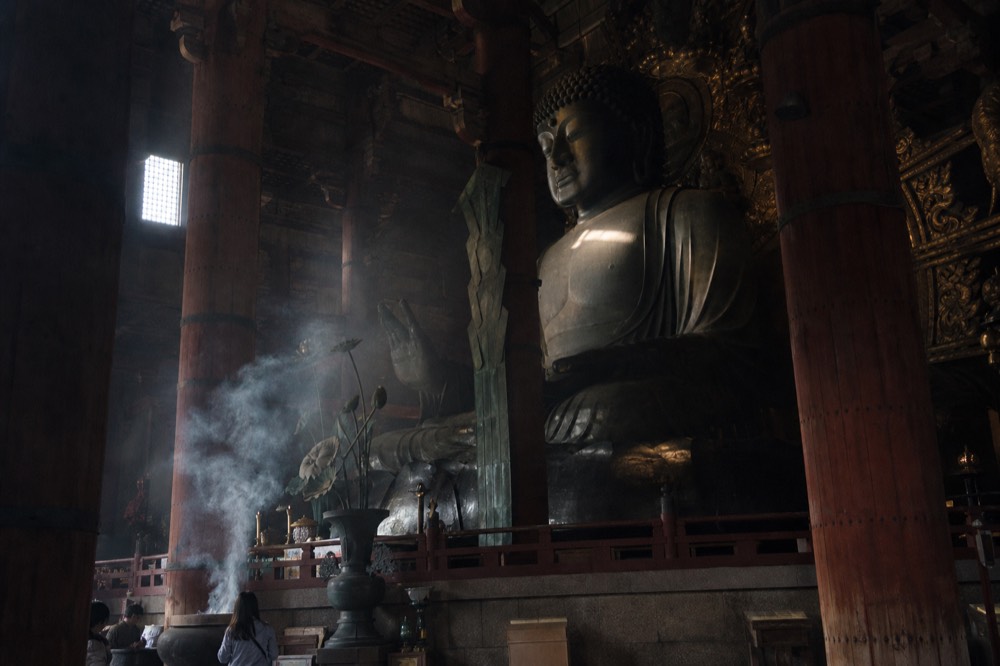
The seated Great Buddha inside rises about 15 metres, a figure not given on the temple's own pages, commonly given as about 15 m, so treat it as a rough figure. The statue has survived earthquakes, fires and a dismantling during the Meiji era's anti-Buddhist turbulence; the head has been recast more than once, and the lotus pedestal and shoulders carry work from different centuries. You do not need to know which parts are which to feel the layered age of it, but the temple's history page rewards anyone curious enough to check.
The 1,200 yen set ticket starts making sense here. The Todai-ji Museum, a short walk across the precinct, holds the temple's treasures, including objects that were originally inside the hall, and seeing them before or after the Daibutsuden deepens both. If your budget stretches to 1,200 yen and you have an extra 45 minutes, the set is the better buy.
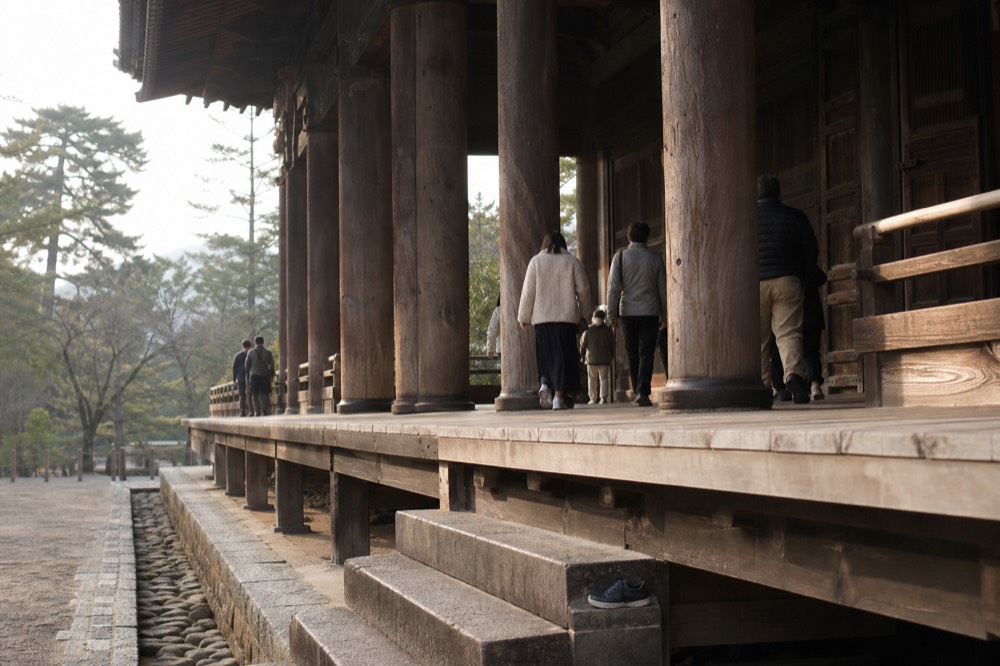
The interior also holds guardians worth slowing down for. Flanking the Great Buddha are two Bodhisattvas, and near the eastern wall stands a guardian figure whose wooden bulk makes the crowds part around it. None of this is roped-off background; you walk among the pillars on the hall's outer walkway, close enough to the joinery to see how the great timbers were fitted. Photography is tolerated without flash, and the light through the open doors in the morning is the reason the first hour is the best hour.
Is the outside view enough if you are short on time?
Honestly, no, and this is the one myth worth puncturing. The free exterior view is a magnificent photograph of a wall; the interior is a 48.742 metre-high room around a 14.98 metre bronze figure that has anchored this site since 752. People who skip the inside to save 800 yen are not saving much of anything, because the outside and inside are different experiences, not versions of the same one.
The famous exterior shots, the ones with deer grazing in the foreground and the massive hipped roof behind, are taken from the lawn before the steps. That view costs nothing, and on a rushed itinerary it is a legitimate stopping point. But you are looking at a facade whose doors are usually shut partway, and the scale reads as "large temple" rather than "impossible building".
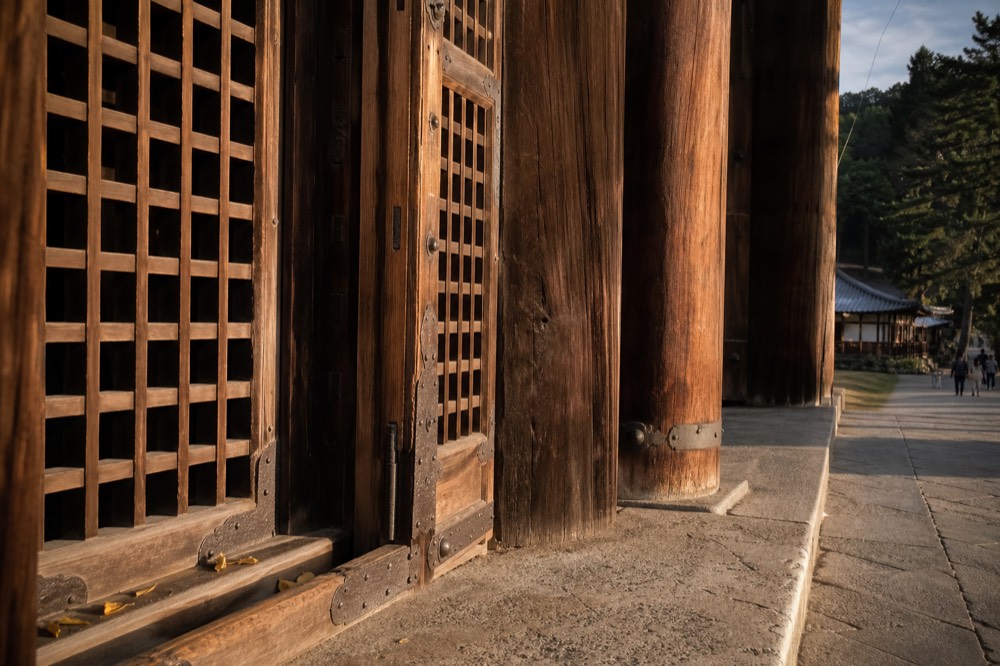
Inside, the scale reads differently because your eye has something to climb. The pillars are the thickness of old trees because they are old trees. The statue's head is roughly level with a four-storey building. There is a pillar with a hole at its base, famously the same size as the Buddha's nostril, that children queue to squeeze through; whether that is folklore-adjacent fun or a genuine draw depends on your party, but it only exists on the paid side.
The realistic minimum inside is 20 to 30 unhurried minutes, more if you take the audio guide or the Museum. Anyone weighing a whole Nara itinerary around this decision may find the wider guide to things to do in Nara useful, or the deeper background in our Todai-ji temple guide.
When is inside worth it less?
A handful of situations genuinely weaken the case. If you arrive mid-holiday-crush, the hall fills shoulder to shoulder and the scale is harder to feel. If you have already seen another great temple hall that day, fatigue is real and 800 yen buys less delight. And on a half-day dash from Kyoto, the calculus shifts to what you must cut elsewhere.
On crowds: the Daibutsuden is at its calmest in the first hour after opening, 07:30 from April to October, 08:00 from November to March, and in the last hour before closing. Mid-morning through mid-afternoon is the peak, and the queue at the ticket window can add 15 minutes or more in high season. Because payment is cash only, the queue also moves slower than a card-accepting one would.
On temple fatigue: Nara's other headline temples charge too, and the costs stack. Kofuku-ji, just back towards Kintetsu Nara Station, sells a 1,600 yen combined ticket across its Central Golden Hall, Eastern Golden Hall and National Treasure Museum, and its famous Five-Storied Pagoda is currently invisible inside a roughly 60 metre steel shroud that will stay up until March 2034. Anyone planning a multi-temple day should budget admissions before leaving the hotel, not at the second ticket window. A simple rule of thumb: one paid interior per half-day, and let the free grounds carry the rest.
On the half-day dash: if your train back to Kyoto leaves within four hours of arrival, you will be choosing between the Daibutsuden, Kasuga Taisha and time with the deer. The deer and the shrine grounds are free; the Daibutsuden is the one item on that list that costs money, and it is still the item most people remember a year later. Kasuga Taisha's own special worship fee, for comparison, is 700 yen, and its outer grounds cost nothing, so a tight budget can spend on the hall and still see a great deal of Nara.
How the guided-tour option changes the arithmetic
A licensed guide turns the 800 yen question into a different question: what is context worth? The hall's dimensions, the 1709 rebuild, the nostril pillar and the recast head are all written down, but a good guide places them while you are standing in the room, and on a coach itinerary the admissions, transport and timing are already solved.
That is the case for the organised day tour, and on this site's roster the relevant product is the Kyoto and Nara Day Tour, operated by JTB Sunrise Tours and rated 4.8 from 32 reviews. It runs Kyoto mornings through Nijo Castle, Kinkaku-ji and the Kyoto Imperial Palace, then coaches to Nara for Kasuga Taisha and Todai-ji with Nara Park, from $191.65 per adult. The Kyoto departure meets at 08:20.
Two caveats worth repeating from the tour's own reviews. The itinerary does not include Fushimi Inari, Kiyomizu-dera or Arashiyama; those are Kyoto stops for another day. And the included lunch, on the options that carry one, has drawn the weakest reviews of any element of the product across multiple years, which is why the no-lunch options at the lower price point are often the smarter buy: eat in Nara, near the park, where the food the city is actually known for is a short walk from the coach.
There is also the Osaka question. Three of the six tour options depart from Osaka at 07:15 and end at Osaka Namba rather than returning to Kyoto, which suits travellers basing themselves in the bigger city. The road transfer between Kyoto and Nara runs about 60 to 80 minutes each way depending on traffic, and an Osaka pickup adds roughly 30 to 60 minutes to each end, so the day is long either way. Whether you assemble the itinerary yourself or let the coach do it, the honest comparison site for that decision is Kyoto Nara Day Tour, where every option on this single product is laid out side by side.
The short version of everything above: yes, go inside. The 800 yen cash ticket buys the interior of one of the largest wooden buildings on earth and a bronze Buddha seated since 752; the set ticket adds the Museum for 1,200 yen; the calmest hour is the first one after opening. The questions below cover the details people ask most.
Common questions about going inside Todaiji
Is it worth going inside Todaiji?
For almost everyone, yes. The 800 yen cash ticket admits you to one of the largest wooden buildings in the world, holding a 14.98 metre bronze Buddha consecrated in 752. The free exterior view is a fine photograph but the interior scale, pillars and statue exist only on the paid side of the gate.
How much does it cost to go inside Todai-ji?
The Daibutsuden adult ticket is 800 yen, cash only. The same fee applies separately to the Hokke-do, the Kaidan-in Kaidando and the Todai-ji Museum, and a 1,200 yen set ticket covers the Daibutsuden plus the Museum.
What are Todai-ji's opening hours?
The Daibutsuden is open 07:30 to 17:30 from April to October and 08:00 to 17:00 from November to March, with no closing days barring special rites or emergencies. No advance booking is accepted or required.
Can you pay by card at Todai-ji?
No. The temple states on its own admission page that payment is cash only. Bring yen; 7-Eleven and Japan Post ATMs accept foreign cards if you need to withdraw.
How long do you need inside the Great Buddha Hall?
About 20 to 30 unhurried minutes, longer with the 500 yen audio guide or if you add the Todai-ji Museum on the 1,200 yen set ticket.
Is the Todai-ji Museum worth adding?
If you have an extra 45 minutes and 400 yen over the single ticket, yes. The set ticket costs 1,200 yen against 1,600 for both bought separately, and the Museum holds treasures originally kept in the hall.
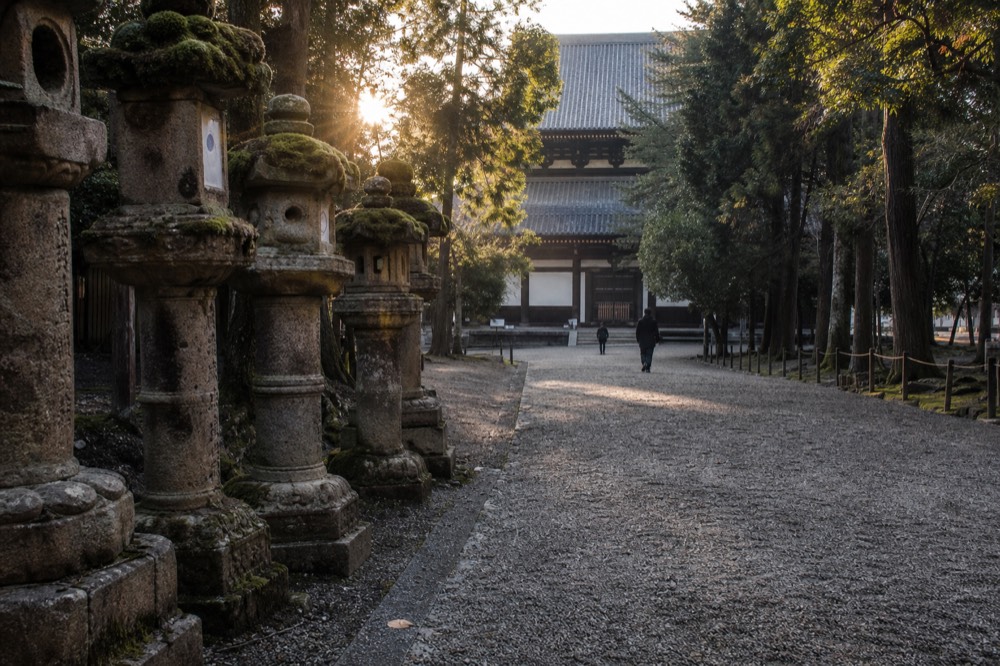
The verdict, restated plainly: the exterior is free and you should see it regardless; the interior is 800 yen in cash and it is where the actual wonder is. Whether you go alone in the first hour after opening or let a licensed guide place the 1709 rebuild and the recast head into context while the coach handles the distances between cities, going inside is the part of a Nara day that justifies the trip. If the guided route appeals, the options below cover the same six stops with and without lunch, from Kyoto or from Osaka.