Todai-ji Temple Nara: Great Buddha Hall Facts, Fees and Hours
Todai-ji's Great Buddha hall is vast by any measure, yet almost every number printed about it online is wrong. Here is what the temple itself publishes: dimensions, dates, fees and hours.
Short answer
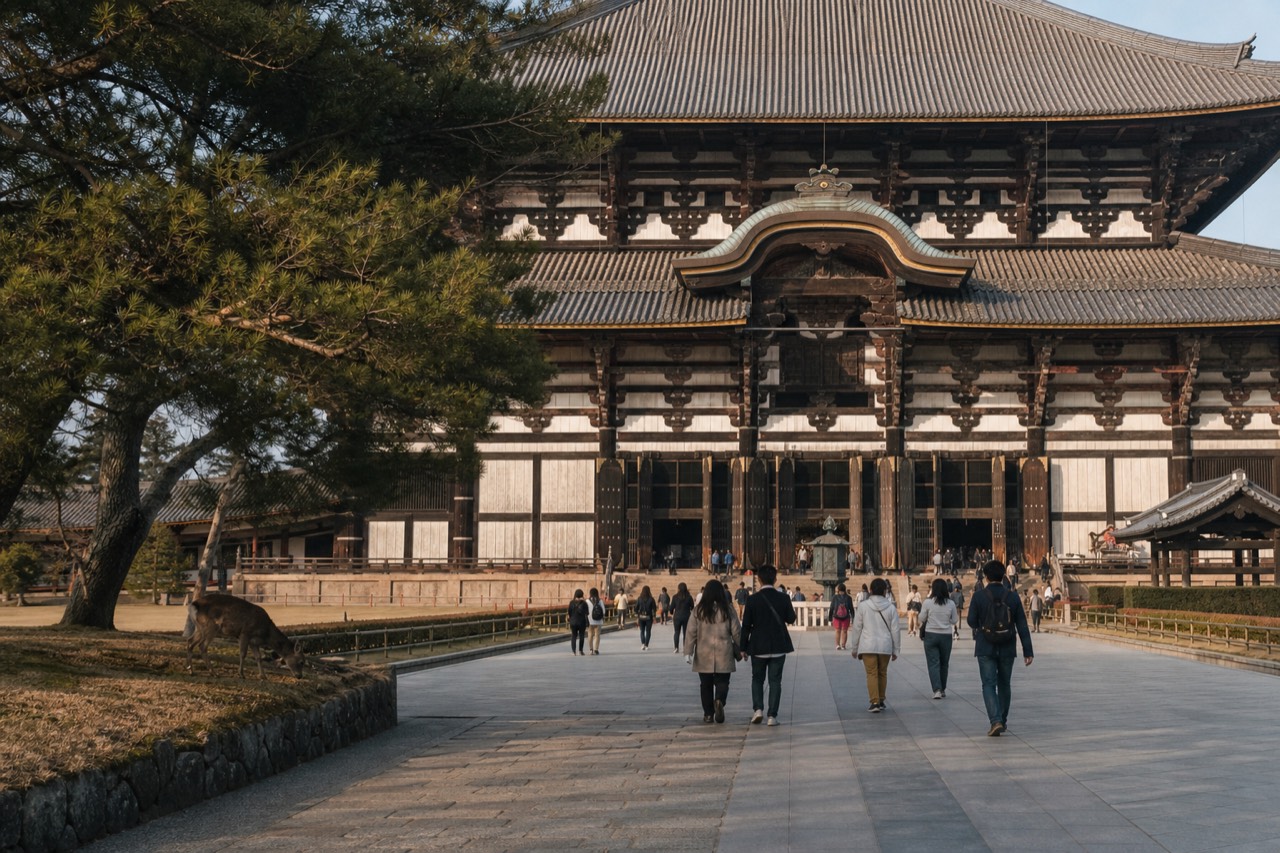
Todai-ji's Daibutsuden measures 57.012 m east-west by 50.480 m north-south and 48.742 m high. Adult admission to the Great Buddha hall is 800 yen, cash only, and a hall plus museum set ticket costs 1,200 yen. The hall opens 07:30-17:30 April to October and 08:00-17:00 November to March.
The eye-opening ceremony for the Great Buddha took place in 752, and the hall standing on the site today is only the most recent of several rebuilds, dedicated in 1709 at a deliberately reduced scale. Todai-ji publishes its own numbers: the present hall's dimensions, the fee schedule for four separately ticketed buildings, seasonal opening hours and a cash-only payment rule that catches a remarkable number of visitors out. This guide sets out all of it, from the temple's own pages, and adds the practical context a day-tripper needs: how long a visit takes, how the Nara Park deer fit around it, and how the hall connects to the wider Kyoto Nara Day Tour circuit.
How big is the Todai-ji Great Buddha hall?
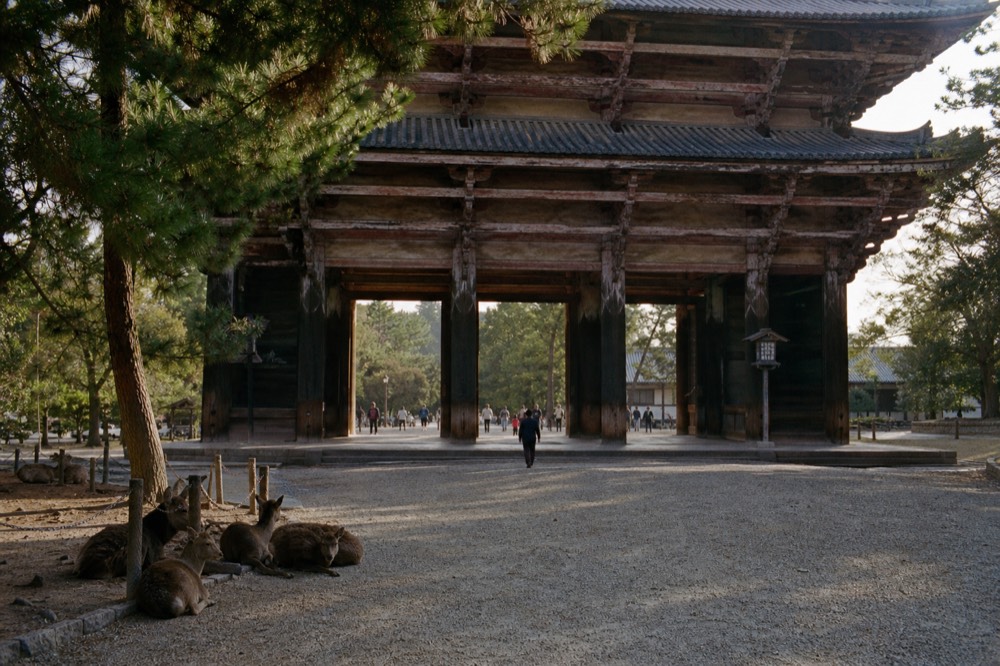
The present Daibutsuden, the Great Buddha hall, measures 57.012 metres east to west, 50.480 metres north to south and 48.742 metres high, dimensions Todai-ji prints on its own English-language page for the hall. It is routinely called the world's largest wooden building, and the numbers behind that claim are exact to the millimetre. What the temple does not print is the statue's height, which live-search sources give as 14.98 metres.
Those three hall dimensions come straight from the temple's own site, so they are the figures to quote when a guidebook or blog rounds them loosely. The depth figure, 50.480 metres, is the one most often garbled online, sometimes inflated to match the older halls that once stood here.
The history matters as much as the size. The eye-opening ceremony for the Great Buddha, the ritual that consecrated the statue, was held in 752, in the fourth month of Tenpyo-shoho 4. That ceremony is the founding moment people mean when they call Todai-ji an eighth-century temple. But the hall burned and was rebuilt repeatedly, and the building you walk into today was dedicated in 1709, the sixth year of Hoei, rebuilt under the priest Kokei.
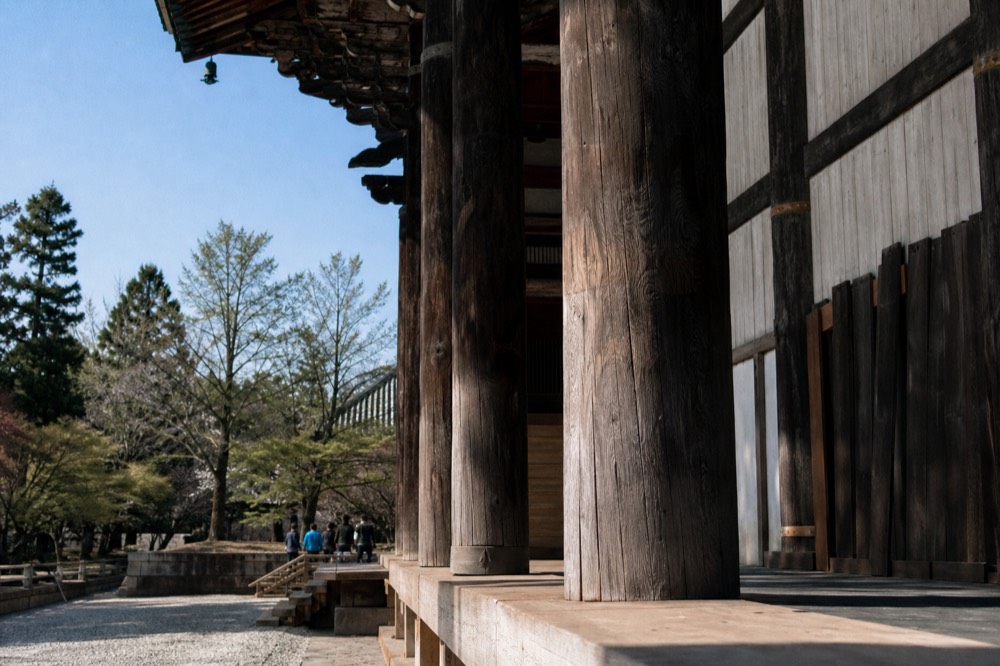
The most quietly interesting number is the one that shrank. The Tenpyo and Kamakura-era halls were eleven bays wide, about 88 metres. When the temple rebuilt after its latest fire, in the Edo period, it cut the hall to seven bays to save money, while keeping the original height and depth. So the "largest wooden building" you visit is a cost-reduced version of what stood here before, roughly two-thirds the frontage, and still the biggest surviving.
| What | Number | Source status |
|---|---|---|
| Hall width, east-west | 57.012 m | Temple's own page |
| Hall depth, north-south | 50.480 m | Temple's own page |
| Hall height | 48.742 m | Temple's own page |
| Earlier hall width | about 88 m, 11 bays | Temple's own page |
| Eye-opening ceremony | 752 | Temple's own page |
| Present hall dedicated | 1709 | Temple's own page |
| Great Buddha height | 14.98 m | Live search, not on the pages read |
For readers deciding how Todai-ji fits a single day alongside Kyoto, the temple is one of the fixed stops on the region's standard full-day coach circuit, and the hall is the architectural anchor of any Nara visit. The Kyoto to Nara transport options matter mainly for getting here; the hall itself rewards the slow lap, because the scale only registers from the back corners.
What buildings can you actually enter at Todai-ji temple?
Todai-ji charges separately for four buildings: the Daibutsuden (the Great Buddha hall), the Hokke-do (also called Sangatsu-do), the Kaidan-in's Kaidando, and the Todai-ji Museum. There is no single all-in ticket. The only set ticket the temple sells pairs the Daibutsuden with the Museum at 1,200 yen for adults, a 400 yen saving on buying both individually.
That structure surprises people. Many visitors assume one ticket covers the temple, walk the free outer approach, and discover the four gates lead to four separate cash windows. The Hokke-do is the oldest surviving building on the temple's grounds, predating the Great Buddha hall itself. The Kaidando is the ordination hall. The Museum holds the temple's treasures and, for many repeat visitors, is the quietest and most rewarding of the four.
Each of the four charges the same 800 yen adult rate, with reductions for high school, junior high and elementary visitors and for groups of 30 or more. The set ticket is the only arithmetic worth doing at the window: if you plan to see both the hall and the Museum, and most people with two hours or more should, ask for the combined ticket by name.
Payment at all of them is cash only, stated plainly on the temple's own admission page, the official Todai-ji guide to the halls. Japan is far from cashless at temple gates, and Todai-ji is emphatically part of that older economy. 7-Eleven and Japan Post ATMs accept foreign cards, so the fix is simple, but it needs to happen before you reach the gate, not at it.
A guided coach day bundles the admissions differently, of course. On the Kyoto and Nara day tour operated by JTB Sunrise Tours, the coach, a licensed English-speaking guide and the day's admissions are arranged as one package, which removes both the cash scramble and the queueing from the equation.
The trio above covers the two most common formats: a Kyoto departure with lunch included, the same departure without lunch at a lower price, and an Osaka morning departure for travellers basing themselves there. The specifics of each option are worth a moment before booking.
How much does Todai-ji temple cost to visit?
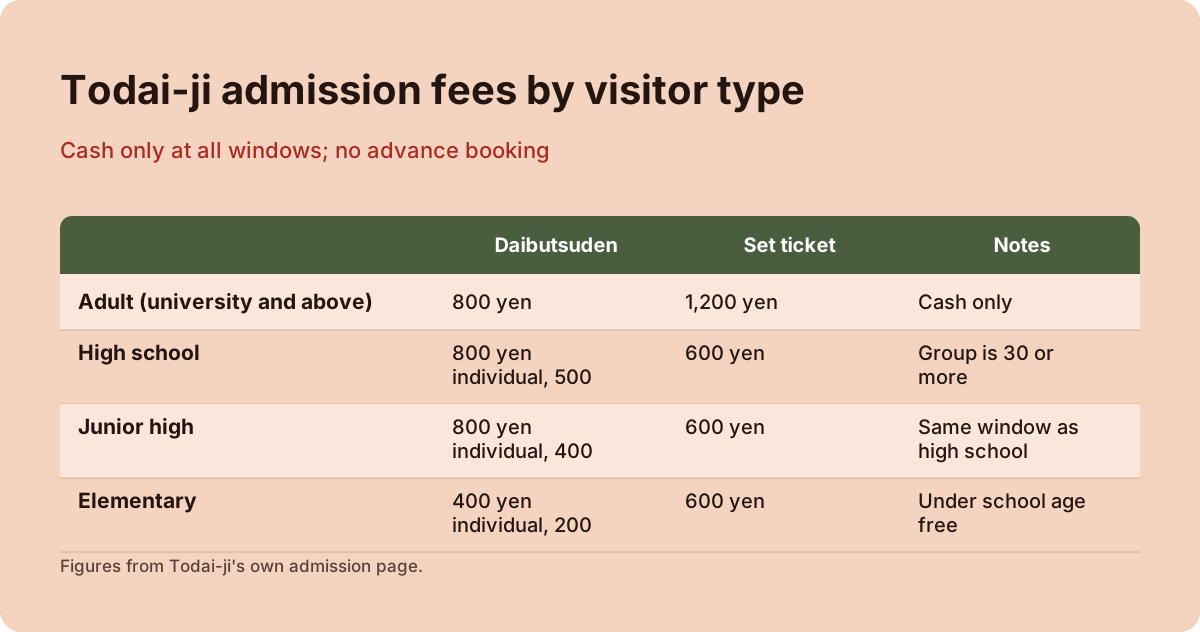
An adult pays 800 yen to enter the Daibutsuden, 800 yen each for the Hokke-do, the Kaidando and the Museum, or 1,200 yen for the Daibutsuden plus Museum set ticket. Elementary-age children pay 400 yen for the hall. Every one of those windows takes cash only, and the temple accepts no advance booking, which it also states is not required.
The full fee scale, read off the temple's own table:
| Visitor | Daibutsuden | Set ticket, hall + museum | Notes |
|---|---|---|---|
| Adult (university and above) | 800 yen | 1,200 yen | Cash only |
| High school | 800 yen individual, 500 group | 600 yen | Group is 30 or more |
| Junior high | 800 yen individual, 400 group | 600 yen | Same window as high school |
| Elementary | 400 yen individual, 200 group | 600 yen | Under school age free |
Two practical notes. First, the set ticket at 1,200 yen is sold for the Daibutsuden and the Museum together; if you buy the hall alone and change your mind at the museum gate, you pay full price for the second. Second, no advance booking exists at all for individuals, and none is needed; group bookings are likewise not accepted and not required. You simply turn up, with yen.
The cash-only point deserves its own sentence because it is the single most common snag reported by foreign visitors: Todai-ji and Kofuku-ji both state on their own pages that admission is cash only, so plan the wallet for both, since most Nara itineraries take in the two temples in one walk. If you are totting up a Nara day, our Nara Park tickets and fees guide breaks down every charge in the park in one table.
Is a guided day better value than doing this solo? It depends on the day. The arithmetic of admissions, trains and time is genuinely close for a Kyoto-Nara round trip, and the fixed-fee structure at the temples means a tour's main saving is queueing and logistics rather than money.
What are Todai-ji's opening hours?
The Daibutsuden opens 07:30 to 17:30 from April to October and 08:00 to 17:00 from November to March. The Hokke-do and Kaidando keep shorter hours, 08:30 to 16:00 all year, and the Museum runs 09:30 to 17:30 in the warm half of the year and 09:30 to 17:00 in the cold half, with last entry half an hour before closing in each season.
The temple publishes no closing days at all, barring special rites or emergencies, which makes Todai-ji one of the most dependable openings in Japanese temple-visit planning. Compare that with city-run sites: Nijo Castle in Kyoto, for example, runs scheduled closure days and now requires an advance web ticket for its Honmaru Palace, released only 30 days ahead.
| Building | April to October | November to March |
|---|---|---|
| Daibutsuden (Great Buddha hall) | 07:30-17:30 | 08:00-17:00 |
| Hokke-do and Kaidando | 08:30-16:00 | 08:30-16:00 |
| Todai-ji Museum | 09:30-17:30, last entry 17:00 | 09:30-17:00, last entry 16:30 |
| Closing days | None barring special rites | None barring special rites |
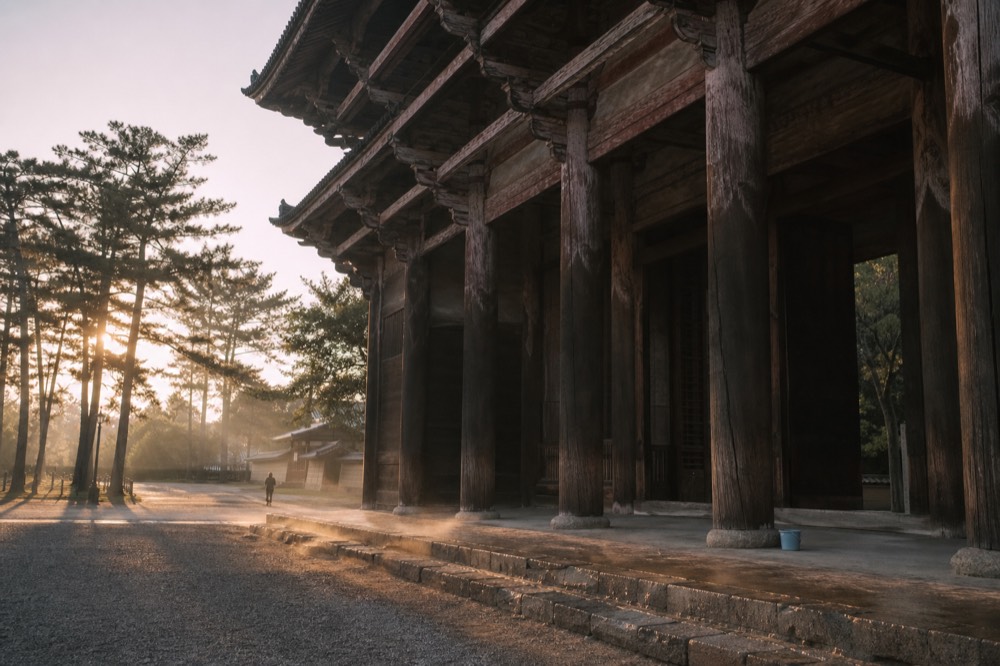
The morning opening is a gift in high season. A 07:30 start at the hall, in the months when it applies, puts you inside before the coach parties arrive, and the light through the eastern doors in the first hour is what most photographs of the interior are really about. By mid-morning the hall's front bay is a crowd corridor.
Season matters for the wider visit too. Kyoto's official maple-colouring date, recorded by the local meteorological observatory, is normally 5 December, and it was 10 December in 2025, a December phenomenon rather than the mid-November folklore that circulates. The same observatory records cherry flowering at Kyoto on 23 March 2026 and full bloom on 30 March, against a 1991-2020 normal of 26 March and 4 April. Early April is therefore the strongest single window for a Todai-ji visit with blossom, and the first week of December for colour.
What is inside the Great Buddha hall?
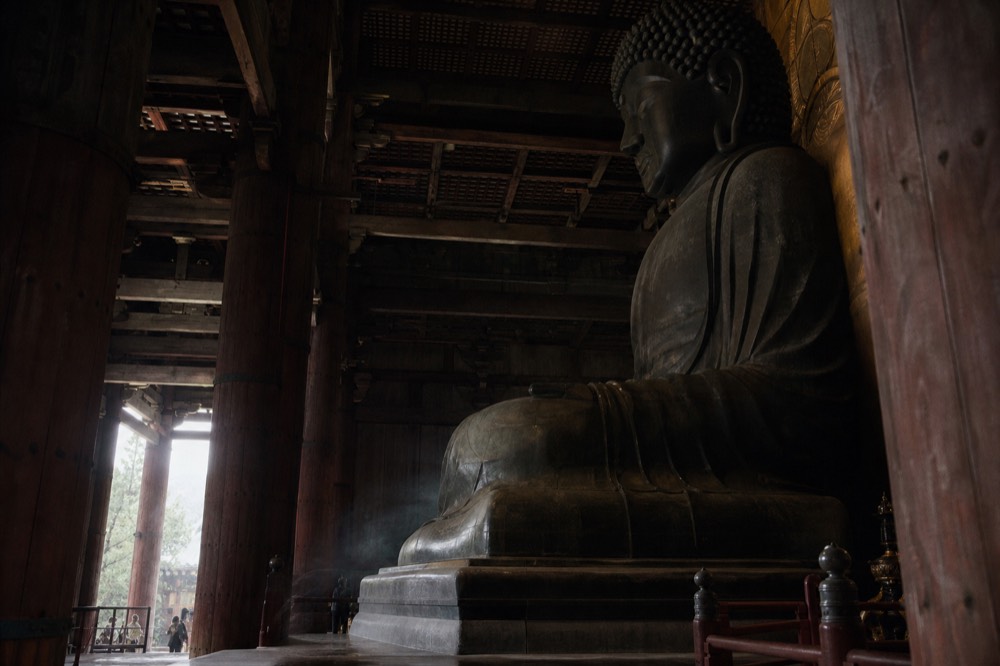
Inside the Daibutsuden sits the Great Buddha, a seated Vairocana whose height live-search sources place at 14.98 metres, flanked by two bodhisattvas, with a famous pillar at the rear pierced by a hole sized to match the statue's nostril. The temple rents audio guides at 500 yen per person, in nine languages, for a 30-minute tour collected 15 metres past the ticket gate.
The statue's height is the one headline number the temple's own English pages do not print, so treat 14.98 metres as widely reported rather than officially published, in contrast to the hall's millimetre-exact dimensions. What the temple does publish is the audio guide arrangement: 500 yen, nine languages, 30 minutes, with the collection desk operating 10:00-17:00 from April to October and 10:00-16:30 from November to March.
The nostril pillar deserves its reputation. Children squeeze through it; adults mostly do not, and trying is a rite of passage that has bent many a shoulder. The belief attached to it, that passing through brings enlightenment in a future life, is a folk gloss rather than doctrine, but the queue for it is real and forms by late morning.
The interior is dimmer and quieter than the postcards suggest, and the hall's rear corners give the truest sense of its scale. Walk the full circuit. The raised section behind the statue often holds a secondary display, and the two guardian figures flanking the Buddha, though damaged and restored across centuries, are the composition most visitors photograph second.
For depth on the treasures, the Todai-ji Museum next door holds the temple's collection, and the 1,200 yen set ticket covers both. Repeated visitors tend to rank the Museum above the two secondary halls, and the Hokke-do, the oldest building on the grounds, above the Kaidando.
How long should you spend at Todai-ji?
A focused visit to the Daibutsuden alone takes 45 minutes to an hour, and a fuller visit adding the Museum and one secondary hall comfortably fills two to two and a half hours. Most full-day Kyoto-plus-Nara itineraries allot roughly an hour here, which is enough for the hall and the great south gate, but not the Museum.
The hall's interior rewards the second lap. First-time visitors tend to walk straight to the Buddha, take the nostril pillar photo and leave; the people who circle the flanking statuary and read the rebuild history, or take the audio guide, consistently report the visit as twice as worthwhile for an extra half hour.
Time of day matters more than season. The 07:30 opening, in the April-to-October window, gives a near-empty hall for the first hour. Midday brings the coach waves, which thin again after 15:00. The Museum's last entry, 17:00 in the warm season, means a late-afternoon arrival can still work the hall first and the museum second, in that order, comfortably.
For context on the wider day, our piece on how much time a Nara day trip needs works through the same arithmetic for the park as a whole, and the things to do in Nara guide places Todai-ji in the fuller circuit with Kofuku-ji, Kasuga Taisha and Naramachi.
How do you get to Todai-ji temple?
From Kintetsu Nara Station the walk to the Todai-ji area takes about 5 to 8 minutes, and from JR Nara Station about 15 to 25 minutes, both figures from standard transport planning sources. From Kyoto, the JR Miyakoji Rapid covers the line to Nara in roughly 45 minutes, running about every half hour, and the Kintetsu limited express does it in around 35 minutes for a higher fare.
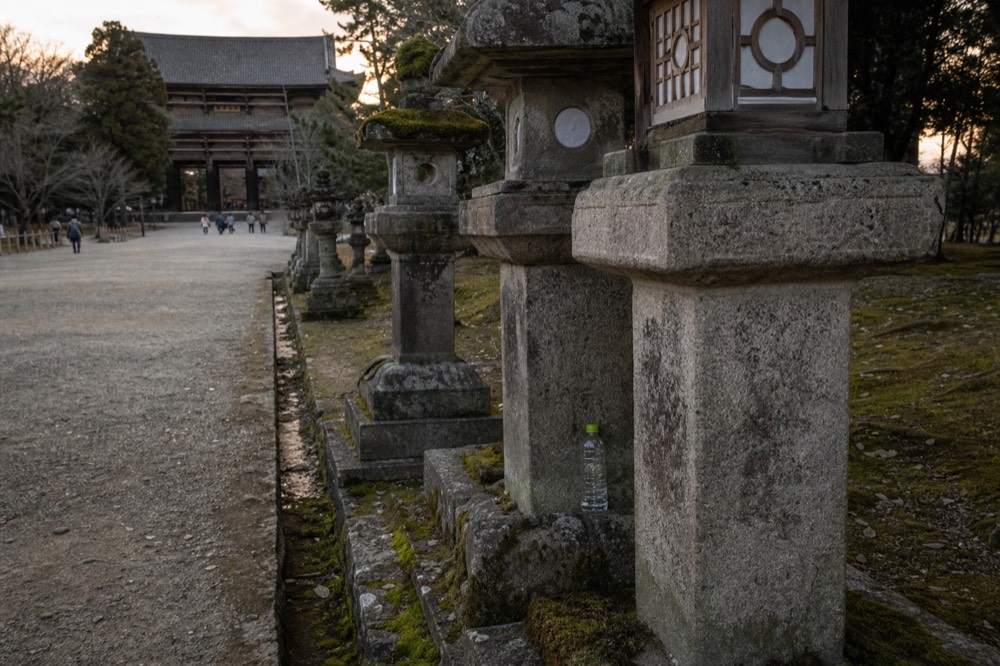
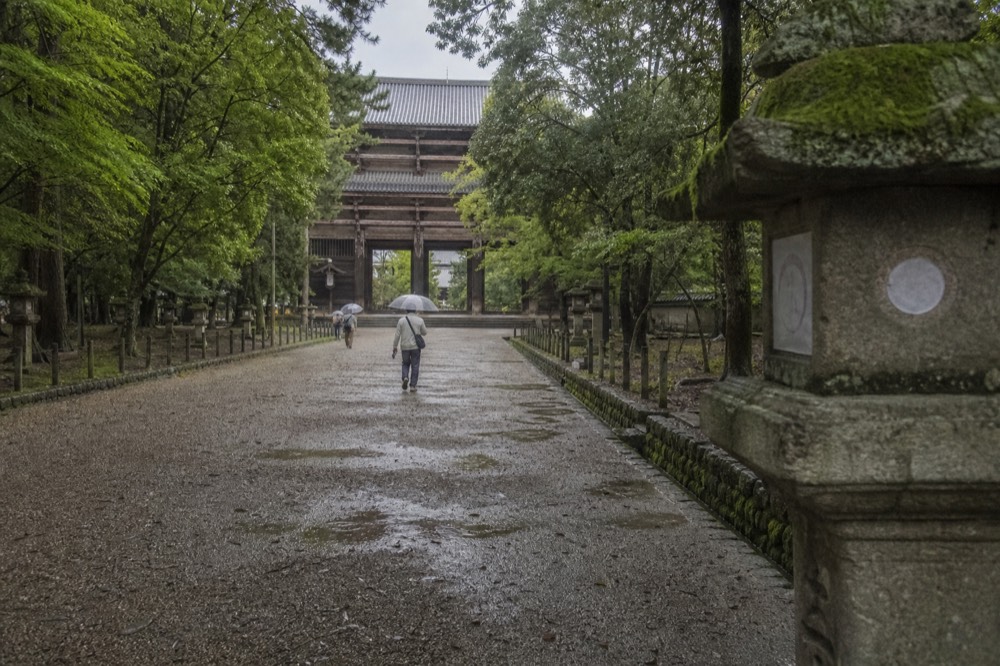
The station choice shapes the whole walk. Kintetsu Nara drops you a few steps from Kofuku-ji and the park edge, and the approach to Todai-ji then runs through the deer territory of Nara Park, past the pond. JR Nara adds ten to fifteen minutes of walking but the Miyakoji Rapid from Kyoto is a comfortable reserved-free ride.
| Route | Time | One-way fare | Notes |
|---|---|---|---|
| Kyoto to Nara, JR Miyakoji Rapid | about 45 min | about 720 yen | Roughly every 30 min |
| Kyoto to Nara, JR local | about 60-75 min | about 720 yen | Slower, same line |
| Kyoto to Nara, Kintetsu express | about 45 min | about 760 yen | No surcharge |
| Kyoto to Nara, Kintetsu limited express | about 35 min | about 1,280 yen incl. 520 yen surcharge | Seated, reserved |
| Kintetsu Nara Station to Todai-ji | about 5-8 min walk | free | Through the park edge |
| JR Nara Station to Todai-ji | about 15-25 min walk | free | Longer approach |
Fares on these lines should be treated as approximate; they are consistent across transport sources but neither operator's own fare search publishes them in a plainly readable form, and fares change. The Japan Rail Pass covers the JR Nara Line including the Miyakoji Rapid, but not Kintetsu.
The alternative to all of this is the coach. A full-day guided tour from Kyoto covers Nijo Castle, Kinkaku-ji, the Kyoto Imperial Palace, then Nara's Kasuga Taisha and Todai-ji with Nara Park, in roughly about 10.5 hours from Kyoto, door to door, with the Kyoto to Nara road leg taking about 60 to 80 minutes each way depending on traffic. For travellers who want the day's admissions, guiding and transport solved at once, that format is the reason it exists.
The no-lunch version of that same Kyoto departure is the cheapest way onto the coach at $191.65, and since the included lunch is the listing's weakest element by its own reviewers' accounts, in 2015, 2017 and again in 2025, skipping it and eating in Nara near the park is a defensible plan.
Todai-ji and the Nara Park deer: what to know before you walk in
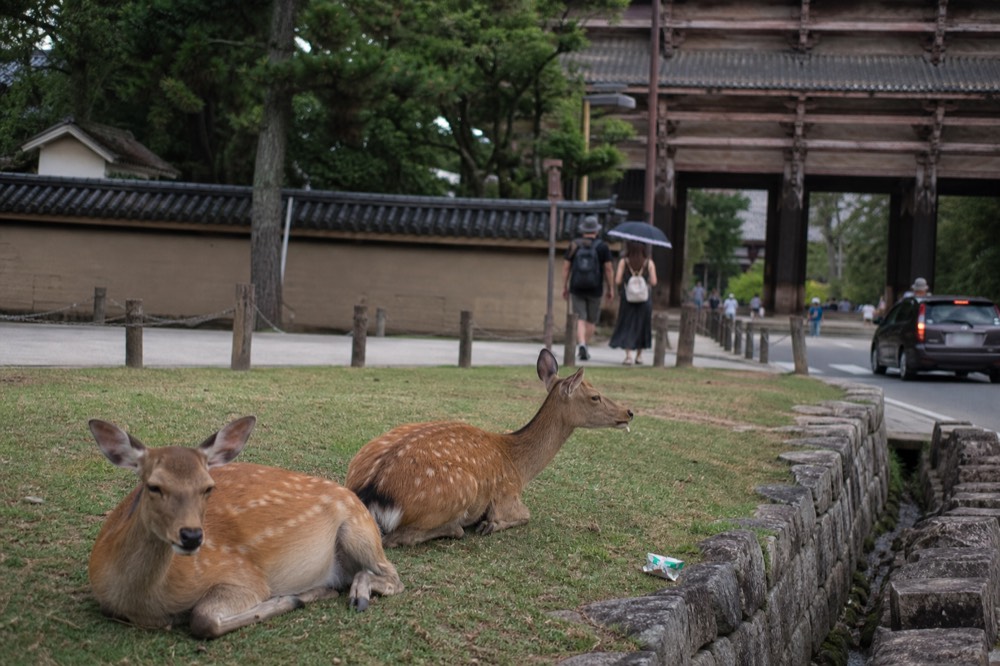
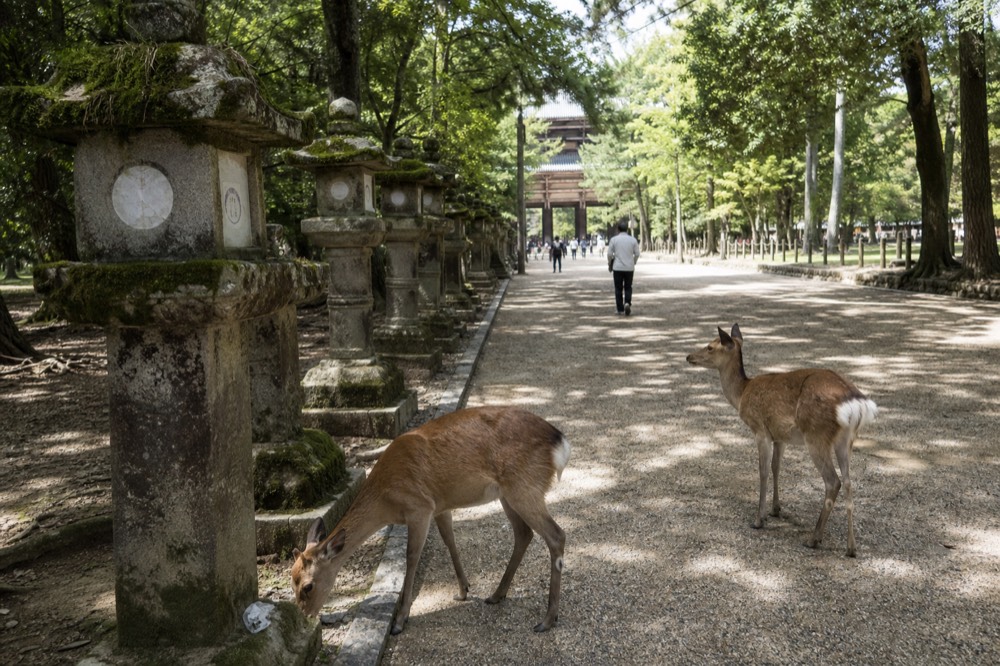
The deer around Todai-ji are wild animals, protected as a National Natural Monument, and the Nara Deer Preservation Foundation counts 1,687 of them in the park as of the July 2026 census, a rise of 222 on the previous year. Feed them nothing except shika senbei, the licensed crackers sold at about 200 yen a bundle, and hand a cracker over fast rather than teasing.
The census is the foundation's own published number, counted by staff and volunteers with the shrine, the prefecture and local universities over the mornings of 15 and 16 July 2026. The cracker price, by contrast, is a live-search consensus rather than an official figure, so treat it as approximate.
Two seasons need extra care, both from the foundation's own guidance: mid-May through June is calving, when does with a newborn turn aggressive if approached, and September to November is the rut, when stags, including ones whose antlers have been cut, must not be approached. June and November are the foundation's designated deer-protection months.
The walk from Kintetsu Nara to Todai-ji runs straight through this, which is most of its charm and all of its caution. The rules fit on a postcard: feed only the crackers, hold nothing in a closed fist, keep distance from any deer that stamps or lowers its head, and give older visitors and small children extra space, per the foundation's official safety guidance. Our fuller Nara deer park guide covers the etiquette in detail.
Todai-ji versus Kofuku-ji: which Nara temple first?
Todai-ji's Daibutsuden is the bigger draw and the one to see first on a short visit, but Kofuku-ji, five minutes from Kintetsu Nara Station, sells a 1,600 yen combined ticket covering its Central Golden Hall, Eastern Golden Hall and National Treasure Museum. Be aware that Kofuku-ji's Five-Storied Pagoda is fully enclosed in a roughly 60 metre steel shroud until March 2034.
The pagoda point is worth repeating because it invalidates a lot of older itineraries: the temple's own restoration project states the pagoda, about 50 metres tall and Japan's second-tallest surviving wooden pagoda, is completely enclosed under a cover finished in March 2025, with completion scheduled for March 2034. Any photograph showing it as a photo op is a pre-2025 image.
The sequencing decision is simple in practice. Coming from Kintetsu Nara you pass Kofuku-ji first, so a short stop there on the way in, then the park walk to Todai-ji, then Kasuga Taisha, makes a natural loop. If time is tight, skip Kofuku-ji's interiors and keep Todai-ji plus the park; the Great Buddha hall is the singular sight.
Both temples are cash only, and both open 09:00 or earlier with no closing days at Todai-ji. Kofuku-ji's three buildings run 09:00 to 17:00 with last entry at 16:45, and its combined ticket is sold only between 09:00 and 16:00, after which single-hall tickets alone are available.
For travellers starting the day in Osaka rather than Kyoto, the same coach day exists with a 07:15 Osaka meeting point, and the Osaka options finish at Osaka Namba rather than returning to Kyoto, which suits a one-way Kansai itinerary.
Whether by train or by coach, the day ends the same way at Todai-ji: a hall a third narrower than the one that burned, holding a statue consecrated in 752, paid for in cash, and best seen before nine in the morning.
The essentials in one line: adult entry to the Daibutsuden is 800 yen cash only, the hall plus museum set ticket is 1,200 yen, the hall opens 07:30-17:30 from April to October and 08:00-17:00 from November to March, and no advance booking is needed or accepted. The hall you enter today dates from 1709, though the Great Buddha's eye-opening ceremony was held in 752.
Common questions about Todai-ji temple
How much does it cost to enter Todai-ji temple?
Adult admission to the Daibutsuden is 800 yen, cash only. The Hokke-do, Kaidando and Todai-ji Museum each charge 800 yen separately, and a set ticket covering the Daibutsuden plus the Museum costs 1,200 yen. Elementary-age children pay 400 yen for the hall.
What are Todai-ji's opening hours?
The Daibutsuden opens 07:30 to 17:30 from April to October and 08:00 to 17:00 from November to March. The Hokke-do and Kaidando run 08:30 to 16:00 all year, and the Museum opens 09:30 with seasonal closing times. There are no scheduled closing days.
Does Todai-ji accept credit cards?
No. The temple states on its own admission page that payment is cash only, at every one of its four ticketed buildings. Withdraw yen beforehand; 7-Eleven and Japan Post ATMs accept foreign cards.
Do you need to book Todai-ji in advance?
No. The temple does not accept advance bookings and states that none is required. You simply arrive and buy a ticket at the window, with cash.
How old is the Great Buddha hall?
The original eye-opening ceremony for the Great Buddha was held in 752, but the hall standing today was dedicated in 1709 after earlier halls burned. It was rebuilt at seven bays wide instead of the earlier eleven, about 88 metres, to cut costs, while keeping the original height and depth.
How long does a visit to Todai-ji take?
About 45 minutes to an hour for the Daibutsuden alone, or two to two and a half hours if you add the Museum and one of the secondary halls. Arrive for the 07:30 opening in the April-to-October season for the quietest hall.