What should you not miss in Nara?
The essential Nara stops, from the Daibutsuden and the park deer to Kasuga Taisha's lantern paths, with current admission prices and what to skip.
Nara was Japan's capital before Kyoto was, and it kept the scale of that era: a great temple hall, a shrine forest of lanterns, and a park where more than 1,600 deer outnumber the monuments in most visitors' memories. The city centre is compact enough that the question is not whether you can see the essentials, but which essentials are worth the walk and which are skippable. This longread works through them in the order a day visitor actually meets them.
What should you not miss in Nara?
The five unmissables are Todai-ji's Daibutsuden, the Nara Park deer, Kasuga Taisha and its lantern approach, the Kofuku-ji precinct, and the Naramachi old quarter. Together they fit inside a day of walking between Nara Park and the station corridors, and the first three alone justify the trip from Kyoto or Osaka. Todai-ji is one of the largest wooden buildings in Japan; Kasuga Taisha hides roughly a thousand hanging lanterns among about 2,000 stone ones under forest canopy; the deer are a protected population, 1,687 in the July 2026 census, up 222 on the previous year. Kofuku-ji and Naramachi round out the day depending on your pace and appetite.
Start from the Kintetsu Nara side rather than JR if you can: Kintetsu Nara Station sits about 5 to 8 minutes from the park edge, while JR Nara Station is a 15 to 25 minute walk away. That single choice buys you nearly half an hour of sightseeing, which on a day trip is the difference between a rushed circuit and a relaxed one. The classic route runs Kofuku-ji and its pond, then Nara Park and the deer, then Todai-ji's Daibutsuden, then Kasuga Taisha at the far end of the lantern path, and back through Naramachi toward the station.
| Stop | What it is | Admission | Honest priority |
|---|---|---|---|
| Todai-ji Daibutsuden | The Great Buddha hall | 800 yen adult, cash only | Unmissable |
| Nara Park and the deer | Open parkland with 1,687 free-roaming deer | Free | Unmissable |
| Kasuga Taisha | Lantern shrine at the forest edge | Grounds free; special worship 700 yen | High |
| Kofuku-ji | Temple precinct with the shrouded pagoda | Combined ticket 1,600 yen | Medium to high |
| Naramachi | Old merchant quarter | Free to wander | Medium, good for lunch |
If you are doing Kyoto and Nara in a single day and want the logistics handled, a coached option covers the Nara trio of Kasuga Taisha, Todai-ji and Nara Park alongside Kyoto's headline sights, with a licensed English-speaking guide and admission to the sights included in the price.
Where do the deer fit into a Nara day?
Nara Park's deer are not an attraction in the zoo sense, they are a wild, protected population of 1,687 animals counted in the July 2026 census, an increase of 222 on the previous year, and they share the park's open ground with visitors. Feeding them the official shika senbei crackers, about 200 yen a bundle, is the signature Nara experience. The count is published each July by the Nara Deer Preservation Foundation, which manages the herd, and 2026's figure is the freshest hard number available anywhere on Nara.
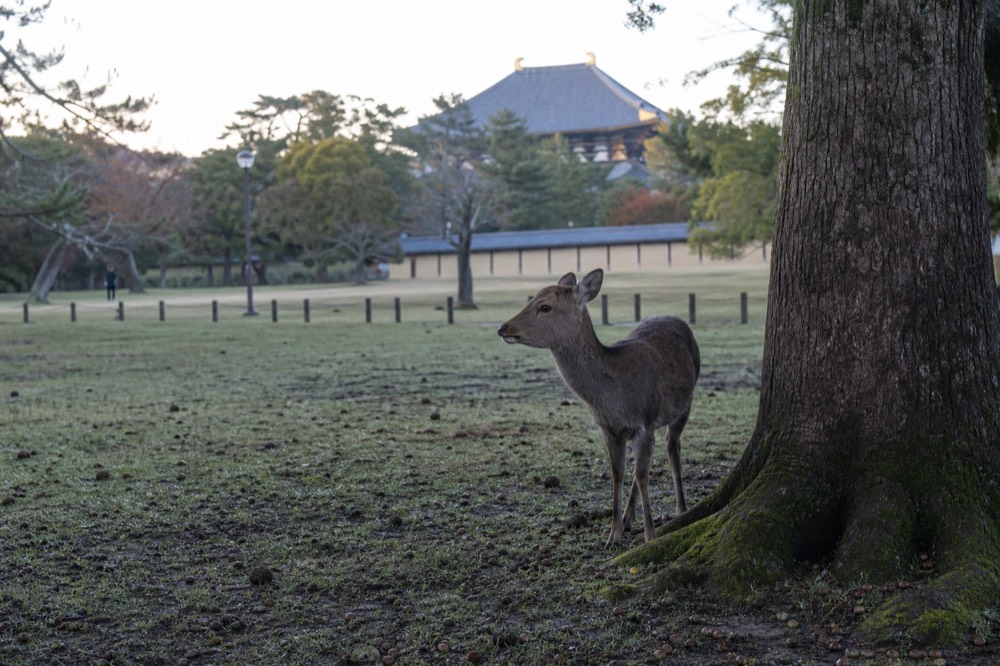
The rules matter more than most visitors expect. Feed the deer nothing except shika senbei, the crackers sold by licensed vendors in the park, because human food makes them ill and the foundation is explicit about it. Hand the cracker over quickly, do not tease, and never hold one in a closed fist, or the deer will follow and press you for it. The animals are habituated but wild: they bite, butt and charge, and small children and older visitors need extra care, a point the foundation makes plainly on its own guidance page at naradeer.com.
Timing changes the experience more than the weather does. Calving runs from mid-May through June, when does with newborns can turn aggressive, and June is a designated deer-protection month. The rut runs September to November, when stags, including the de-antlered ones, must not be approached; November is the other protection month. Outside those windows, morning is the calmest time in the park, and by midday the cracker stalls nearest the station can sell out in peak season.
Is the Daibutsuden at Todai-ji worth the entry fee?
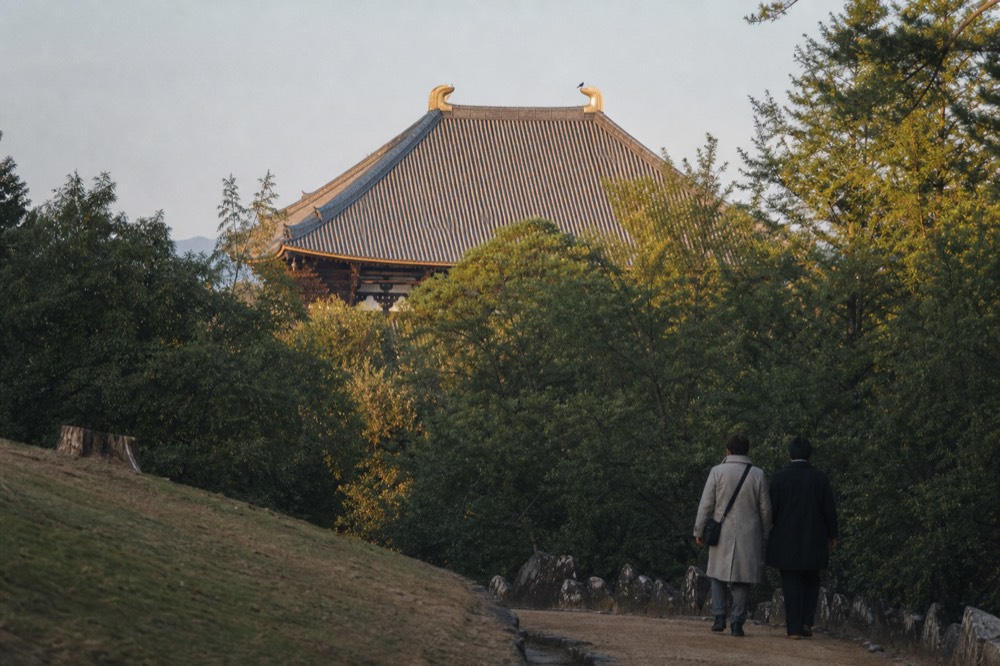
Yes, and it is the single best 800 yen in Nara. The Daibutsuden houses the Great Buddha, a bronze figure whose eye-opening ceremony dates to 752, inside a hall measuring 57.012 metres east-west and 48.742 metres high, rebuilt at its present scale in 1709. Admission is cash only, and the temple accepts no advance bookings and needs none. The hall is one of the largest wooden structures in the world, and even at its reduced seven-bay width, a deliberate cost-cutting of the original eleven-bay Tenpyo hall, the interior scale stops most visitors mid-step.
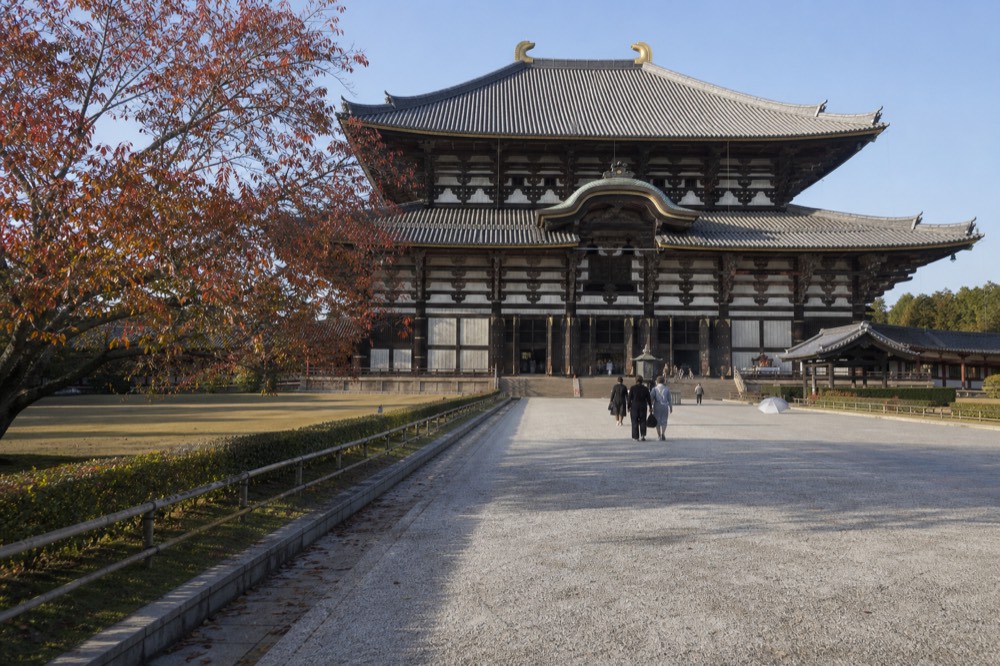
Hours shift by season: April to October the hall opens 07:30 to 17:30, November to March 08:00 to 17:00. A set ticket covering the Daibutsuden plus the Todai-ji Museum costs 1,200 yen for junior high age and up, and the museum is worth the extra if you have any interest in Buddhist sculpture, but on a tight day the hall alone delivers. Audio guides run 500 yen in nine languages if you want structure around what you are looking at. The fee scale and cash-only rule are published on the temple's own page at todaiji.or.jp, which is where to reconfirm anything before you travel.
One practical note that catches day-trippers: bring cash. Todai-ji and Kofuku-ji both state on their own sites that admission is cash only, and while 7-Eleven and Japan Post ATMs in the area take foreign cards, a queue at an ATM is a poor use of a Nara afternoon. The approach from Nara Park to the Daibutsuden passes through the Nandaimon gate with its guardian statues, which is free and, on a quiet morning, nearly as memorable as the hall itself.
Why is Kasuga Taisha different from every other shrine?
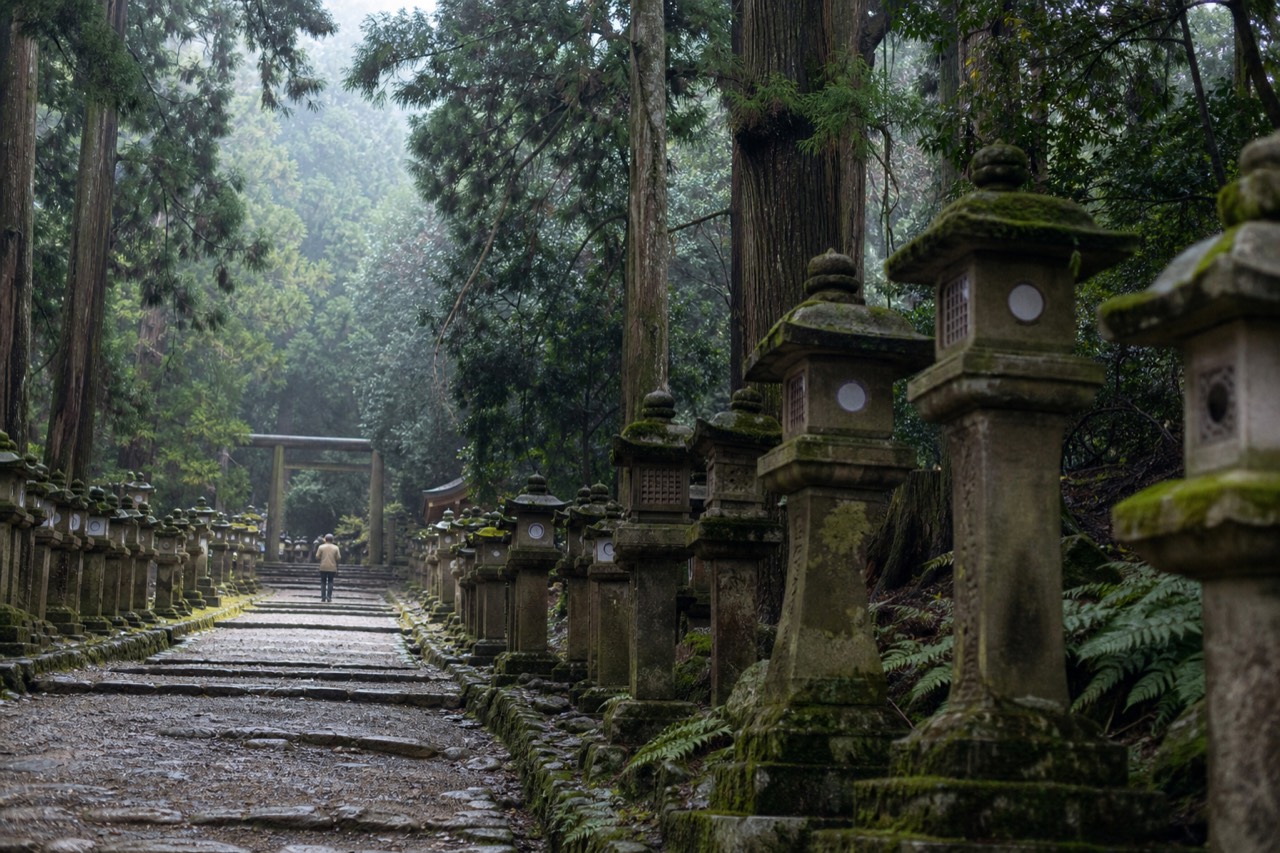
Kasuga Taisha is Nara's forest shrine, approachable only along lantern-lined paths, with roughly 2,000 stone lanterns on its approaches and about 1,000 hanging bronze lanterns in its halls, and its vermilion buildings sit inside a wooded precinct that has been preserved since the shrine's founding in the eighth century. The grounds and the approach are free to walk, and the lantern path itself, moss-covered stones tilting under cedar shade, is the part most visitors remember rather than the main sanctuary.
The paid option is special worship inside the middle gate, 09:00 to 16:00, at 700 yen, a fee the shrine raised from 500 yen in October 2024. It buys you a closer view of the sanctuary architecture and the atmosphere of the inner court. Closures are frequent and specific: special worship closes around 8 to 13 March, from 20 December to 7 January, on Coming-of-Age Day, on the mornings of the 1st, 11th and 21st of each month, and on a rolling list of festival dates, all published at kasugataisha.or.jp. The shrine's museum, the Kokuhoden, holds 354 National Treasures and charges 700 yen, a serious collection for a city this size.
If your visit can stretch to it, the Man'yo Botanical Garden beside the shrine, 700 yen, is Japan's oldest garden of plants named in the Man'yoshu poetry anthology, founded in 1932 with about 300 species. It closes on Tuesdays from June to March. For most day visitors, though, the free walk through the primeval forest between Nara Park and the shrine is the headline, and the deer thin out along it, which after an hour of cracker-pressing crowds is its own recommendation.
What happened to the Kofuku-ji pagoda?
Kofuku-ji's Five-Storied Pagoda, about 50 metres tall and the second-tallest wooden pagoda in Japan after To-ji in Kyoto, has been completely enclosed in a roughly 60-metre steel weather cover since March 2025, and it will stay hidden until its first full conservation repair in about 120 years finishes in March 2034. Any itinerary, photo plan or guidebook spread that presents the pagoda as a Nara photo opportunity is simply out of date. This matters because the pagoda is the first landmark most visitors see from Kintetsu Nara Station, and the sight of a steel shroud instead can color a whole first impression.
The rest of the precinct is fully open and worth the ticket. The combined ticket, sold 09:00 to 16:00 only, covers the Central Golden Hall, rebuilt in 2018, the Eastern Golden Hall and the National Treasure Museum for 1,600 yen, with the museum alone the strongest of the three for its sculpture. All three open 09:00 to 17:00 with last entry at 16:45, every day, cash only, and the temple's visitor page at kohfukuji.com carries the details. The neighboring Sarusawa Pond, with the pagoda shroud reflected where the pagoda itself used to be, is free and pleasant either way.
For a day visitor weighing stops, the honest ranking is: the pond and exterior for free if time is short, the National Treasure Museum if you have an hour, the full combined ticket if Nara is your main day in Kansai. The restoration itself, triggered when a 2020 survey found displaced and broken roof tiles, is a real piece of living conservation, and the project's own site documents it in detail for anyone curious about what is happening under the steel.
Where do you eat and wander in Nara?
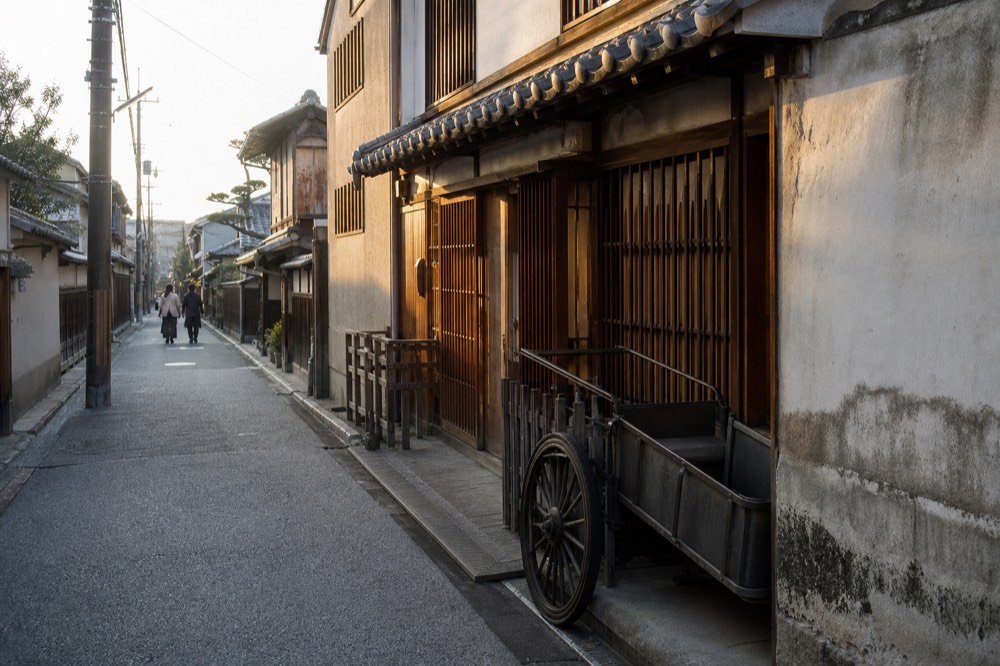
Naramachi, the old merchant quarter a short walk south of the park, is Nara's best eating and strolling district, a grid of machiya townhouses holding tea shops, pickle stores and small restaurants, and it sits conveniently between the temple circuit and the station corridors for a midday or late-afternoon break. The lanes are free to wander, and several former merchant houses are open as small museums. For specifics on what to order, from kakinoha-zushi wrapped in persimmon leaves to the local mochi pounded at a famous storefront, see what Nara is famous for food-wise.
Two honest warnings about eating in Nara. First, the restaurants nearest the park fill by noon in peak season, so either eat early or walk the extra few minutes into Naramachi. Second, if you are on a coached day tour that includes lunch, note that the included set lunch is the one part of the day this tour's own reviews criticise, and three of the six options include it while three do not, and the no-lunch options let you eat in town instead for less overall. A packed day goes better with a bowl of local noodles chosen on the spot than with a pre-booked set meal you did not choose.
The other neighborhood worth a clause is the area around the Nara National Museum, which holds one of Japan's great Buddhist art collections and anchors the east side of the park. If your day runs long, the museum is the best indoor stop in the city; if it runs short, Naramachi wins because it costs nothing and feeds you. Our guide to everything worth doing in Nara breaks these trade-offs down stop by stop.
How much time do you actually need?
Nara's essentials fit a full day, roughly five to six hours on the ground, but a well-planned half day of about four hours covers the Daibutsuden, the deer and one of Kasuga Taisha or Kofuku-ji, and even three focused hours deliver the core experience if you start at Kintetsu Nara Station and walk one direction only. The mistake to avoid is treating Nara as a two-hour stop between Kyoto commitments; the walk from the park to Kasuga Taisha and back is a commitment in itself, and the shrine paths are half the point.
| Time on the ground | What you can realistically see | What you sacrifice |
|---|---|---|
| About 3 hours | Daibutsuden, deer in the park, Nandaimon gate | Kasuga Taisha, Kofuku-ji interiors, Naramachi |
| About 4 hours | The above plus Kasuga Taisha's lantern approach | Kofuku-ji interiors, relaxed lunch |
| 5 to 6 hours | Everything in the table above, plus Kofuku-ji and lunch in Naramachi | Only the National Museum and the botanical garden |
| A full day | All of it, including the museum and a second pass through the park at dusk | Nothing, at a leisurely pace |
Season changes the calculus less than you might think. Cherry blossom in Nara came early in 2026, with flowering recorded on 25 March, four days ahead of normal. Autumn colour in the Kansai region runs later than most guidebooks claim: the 2026 first forecasts put Kyoto's maple viewing date around 11 December against a 5 December normal, so a November visit should expect partial colour rather than peak red. Summer is the honest wildcard, with July and August mean daily highs above 31 C in Nara, so the shrine's shaded forest paths earn their keep.
If the balance of a day between Kyoto and Nara is the decision you are wrestling with, our comparison of whether Kyoto and Nara work in one day works through the arithmetic, and the coached option below removes the arithmetic entirely: it is the same operator behind Kyoto Nara Day Tour, with the coach, a licensed English-speaking guide and the admissions all covered in the from-price of $191.65 per adult.
The questions visitors ask most about Nara cluster around money, timing and the deer: what the must-sees are, whether the park is free, whether cash matters, and when the animals turn difficult. The six answers below cover each one with the current figures, so you can finish planning the day in a couple of minutes.
Common questions about Nara
What should you not miss in Nara?
Todai-ji's Daibutsuden, the Nara Park deer, and the lantern approach to Kasuga Taisha. Add Kofuku-ji's precinct and the Naramachi old quarter if you have five or more hours, with the Kofuku-ji National Treasure Museum the best add-on for anyone interested in Buddhist art.
Is Nara Park free to enter?
Yes, the park and the deer are free and always accessible. The only costs are the optional shika senbei crackers at about 200 yen a bundle and the separate temple and shrine admissions around its edges: Todai-ji's Daibutsuden at 800 yen, Kasuga Taisha special worship at 700 yen, and Kofuku-ji's combined ticket at 1,600 yen.
Can you see the Kofuku-ji pagoda in 2026?
No. The pagoda has been fully enclosed in a steel weather cover since March 2025 and stays hidden until the restoration is scheduled to finish in March 2034. The rest of Kofuku-ji, including both golden halls and the National Treasure Museum, remains open daily.
Do you need cash in Nara?
Yes. Todai-ji and Kofuku-ji both state on their own sites that admission is cash only, and many smaller shops and cracker stalls in the park are cash-preferred. 7-Eleven and Japan Post ATMs in central Nara accept foreign cards, but withdraw before you reach the park to save the queue.
When are the deer dangerous in Nara?
June, when calves are born and does protect them, and September to November, the rutting season when stags turn aggressive. The Nara Deer Preservation Foundation designates both months as deer-protection periods. At any time of year, feed only shika senbei and hand the cracker over quickly rather than teasing.
Is one day enough for Nara?
Yes. Five to six hours covers every essential stop from the Daibutsuden to Naramachi, and even four well-planned hours deliver the core experience. A half day works too if you start from Kintetsu Nara Station and walk one loop only.