How many days in Kyoto is enough?
A practical answer to how many days in Kyoto is enough, with what one, two and four days each cover, seasonal timing and how Nara fits in.
How many days in Kyoto is enough?
Three days is enough for Kyoto for most travellers: one day for the eastern temple belt around Kiyomizu-dera and Gion, one for the golden northwest around Kinkaku-ji and Nijo Castle, and one for either Arashiyama or a Nara day trip. Two days works if you move fast and accept queues. Four is the point at which the city stops being a checklist and starts being a place.
The honest first point: almost nobody disagrees with three. Kyoto was Japan's capital for over a thousand years, and it holds roughly 1,600 Buddhist temples and 400 Shinto shrines, but the overwhelming majority of visits touch the same two dozen sites. A first trip that covers Kiyomizu-dera, the Gion district, Fushimi Inari, Kinkaku-ji, the Arashiyama bamboo grove and Nijo Castle has already seen the Kyoto of the guidebooks. The question is not whether that fits in three days. It fits in two. The question is whether you want to remember the trip or just survive it.
There is a good argument for planning two days in Kyoto and using the third day differently. The full Kyoto-plus-Nara pairing is the classic Kansai itinerary, and Nara deserves at least half a day on its own: Todai-ji's Great Buddha Hall, the free-roaming deer of Nara Park and the lantern approaches of Kasuga Taisha are 45 minutes away by train. If you would rather not deal with Japanese rail ticketing on day three, a coach tour folds both cities into one structured day, and the rest of this article lays out exactly what that costs you in pace and what it saves in stress. The can you see Kyoto and Nara in one day question has its own answer, but the short version is yes, tightly.
It also matters which Kyoto you are counting days for. Cherry-blossom Kyoto in late March moves at half speed, because every temple approach has a queue and every bus is full. Mid-January Kyoto moves at double speed, because you will often have the temple grounds nearly to yourself. The same three-day plan can feel generous in winter and rushed in April.
What does one day in Kyoto actually cover?
One day in Kyoto covers three, maybe four headline sights if you start at 08:00 and use taxis or a bicycle rather than buses: one morning temple, one midday district like Gion or Higashiyama, and one afternoon anchor such as Kinkaku-ji or Fushimi Inari. It cannot cover both Arashiyama and the eastern temple belt, and it cannot include Nara.
The arithmetic is unforgiving. Kyoto's sights sit in clusters at the edges of a basin, and crossing between clusters eats 40 minutes to an hour each time by public transport. The city bus flat fare is 230 yen in the central zone and buses on the sightseeing routes fill up fast in high season, so a single day built on buses loses an hour or more to waiting. Kiyomizu-dera opens at 06:00 year-round, which is the single most useful scheduling fact in the city: an 06:30 arrival beats the crowds almost completely, and by 09:00 the stage viewpoints are three-deep.
A realistic single day looks something like this, and it is a good day, just an incomplete one:
| Time | Stop | What you get |
|---|---|---|
| 06:30-08:30 | Kiyomizu-dera | The wooden stage almost alone; the temple opens at 06:00 |
| 09:00-11:30 | Higashiyama lanes and Gion | Sannenzaka, Yasaka Shrine, the Hanamikoji main street |
| 12:00-13:30 | Lunch and Nishiki Market area | Food stalls and central-city breathing room |
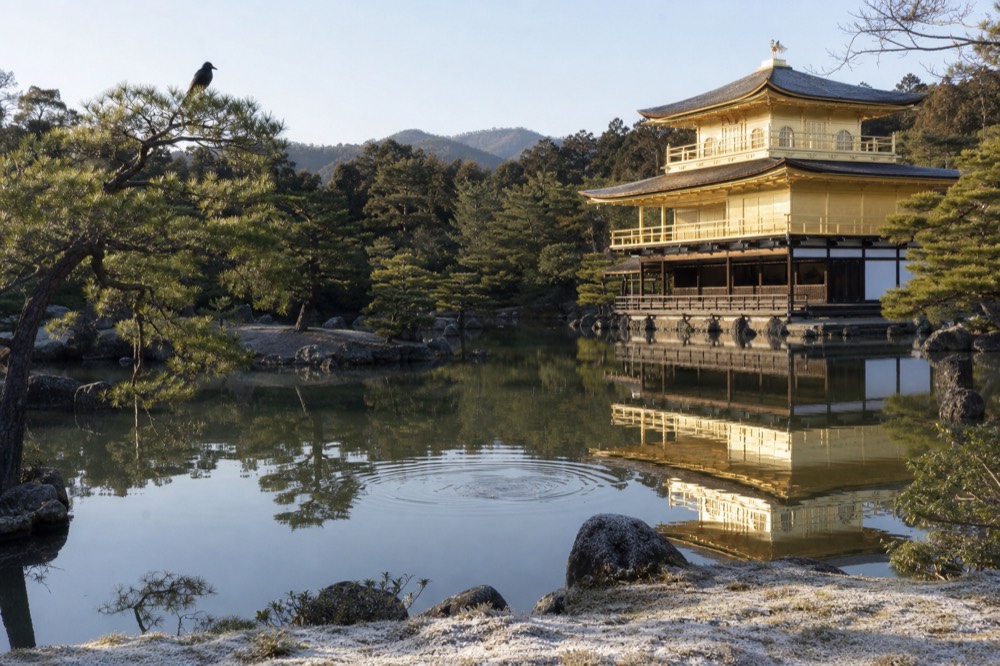
| 14:00-15:30 | Kinkaku-ji | The Golden Pavilion; admission 500 yen, hours 09:00-17:00 |
| 16:00 onwards | Nijo Castle or Fushimi Inari | Nijo closes mid-afternoon in winter; Inari's paths have no closing time |
Two cautions on that table. Nijo Castle's Honmaru Palace now requires an advance web ticket released 30 days ahead, on top of the 800 yen castle admission, so decide before the day whether it is your afternoon anchor. And Fushimi Inari as a final stop works because the shrine sets no closing time for its mountain paths, but the full summit round trip takes about two to three hours, so a 16:00 start gets you the lower torii tunnels, not the whole mountain.
If one day is genuinely all you have, a guided coach day is the more efficient shape, because someone else absorbs the routing. The Kyoto and Nara Day Tour, run by JTB Sunrise Tours and rated 4.8 from 32 reviews, compresses Nijo Castle, Kinkaku-ji, the Kyoto Imperial Palace, Kasuga Taisha and Todai-ji with Nara Park into a single day from $191.65 per adult with a licensed English-speaking guide and admissions arranged. It is a fast day rather than a deep one, but it is the only realistic way to say you saw both cities in one sunrise.
Is two days in Kyoto enough?
Yes, two days is enough to see Kyoto's headline sights without panic, provided you split the city geographically: devote one day to the east and the other to the north-west, and cut either Arashiyama or Fushimi Inari rather than attempting both. With that trade-off accepted, you can move at a calm pace and still leave feeling you met the essential city. Most first-time visitors who report a happy two-day trip did exactly that, and most who regret it tried to fit everything into a plan that had no slack in it.
The split that works is the ancient one. Day one goes east and central: Kiyomizu-dera at opening, the Higashiyama slope lanes, Gion, and Nijo Castle in the afternoon while your legs still work. Day two goes north and west: Kinkaku-ji early, the Ryoan-ji rock garden nearby, then Arashiyama's bamboo grove and the Togetsukyo bridge in the afternoon. Fushimi Inari slots onto either morning if you are willing to get up for it, because the shrine is at its best before 08:00 and its worst between 10:00 and 16:00.
Two days fails when the itinerary is thematic instead of geographic. A "temples day" followed by a "culture day" crosses the city four times. Kyoto rewards clusters: the Golden Pavilion, Ryoan-ji and Ninna-ji are a 15-minute walk from each other; Kiyomizu-dera, Kodai-ji and the Sannenzaka lanes share one hillside. Group by neighbourhood and two days starts to feel almost roomy.
The thing two days cannot absorb is a failure day. Rain, a heatwave or a temple closure in a two-day plan removes a quarter of your trip, which is the quiet argument for three. Kyoto's summer heat is a real planning factor: four of the city's six hottest days since records began in 1880 have occurred in 2018, 2024, 2025 and 2026, with the third-hottest on record, 39.7 degrees, on 23 July 2026. A July or August visit needs slower mornings, shade and a plan B, which is exactly what a two-day schedule does not have.
What does a third or fourth day in Kyoto add?
A third or fourth day in Kyoto adds either Nara, which is the standard and correct choice for most travelers, or the city's second tier of sights: Arashiyama explored at a leisurely pace, the Fushimi sake district, the northern temples, or simple neighbourhood time spent wandering streets and soaking in the atmosphere without a fixed itinerary. A fourth day adds depth rather than sights, and that is when most people stop needing more days at all.
The third-day fork is the real decision. Nara as a self-guided trip is straightforward: the Kintetsu express from Kyoto takes about 45 minutes and drops you a 5 to 8 minute walk from Nara Park, while the JR Nara Line's Miyakoji Rapid takes about the same time but leaves you 15 to 25 minutes from the park on foot. Fares on both are modest, roughly 720 yen on JR and 760 yen on Kintetsu each way, and they change, so check current prices before you travel. The Nara day trip from Kyoto guide covers the full mechanics.
The alternative third day is Kyoto's own second tier, and it is genuinely good. A slow Arashiyama morning before the bamboo grove fills up, the Katsura riverbank, Okochi Sanso garden, then the Philosopher's Path and Nanzen-ji's aqueduct in the afternoon, is a day many repeat visitors rank above the first two. Fushimi's sake breweries, reached in 15 minutes from Kyoto Station, fill another half day comfortably.
A fourth day is for pacing. It buys you a second visit to a favourite spot at the right hour, a day trip beyond Nara to Uji or Ohara, and the unstructured afternoon that three-day plans always sacrifice. Beyond four days, a first-time visitor is usually better off adding Osaka, Kobe or Koyasan than a fifth Kyoto day.
When is Kyoto at its most crowded, and does that change the answer?
Yes. Kyoto is most crowded during cherry-blossom season, Golden Week, and the late-November foliage window, and that does change the answer: the same two-day itinerary runs 30 to 50 percent slower when every approach road has a queue, so you should add a day to your plan during those periods rather than trying to squeeze the standard route into two. The city's peak-load windows are predictable, and they are the strongest argument for three days instead of two.
The timing facts matter more than most guidebooks admit. Kyoto's cherry blossoms flowered on 23 March and reached full bloom on 30 March in 2026, close to the 1991-2020 normals of 26 March and 4 April, so the crunch window is roughly the last week of March through the first week of April. In 2027 the spring equinox falls on Sunday 21 March with a substitute holiday on Monday 22 March, giving cherry season a three-day weekend at the front of the window.
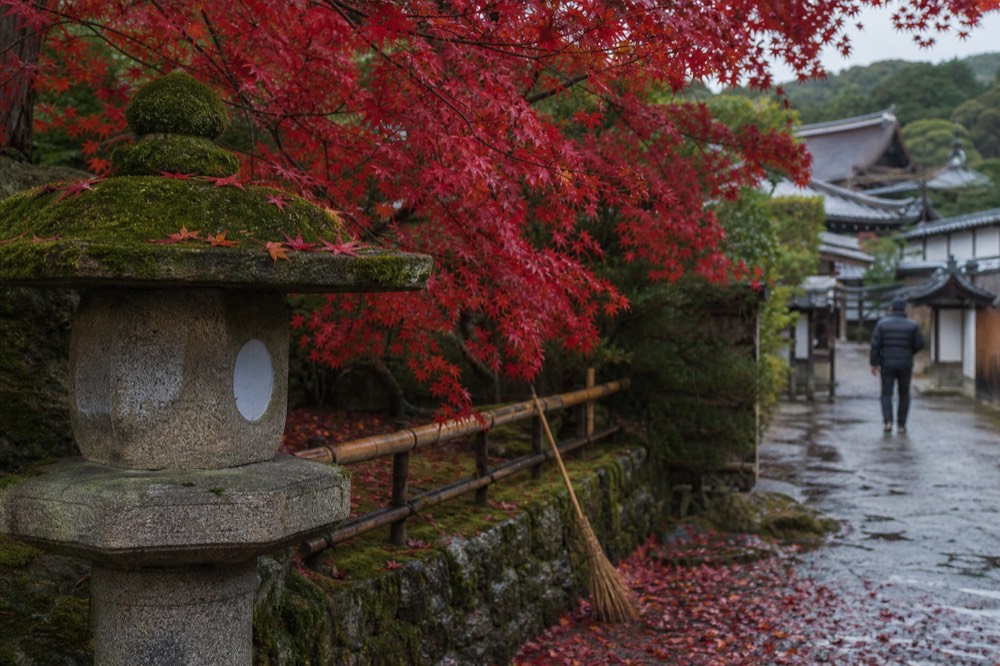
The foliage surprise is bigger. Kyoto's official maple colouring date, recorded by the Kyoto Local Meteorological Observatory, is a December date: the 1991-2020 normal is 5 December, and 2025 came in on 10 December. The mid-November "peak autumn" line that circulates every year describes ginkgo gold and early colour, not the maples at their reddest. Late November into the first week of December is the true window, and a first forecast for 2026 puts Kyoto's maple viewing date at 11 December against the 5 December normal. Anyone booking a "November foliage" trip for mid-month should shift a week later.
| Period | Crowd level | Effect on your day count |
|---|---|---|
| Late March to early April | Cherry peak, highest | Add a day; temples queue from opening |
| 29 April to 5 May | Golden Week holidays | Domestic travel peak; book everything early |
| Late November to early December | Maple peak | Add a day for the same reason as April |
| Mid-January to early February | Quietest | Two days may genuinely suffice |
| Late July to August | Heat peak | Add slack for slow afternoons, not crowds |
Should you spend one of your Kyoto days in Nara?
Yes, if you have three or more days in Kyoto. Nara sits just 45 minutes away, its core sights cluster within one walkable park, and it delivers a different Japan, an early capital, a giant bronze Buddha, and free-roaming deer, that Kyoto cannot offer. With only two days, fold Nara into a combined coach day or skip it and keep your Kyoto days whole.
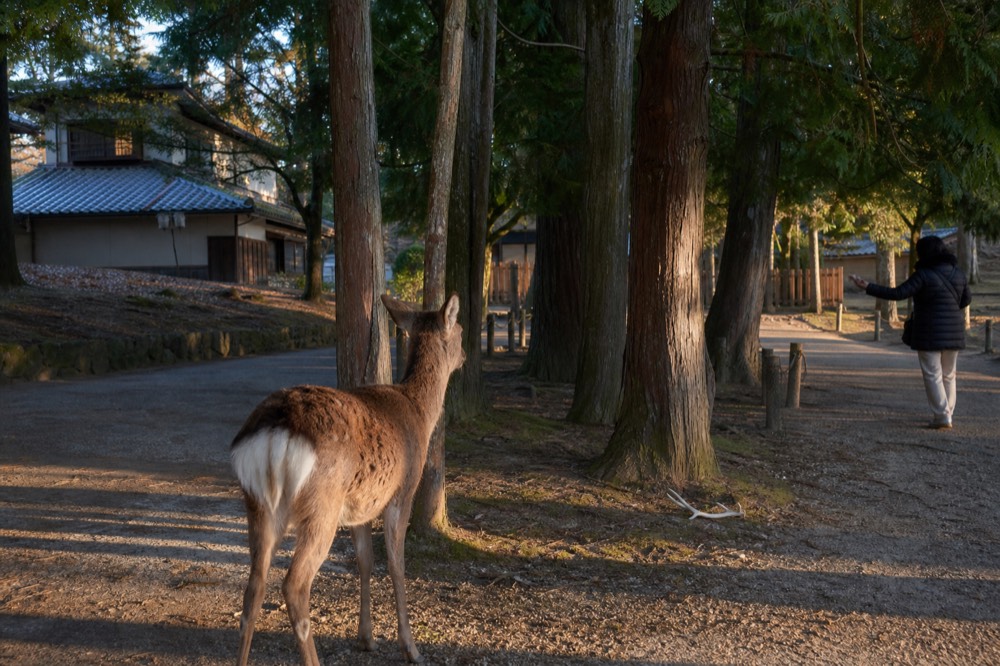
The deer alone justify the trip for many visitors. The July 2026 census counted 1,687 deer in Nara Park, up 222 on the previous year, one of the highest figures the Nara Deer Preservation Foundation has published in recent years. They are habituated but wild, and the foundation's guidance is direct: feed them only the official shika senbei crackers, about 200 yen a bundle, hand the cracker over quickly, and give stags a wide berth between September and November when the rut makes them aggressive. Calving season from mid-May to June has its own cautions around does with fawns.
Doing Nara by coach rather than train trades flexibility for coverage. The train version gives you a long lunch in Naramachi and a relaxed afternoon; the coach version gives you Kyoto's headline sights and Nara's headline sights in one bundle, with a licensed English-speaking guide, the coach and the admissions handled. If the day-trip maths matters to your plan, the day trips from Kyoto guide compares the main destinations beyond Nara.
One budget note for either version: Todai-ji and Kofuku-ji both state on their own pages that admission is cash only, and both temples sit at the heart of any Nara day, so carry yen. Todai-ji's Great Buddha Hall costs 800 yen, or 1,200 yen combined with the temple museum. Kofuku-ji, a short walk from Kintetsu Nara Station, sells a 1,600 yen combined ticket for its three paid buildings, though its famous Five-Storied Pagoda has been fully enclosed under a roughly 60-metre steel conservation cover since March 2025 and will stay hidden until the work completes in March 2034, so do not plan photographs around it.
The no-lunch versions of the coach day are the ones to look at closely. The included lunch on the lunch options is the weakest element of the tour by its own reviewers' accounts, criticised repeatedly over the years, and skipping it saves money and leaves the midday hour free to eat where you like near Kyoto Station. The Kyoto no-lunch departure, meeting at 08:20, is the from-price option at $191.65.
For anyone weighing the whole question at once, the Kyoto Nara Day Tour site exists to answer exactly this: how to split limited days between two ancient capitals without wasting half of them on transfers.
The short version of everything above: three days is the sweet spot for Kyoto, two works with a geographic split, one is a highlights reel, and Nara earns the third day if you have it. The answers below repeat the essentials for anyone scanning rather than reading.
Common questions about how many days in Kyoto
How many days in Kyoto is enough?
Three days is enough for most travellers: east and central Kyoto one day, the north-west the second, and Nara or Arashiyama on the third. Two days covers the headline sights if you split the city geographically and cut one major destination.
Can you see Kyoto in one day?
You can see three or four headline sights in one day if you start at 06:00-06:30 at Kiyomizu-dera and use taxis or a bicycle instead of buses. You cannot cover both Arashiyama and the eastern temple belt, and Nara is out of reach on a self-guided single day.
Is 2 days in Kyoto enough?
Yes, with a geographic split: east and Gion on day one, Kinkaku-ji and Arashiyama on day two. It fails in cherry season and foliage season, when queues slow the same plan by a third or more, and it leaves no slack for rain or heat.
Is 4 days in Kyoto too many?
No. A fourth day buys depth rather than sights: a second visit to a favourite temple at the right hour, Uji or Ohara as a half-day trip, and unstructured neighbourhood time. Beyond four, most visitors are better served by Osaka, Kobe or Koyasan.
Should a Kyoto trip include Nara?
With three or more days, yes. Nara is about 45 minutes from Kyoto by train and its core sights, Todai-ji, Nara Park and Kasuga Taisha, sit in one walkable area. With two days, a combined coach day or a skip is the better call.
When is Kyoto too crowded for a short trip?
Late March through early April for cherry blossoms, 29 April to 5 May for Golden Week, and late November into early December for maple colour, when the official colouring date is a December date, with a normal of 5 December. In those windows, add a day or shift to mid-winter, the quietest season.