Fushimi Inari Taisha: The 10,000 Gates, the Summit Climb and How to Fit It Into a Kyoto and Nara Trip
Fushimi Inari Taisha is the head shrine of roughly 30,000 Inari shrines across Japan, wrapped in about 10,000 torii gates that climb Mount Inari over roughly 870,000 square metres of forested hillside in southern Kyoto. It is not a stop on the Kyoto and Nara coach tour this site covers, and this guide says so up front, then covers everything the shrine's own pages actually publish.
Short answer
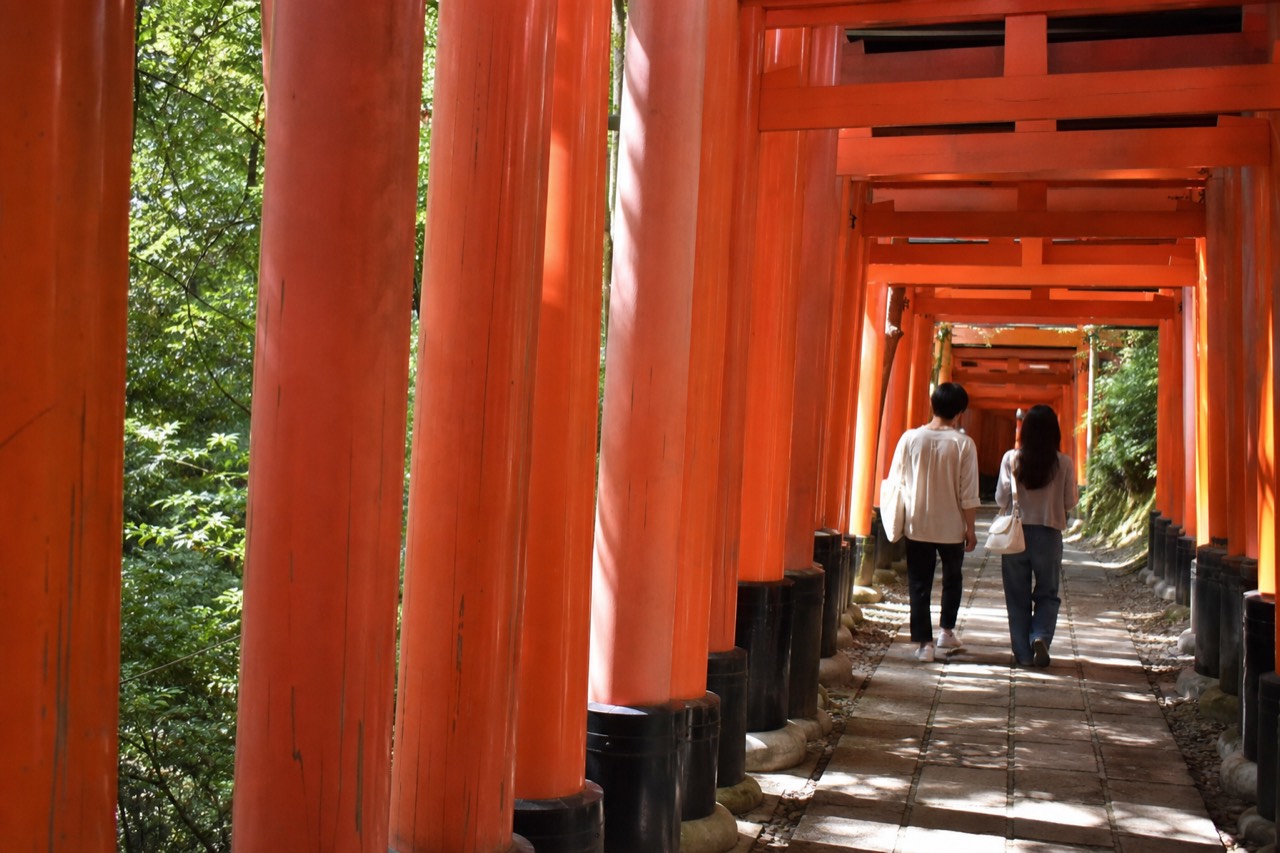
Fushimi Inari Taisha sits at the base of Mount Inari in southern Kyoto and is the head shrine of roughly 30,000 Inari shrines nationwide. The shrine itself states that about 10,000 torii of all sizes stand along the mountain paths. Entry is free, the shrine publishes no closing time, and the full summit circuit takes about two to three hours.
Fushimi Inari Taisha is not a stop on the Kyoto and Nara day tour this site is built around. The coach route runs Nijo Castle, Kinkaku-ji, the Kyoto Imperial Palace and then on to Kasuga Taisha, Todai-ji and Nara Park, and it never turns south toward Mount Inari. That matters because almost every search result for this shrine quietly assumes you have a free half day in Kyoto with nothing else booked. If you do, Fushimi Inari deserves it. If you have a Nara day tour already on the calendar, this guide shows how the two fit together, because they fit better than most people assume.
The shrine's own pages give the figures below, and where they stay silent, so do we: the FAQ that settles the torii question, the precinct figures, and the meteorological record for the climb's weather. Where something is live-search consensus rather than a shrine statement, it says so.
What is Fushimi Inari Taisha?
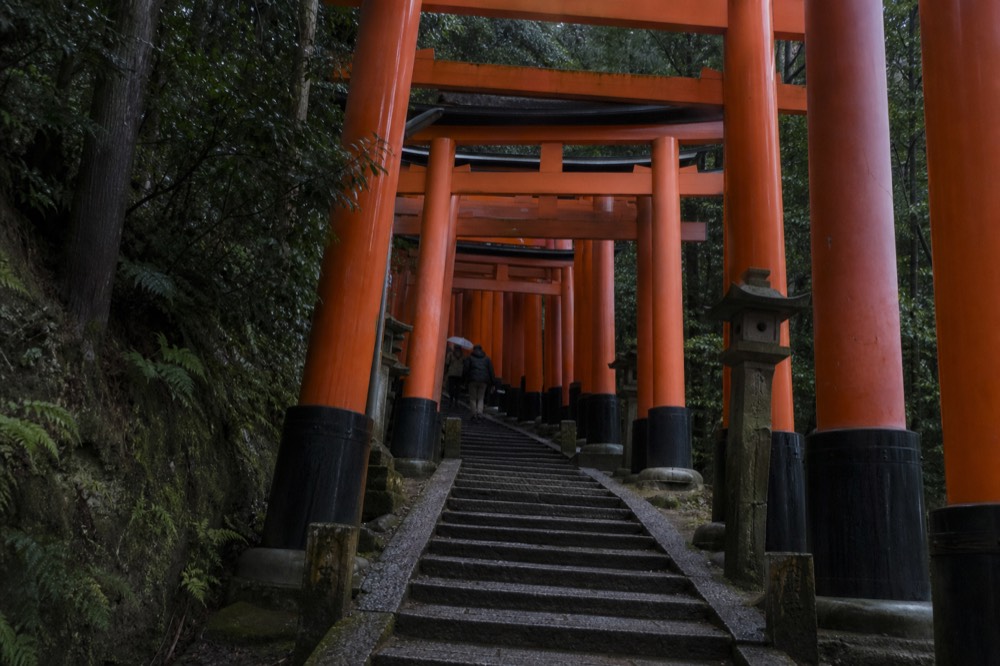
Fushimi Inari Taisha is the head shrine of Japan's Inari faith, serving as the overseeing authority for roughly 30,000 Inari shrines across the country. Its precinct spans about 260,000 tsubo, roughly 870,000 square metres, and most of that ground is the mountain itself. It sits at the southern base of Mount Inari, which the shrine identifies as the southernmost of Kyoto's Higashiyama thirty-six peaks. The shrine does not sit in front of the mountain; it grows up it, so a single visit can mean anything from five minutes at the main hall to a three-hour circuit of the summit trails.
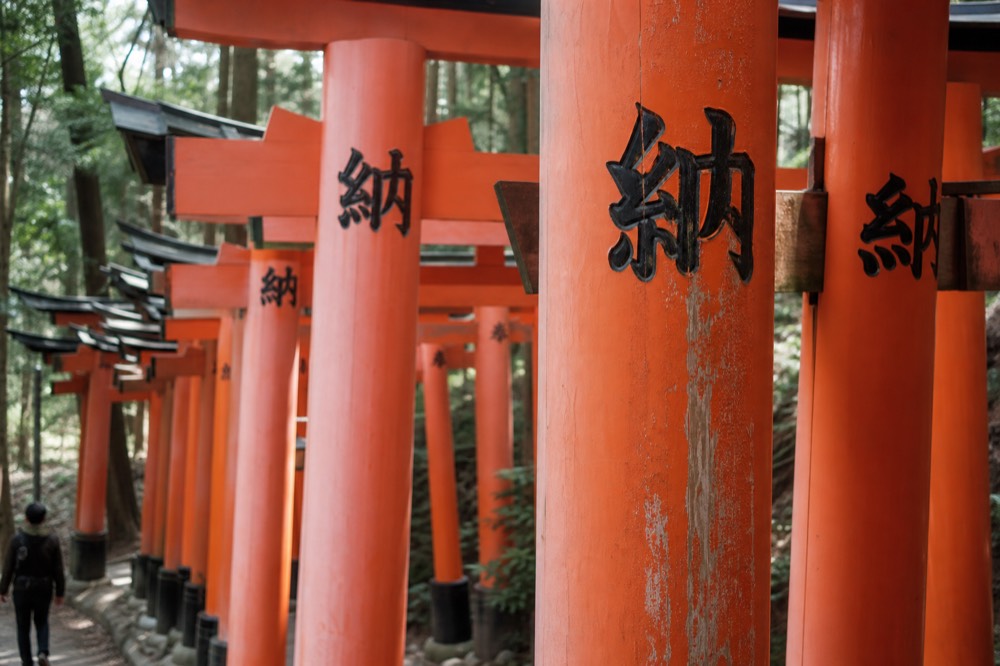
The deity here is Inari, historically associated with rice and sake and, by extension, with prosperity in business. That association is why the mountain is dense with torii donated by companies, trade associations and individuals: donating a gate as thanks for a prayer "passing" spread from the Edo period onward, according to the shrine's own FAQ. The gates you walk under are not temple architecture or decoration. They are receipts, in effect, thousands of them, renewed and added across centuries.
The scale takes first-time visitors by surprise. Most photographs of Fushimi Inari show the Senbon Torii, the tight double tunnel of gates just above the main shrine, and that tunnel is genuinely stunning. But it is a small fraction of the precinct. Behind it the path splits into a full mountain circuit through woods, past dozens of sub-shrines, and the crowds thin dramatically within twenty minutes of climbing. The shrine compares its precinct to about twenty-two Koshien Stadiums, and it is not exaggerating for effect: the mountain is the shrine.
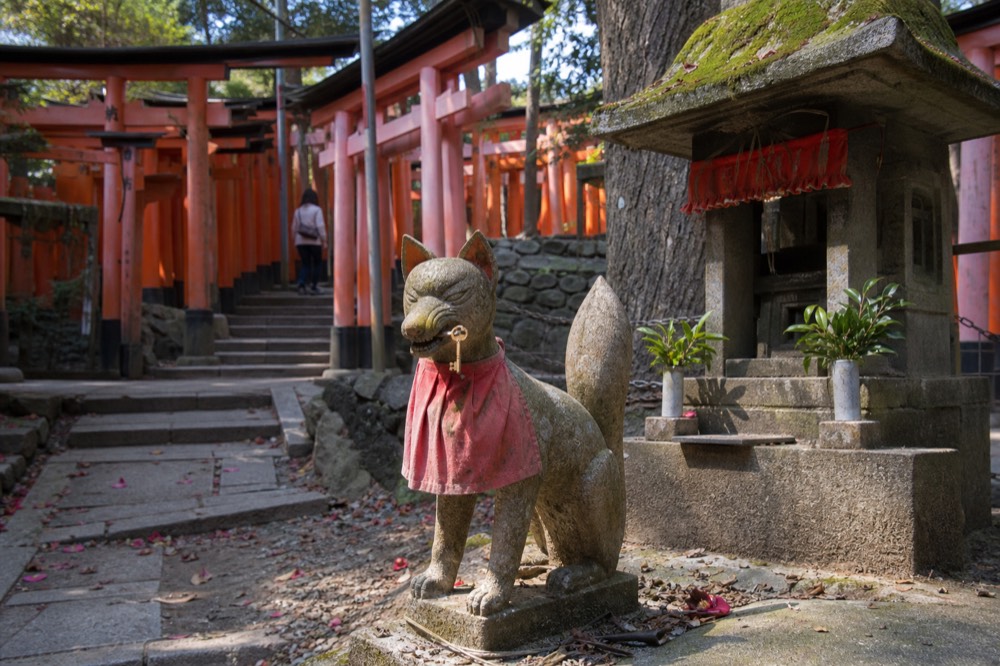
The fox imagery everywhere on the mountain is not a separate deity. Foxes are the messengers of Inari, and the stone foxes at Fushimi Inari often hold keys, sheaves of rice or scrolls in their mouths. Visitors sometimes assume the foxes are worshipped; the shrine's materials frame them strictly as attendants.
How many torii gates does Fushimi Inari really have?
The shrine's own FAQ, in both Japanese and English, states that about 10,000 torii of all sizes stand along the mountain paths, and that figure covers the whole mountain, not just the famous Senbon Torii tunnel that appears in nearly every photograph. This is the single most garbled number in Kyoto travel writing. Exact counts like 32,000 circulate constantly and trace to nothing. The shrine publishes an approximate figure, attributes it to itself, and the "about" is doing real work: the number changes as gates are donated, replaced and removed over time.
The detail almost every blog gets wrong is scope. The 10,000 figure describes torii of all sizes across the entire network of mountain paths, from the massive gates at the main shrine to small personal gates at sub-shrines far up the slope. The Senbon Torii tunnel, the photogenic double corridor of closely spaced gates, holds only a fraction of that total. If someone tells you they counted the tunnel, they counted the wrong thing.
For a deeper look at where the number comes from and why the fake precise counts fail, the companion piece on how many torii gates Fushimi Inari has works through the shrine's own wording in detail.
| Claim | What the shrine says | Status |
|---|---|---|
| About 10,000 torii of all sizes along the mountain paths | Stated in the shrine's Japanese and English FAQ | The shrine's own published figure |
| The Senbon Torii tunnel contains 10,000 gates | Not stated anywhere by the shrine | Wrong scope; the figure covers the whole mountain |
| Exactly 32,000 gates | No primary source exists | Do not trust it |
| Gates are donated as thanks for prayers passing | Stated in the FAQ, a custom spread from the Edo period | Verified |
Since the shrine is free to enter and the coach tour covers different ground entirely, plenty of visitors do both: the coach tour for the headline sights, and a self-guided morning or evening at the gates. For a broader look at the options from Kyoto, the guide to day trips from Kyoto compares the routes.
What does it cost, and is it really open around the clock?
Entry to Fushimi Inari Taisha is free: the shrine publishes no admission charge for the precinct and no closing time for the mountain paths, which is why visitors climb at dawn and at midnight alike, and the only published hours are the desk windows for prayers, amulets and stamps. The absence of a gate and a ticket booth is the whole story: this is a working shrine, not an attraction with turnstiles, and the shrine sets its desk hours day by day.
That freedom is unusual in Kyoto, where most major temples charge between 400 and 800 yen and close between 16:30 and 17:00. Kinkaku-ji, on the coach tour's route, charges 500 yen and opens only 09:00 to 17:00. Fushimi Inari's open-door structure means the classic strategy, visiting before 07:00 or after 17:00, costs nothing and requires no booking. The trade-off is that the shrine cannot manage crowds the way a ticketed temple can, so peak midday hours in high season are dense everywhere below the Yotsutsuji junction.
The shrine itself helps with crowd planning more than most visitors realise. Its site links to the Kyoto City Tourism Association's crowd-comfort forecast and to live cameras at the front and rear approaches, so you can check conditions before leaving your hotel. That is a shrine-published tool, not a third-party app.
| Item | Fushimi Inari Taisha | A ticketed comparison: Kinkaku-ji |
|---|---|---|
| Admission | Free, none published | 500 yen adult |
| Hours | No closing time published for the paths | 09:00 to 17:00 |
| Booking | Not applicable | Not required |
| Crowd management | Live cameras and city crowd forecast linked by the shrine | Queue at gate |
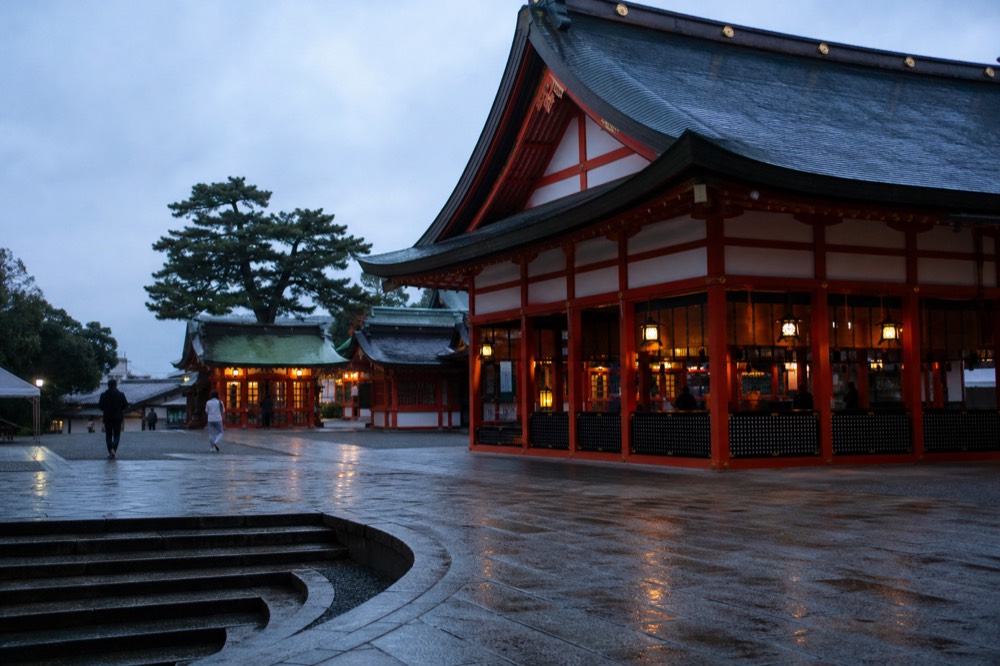
One honest caveat: "open 24 hours" is a description drawn from the shrine's practice, not a sentence it prints. What the shrine publishes is specific desk hours and no closing time for the paths. Treat the mountain as always walkable, but check desk hours if you want an amulet or a stamp.
If pairing the shrine with the six-stop coach circuit appeals, the standard tour is worth a look.
How long is the climb to the summit of Mount Inari?
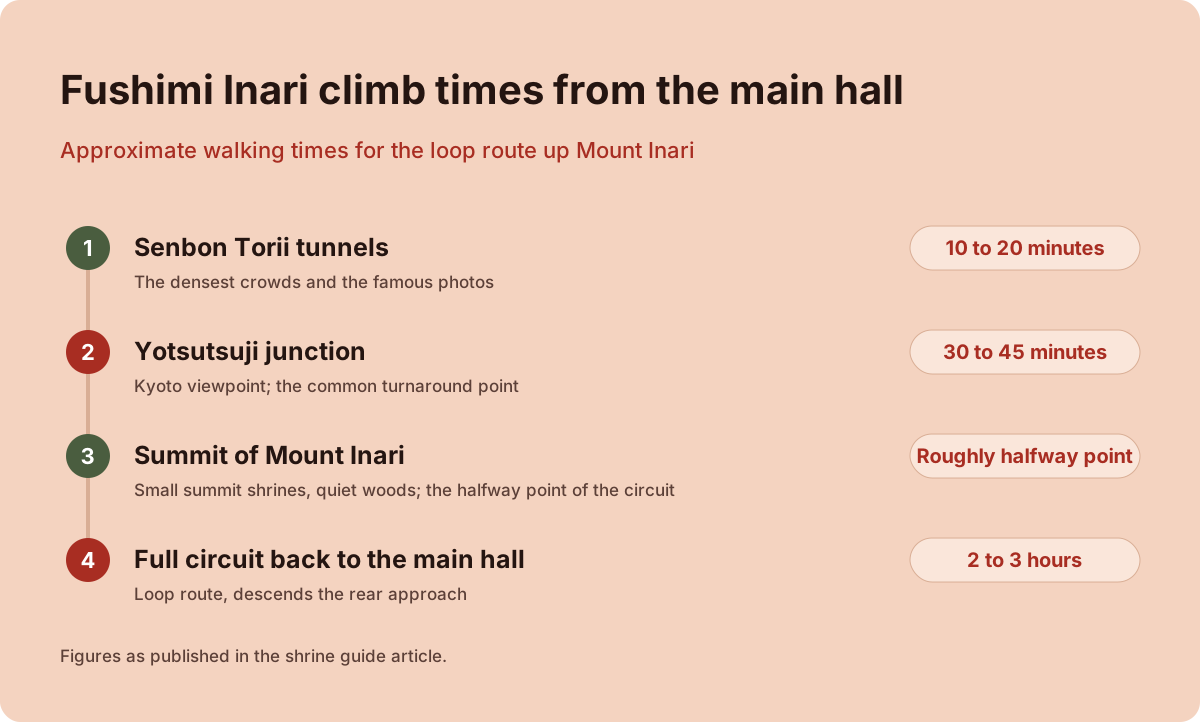
The full round trip from the main shrine to the Mount Inari summit takes about two to three hours, on a loop of stone paths and long stair stretches through woods, with the crowds thinning sharply after the first tunnel section and the whole circuit achievable at an easy, unhurried pace. That two to three hour figure is live-search consensus rather than a shrine-published estimate, but it holds up across independent sources, and it matches the experience of the terrain: steady stairs, wooded switchbacks and several flat rest stretches rather than one gruelling ascent.
The route is a loop, not an out-and-back. Climbing clockwise through the Senbon Torii brings you to the Yotsutsuji junction, a lookout with a view over Kyoto, around the halfway point. Many visitors turn around there after 30 to 45 minutes and still see the best of the tunnels and the view. Continuing, the path passes the Mitsurugi shrine cluster and reaches the summit, marked by a modest cluster of stones and small shrines rather than a viewing platform, then descends through the bamboo-lined rear approach back to the main hall.
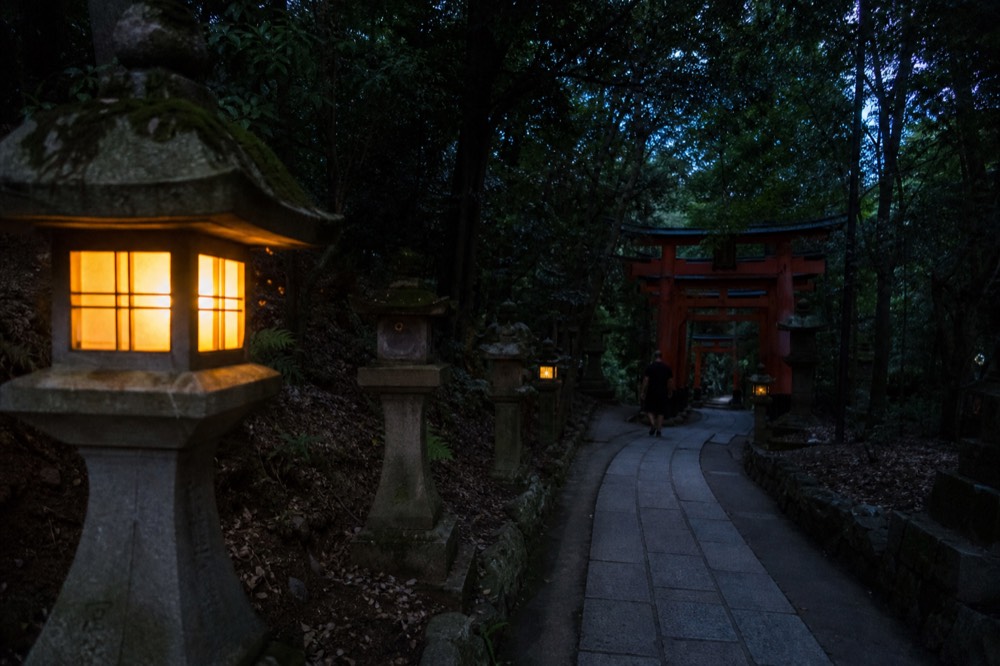
Time of day changes the climb more than fitness does. The paths are unlit in stretches, and the shrine does not light the mountain for visitors. A dawn start means cool air, empty tunnels and soft light through the gates; a start after 10:00 in high season means queues forming at the narrow tunnel sections where people stop for photographs. The question is Fushimi Inari worth it gets a longer treatment elsewhere on this site, but the short version is that the answer depends almost entirely on how far up you go and when.
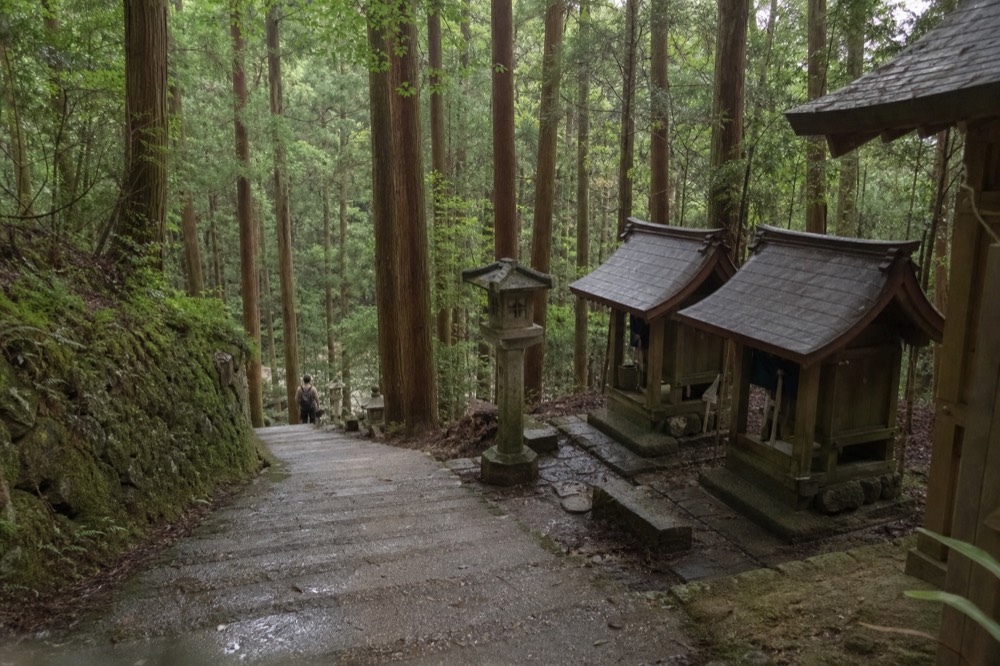
Footwear matters more than at Kyoto's flat temple complexes. The path is stone and in good condition, but it is stairs for long stretches, wet in rain, and lightly slippery with leaf litter in late autumn. Trainers are fine. Sandals are a bad plan.
| Section | Approximate time from the main hall | Notes |
|---|---|---|
| Senbon Torii tunnels | 10 to 20 minutes | The densest crowds and the famous photos |
| Yotsutsuji junction | 30 to 45 minutes | Kyoto viewpoint; the common turnaround point |
| Summit of Mount Inari | Roughly the halfway point of the circuit | Small summit shrines, quiet woods |
| Full circuit back to the main hall | 2 to 3 hours | Loop route, descends the rear approach |
For anyone pairing this climb with a coach tour day, the honest advice is to separate them across two days. The coach tour day runs about 10.5 hours from Kyoto including travel, and a three-hour mountain circuit on top of it is a recipe for misery.
When is the best time of year and day to visit?
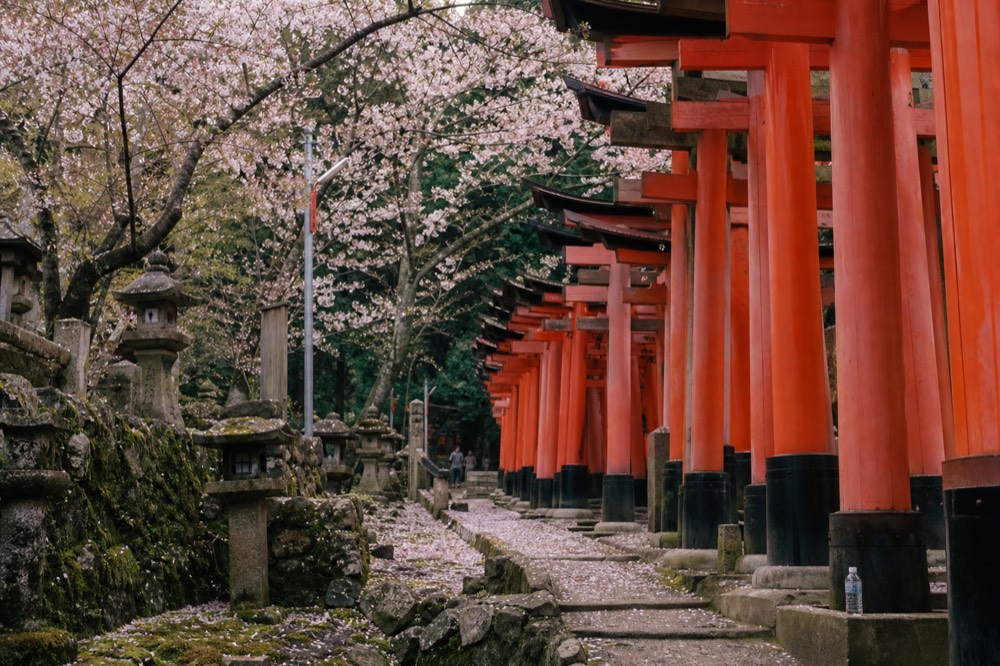
Early morning, before 07:00, is the best time of day in any season, and late March to early April or late November to early December are the strongest seasonal windows, using the Kyoto observatory's own phenology dates rather than the tourism folklore that puts Kyoto's maples in mid-November. The cherry timing is precise: Kyoto's Somei Yoshino cherries flowered on 23 March 2026 and reached full bloom on 30 March, against a 1991 to 2020 normal of 26 March flowering and 4 April full bloom. For autumn colour, the single most useful correction in Kyoto planning applies here.
The folklore says mid-November. The Kyoto Local Meteorological Observatory's record says otherwise for maples: the normal maple colouring date in Kyoto is 5 December, and in 2025 it was 10 December. The earliest on record was 10 November 1976, the latest 20 December 2024. Ginkgo colouring, golden rather than red, runs earlier, with a normal of 24 November. So a late-November visit to Fushimi Inari usually delivers ginkgo gold and green maples, while the maple peak on the mountain is genuinely an early-December event. Anyone promising you red maples in mid-November is repeating a brochure, not the record.
Kyoto's climate shapes when to go, and the dated figures below show what to expect puts the monthly climate picture in one view.
Summer deserves a plain warning. Kyoto's July mean daily maximum is 32.0 C and August's is 33.7 C, and the station's record table puts four of its six hottest-ever days in the last nine years. Climbing exposed stone stairs in August midday heat is genuinely unpleasant and, for older visitors, not trivial. If summer is when you are in Kyoto, go at 06:00, be off the mountain by 09:00, and use the midday for air-conditioned museums or the coach tour. The shrine's own live cameras help you judge whether the lower paths are already thick with people.
How do you fit Fushimi Inari around a Kyoto and Nara day tour?
Do the shrine the morning before or the evening after your tour day, not on it: a dawn circuit of two to three hours can finish by 09:00, leaving a full day for the coach route, or you can reverse the plan and walk the tunnels after your tour bus returns, since the mountain paths never close. The geography makes this easier than it looks. Fushimi Inari sits on the JR Nara Line, the same line that runs Kyoto Station to Nara, and Inari Station is the second stop from Kyoto, about five minutes down the line. The shrine's main entrance is directly across the road from the station exit.
That is a genuinely useful coincidence for anyone planning a self-guided Nara day. You can walk the tunnels at 06:30, be back at Inari Station by 08:00, and ride the Miyakoji Rapid, roughly 45 minutes, straight to JR Nara Station. A self-guided plan like that is mapped out fully in the guide to a Nara day trip from Kyoto, including where the walk from JR Nara Station to the park lands you.
If your Nara day is the coach tour instead, the arithmetic changes. The Kyoto departure meets at 08:20, which rules out a same-morning climb unless you confine yourself to the lower shrine. The evening option is better: the tour returns to Kyoto in the early evening, the shrine never closes, and the tunnels after sunset are quiet, atmospheric and cooler in summer. Bring a torch for the unlit upper stretches, or turn back at the Yotsutsuji viewpoint.
| Plan | Morning | Midday and afternoon | Trade-off |
|---|---|---|---|
| Shrine before the tour | Dawn circuit, 06:00 to 09:00, then rest | Coach tour next day, meets 08:20 | Needs two Kyoto mornings |
| Shrine after the tour | Coach tour day, six stops | Tunnels after the return, 17:30 onward | Upper paths unlit; lower circuit only |
| Shrine plus self-guided Nara | Tunnels 06:30 to 08:00, JR to Nara | Nara Park and Todai-ji on your own | You organise everything yourself |
For travellers based in Osaka rather than Kyoto, the same logic holds with the Osaka tour options, which meet earlier in the morning and finish at Namba. The Osaka departures trade the later Kyoto start for a longer pickup, so an evening shrine visit is the natural pairing there too. The full set of coach options is covered across Kyoto Nara Day Tour, and the same pairing advice applies to all of them.
What should you actually not miss at the shrine?
Walk the full Senbon Torii tunnel even if you go no further, stop at the Yotsutsuji junction for the city view, and see the giant fox statues and the ema plaques at the main hall; everything above the junction is atmosphere and quiet woods rather than headline landmarks, which is precisely its appeal. The lower precinct rewards a slower pass than most visitors give it. The main hall is the shrine's ceremonial centre and usually has something happening, a morning rite, a business blessing, a procession, if you arrive early.
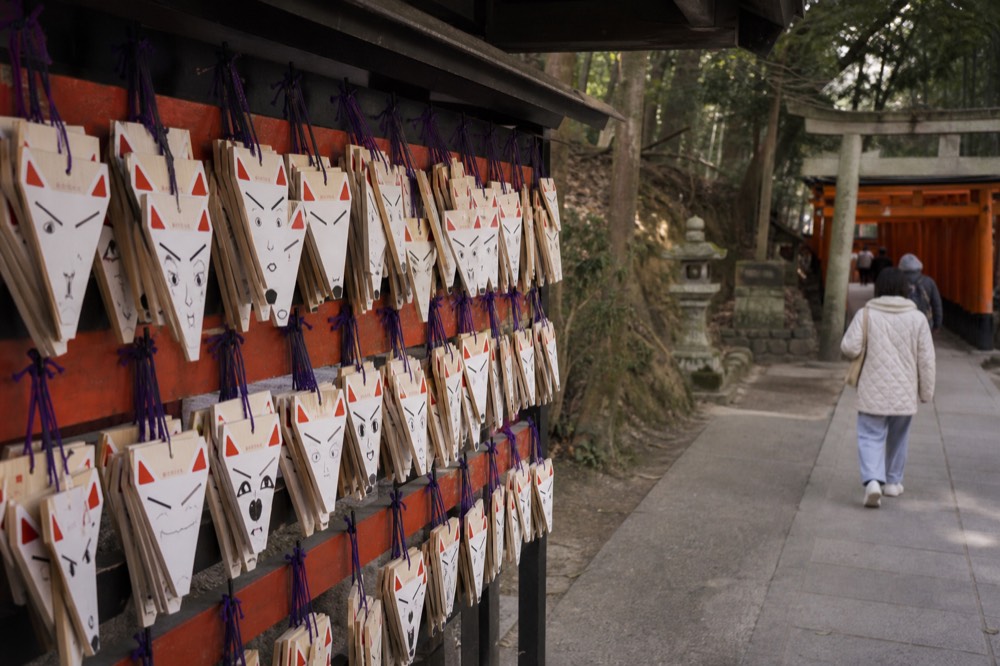
The ema, wooden wish plaques, at Fushimi Inari are drawn as fox faces that visitors customise with ink, and they hang in racks near the tunnel entrance. It is one of the few interactive traditions at a major Japanese shrine with no fee attached. The omokaru-ishi, the "heavy or light" stones near the Okusha Hohaisho partway up, are another: lift the stone, make a wish, and judge by whether it feels light. These small rituals are what the mountain was for, long before the photographs.
Food-wise, the front approach streets, especially the lane behind the rear approach exit, hold small grilled-skewer stalls and teishoku shops that open from mid-morning. The area around Inari is also one of Kyoto's old sake districts, and the shrine's historical ties to sake merchants are the reason so many brewery torii stand on the mountain. None of this is on the tour route either, which is exactly why it pairs with it: the tour feeds you, and the shrine morning feeds you differently.
Practical basics: bring coins for offerings and small purchases, because not every stall takes cards; carry water on the climb, especially June through September; and keep your voice down on the upper paths, where local worshippers visit the sub-shrines in genuine quiet. The mountain is a religious precinct first and a photo location second, and it behaves better for everyone when visitors remember the order.
If the six-stop coach circuit is the backbone of your trip, these are the options worth weighing.
Fushimi Inari Taisha is free to enter, never closes its mountain paths, holds about 10,000 torii of all sizes according to the shrine itself, takes two to three hours for the full summit circuit, and is not on the Kyoto and Nara coach route, so it is best visited on your own the morning before or the evening after a tour day. The questions below cover the details visitors ask most often, with the answers drawn from the shrine's own published pages and the official meteorological record wherever a figure exists.
Common questions about Fushimi Inari shrine
Is Fushimi Inari free to enter?
Yes. The shrine publishes no admission charge and no closing time for the mountain paths. Only the prayer, amulet and goshuin desks have published hours, which the shrine sets day by day.
How many torii gates are at Fushimi Inari?
The shrine's own FAQ states about 10,000 torii of all sizes along the mountain paths, covering the whole mountain rather than just the Senbon Torii tunnel. Any exact figure, such as 32,000, has no primary source.
How long does the walk take?
The full round trip to the Mount Inari summit takes about two to three hours. Most visitors turn around at the Yotsutsuji viewpoint after 30 to 45 minutes and still see the tunnels and the city outlook.
Can you visit Fushimi Inari at night?
Yes. The shrine publishes no closing time for the paths, and the tunnels are quiet and atmospheric after dark. Some upper stretches are unlit, so bring a torch or keep to the lower circuit.
When is the best time to visit?
Early morning, before 07:00, avoids the heaviest crowds at any time of year. Cherry full bloom normally falls around 4 April, and maple colouring is a December event, with a normal date of 5 December, so the classic mid-November maple advice is off by weeks.
Is Fushimi Inari on the Kyoto and Nara day tour?
No. The coach tour visits Nijo Castle, Kinkaku-ji, the Kyoto Imperial Palace, Kasuga Taisha, Todai-ji and Nara Park. Fushimi Inari is best visited on your own the morning before or the evening after the tour day.