Is Kyoto a tourist trap?
A longread answer to whether Kyoto is a tourist trap: which streets and temples feel manufactured, which ones earn their fame, and how to plan around the crowds.
Is Kyoto a tourist trap?
No, Kyoto is not a tourist trap, but it behaves like one in specific, avoidable places. A city of working temples, shrines and ordinary neighbourhoods is real and mostly uncrowded; the trap feeling comes from a handful of famous streets and gates at peak hours. The fix is timing and routing, not skipping the city.
The question is fair, though, because the tourist version of Kyoto has been expanding for years. Certain lanes in Gion now have signs in several languages warning visitors not to photograph or even enter, with a 10,000 yen penalty attached, and that is not normal behaviour for a city at peace with its visitors. The city's own tourism guidelines now ask visitors not to chase or photograph geisha and maiko without permission, which tells you how far things went before the rules arrived.
What follows is a breakdown of where the trap feeling is justified, where it is not, and how to structure a visit so you meet the real city more often than the queue. The short version: go early, go off the main drags, and be honest about which famous sights you actually want. The long version is below, including the worship fee rise that most guidebooks still get wrong.
Where does the trap feeling actually come from?
The trap feeling concentrates in three places: the private alleys of Gion, the approach lanes around Kiyomizu-dera, and the first tunnel of torii at Fushimi Inari in the middle of the day. Each one is a real, historic site that has been squeezed by foot traffic until the experience of visiting it no longer matches the photographs people arrived with. None of these three is representative of the city as a whole.
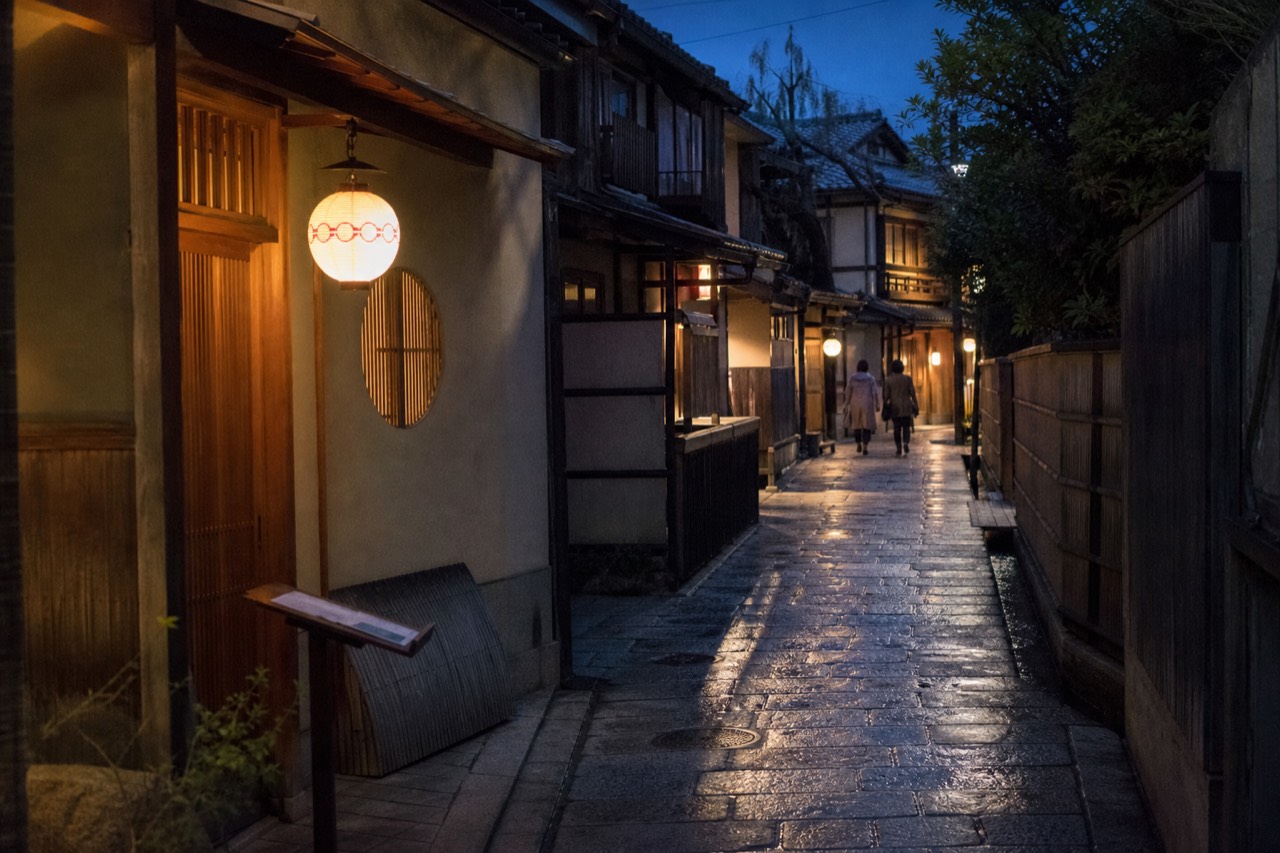
Take Gion first. The main street, Hanamikoji, remains public and walkable, and it is genuinely lovely in the early evening. The problem is the private lanes off it, where residents have dealt with years of visitors blocking doorways and chasing women in kimono. Photography and entry are now banned on those specific private roads, and enforcement includes signage, cameras and volunteers. A 10,000 yen fine is attached. The rule is narrowly drawn, but many visitors read about it and conclude the whole district is hostile, which it is not.
Kiyomizu-dera is a different kind of problem, a crowding problem rather than a rules problem. The temple itself publishes its hours carefully, and they are generous: 06:00 to 18:00 for most of the year, with night viewing until 21:30 in spring, mid-August and late November. Arrive at 06:00 and you will have the famous stage, built on 400-year-old zelkova pillars without a single nail, nearly to yourself. Arrive at 11:00 and you will queue to stand on it. Same temple, opposite experiences. Note that Kiyomizu-dera is not a stop on the day tour this site covers; it is listed here because it is one of the places people mean when they ask the tourist-trap question.
Fushimi Inari is the third. The shrine is free, the mountain paths are open with no closing time the shrine sets for them, and the whole precinct is enormous, roughly 870,000 square metres by the shrine's own comparison to 22 Koshien Stadiums. Yet the famous Senbon Torii tunnel can be a slow-moving column of people by mid-morning. The shrine's own FAQ says about 10,000 torii of all sizes stand along the mountain paths, a figure covering the entire mountain, not the tunnel alone; walk twenty minutes past the tunnel and the crowds thin dramatically. It is also not a stop on this site's tour, for the same reason.
The pattern across all three is identical: the trap is not the place, it is the place at the one hour everyone visits it.
Which famous sights are actually worth it?
The honest answer is that Kyoto's most famous sights mostly earn their fame, and the ones that feel hollow are the commercial strips built beside them, not the sights themselves. Kinkaku-ji, Nijo Castle, Fushimi Inari and Kiyomizu-dera are all destinations with centuries of substance behind them, and their fees are modest: temple admissions here run 500 to 800 yen, not the 30-dollar theme-park pricing a trap would charge.
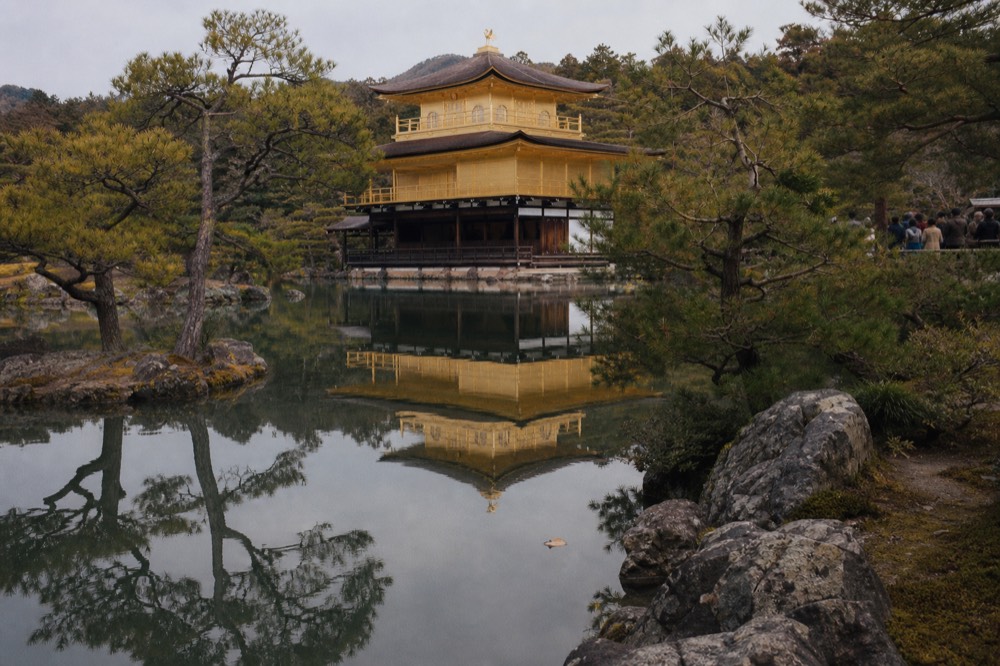
Kinkaku-ji is a good example of substance versus framing. The Golden Pavilion is a 1955 rebuild of the building destroyed by arson in 1950, recoated in gold leaf in 1987, so the structure you photograph is younger than many visitors assume. The temple charges 500 yen for adults and high school students, 300 yen for elementary and junior high children, free below school age, and opens 09:00 to 17:00. The garden, about 132,000 square metres with most of it designated a Special Historic Site and Special Place of Scenic Beauty, is the original Muromachi-era design. The crowd moves along a fixed one-way path, which is efficient but can feel like a conveyor. Go at 09:00 sharp and the ratio of wonder to elbow is far better.
Here is a comparison of the headline sights and what they cost, using the temples' own published figures:
| Sight | Adult admission | Hours | What the fee buys |
|---|---|---|---|
| Kinkaku-ji | 500 yen | 09:00-17:00 | Garden circuit past the pavilion |
| Nijo Castle | 800 yen (1,300 yen with Ninomaru Palace) | Varies by season | Castle grounds; the palace interior costs extra |
| Kiyomizu-dera | Fee not published by the temple; secondary sources report around 500 yen | 06:00-18:00 most days, 2026 table published | Full grounds including the stage |
| Fushimi Inari | Free | Paths open, no closing time the shrine sets | The whole mountain, about 2-3 hours round trip to the summit |
| Todai-ji (Nara) | 800 yen, cash only | 07:30-17:30 Apr-Oct, 08:00-17:00 Nov-Mar | The Great Buddha Hall, 57.012 metres wide |
A few things stand out. None of these is expensive by international standards; a full day of paid sights costs less than a single museum entry in London or New York. Todai-ji and Kofuku-ji in Nara are both cash only, stated on their own pages, so carry yen. And Nijo Castle's Honmaru Palace now requires an advance web ticket released 30 days ahead, on top of castle admission, which is exactly the kind of detail that breaks older itineraries.
Nijo Castle is also one of the six stops on the Kyoto and Nara Day Tour this site covers, along with Kinkaku-ji, the Kyoto Imperial Palace, Kasuga Taisha, and Todai-ji with Nara Park. A coached day is one way to see several of these without working out the bus connections between them, and the 4.8-rated, 32-review listing is run by a long-established operator with a licensed English-speaking guide.
Do the crowds have a schedule you can beat?
Yes, and the schedule is more predictable than most people expect, because it follows two clocks: the seasons and the hours. Kyoto's cherry blossoms normally flower on 26 March and reach full bloom on 4 April, the city's maples normally colour on 5 December, and the hours between 10:00 and 16:00 carry most of the daily crush. Plan against both clocks and you halve the trap feeling without giving anything up.
The seasonal dates come from the Kyoto Local Meteorological Observatory, which has tracked phenology here for well over a century, not from a tourism body. In 2026 the cherries flowered on 23 March and hit full bloom on 30 March, a few days ahead of the 1991-2020 normal. The records run from an earliest flowering of 16 March in 2021 to a latest of 9 April in 1984, so a visit aimed at blossoms carries real uncertainty; book for late March and you are betting on a moving target.
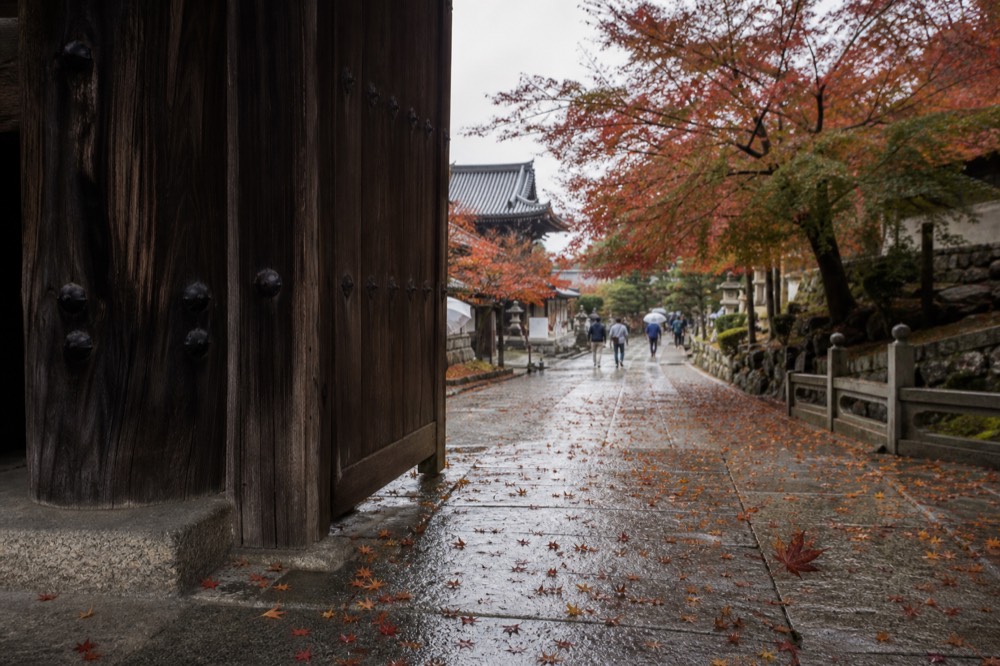
The maple date is the one almost everyone gets wrong. Kyoto's official maple colouring date, the observatory's own definition, is 5 December on the 1991-2020 normal; in 2025 it was 10 December. The mid-November peak-colour folklore you read in most articles describes the ginkgo and the early colouring, not the maples at their best. If you want maples, December is your month, which conveniently is also low season for hotel prices. The ginkgo colouring normal is 24 November, for reference.
The daily clock matters as much as the calendar. Kiyomizu-dera opens at 06:00 for most of the year; Fushimi Inari's paths have no closing time the shrine sets, so dawn there is quiet, free and genuinely magical; Kinkaku-ji opens at 09:00, so the first fifteen minutes are the calmest of the day. The mid-afternoon rush on public transport is real too: the city's flat bus fare is reported as about 230 yen adult, 120 yen child in the central zone, buses accept IC cards like ICOCA and Suica, and drivers may refuse large luggage on city buses, a rule worth knowing if you are checking out and sightseeing on your last day.
Summer deserves its own warning. Kyoto is a basin, and it is getting hotter in a measurable way: the city's station records begin in 1880, and four of the six hottest days in that entire record fall in 2018, 2024, 2025 and 2026, with 39.7 degrees recorded on 23 July 2026. August afternoons are not just unpleasant, they are dangerous for long outdoor walks. If your trip lands in July or August, shift the famous sights to mornings and evenings, and treat the middle of the day as museum and shade time.
How do you see the real Kyoto, not the brochure version?
The real Kyoto is found in three ways: walk one neighbourhood instead of five sights, eat where the queues are local rather than photographed, and let the famous list shrink to what you genuinely want. Kyoto rewards depth over coverage, and a day spent in Naramachi-style side streets, a market before 09:00, or a minor temple with no queue usually beats a fourth headline temple at noon.
Start by picking your headline sights honestly. If temples blur together for you, two is plenty: Kinkaku-ji for the image, then something quiet. The free and nearly free list is longer than most guidebooks admit, and our piece on free things to do in Kyoto and Nara covers it in detail. Fushimi Inari costs nothing, Arashiyama's bamboo path is a public path with no gate, and whole districts like Naramachi across in Nara or northern Higashiyama's residential lanes ask nothing but your feet. For the full picture of what one city can offer in a single day, the Kyoto Nara Day Tour homepage lays out the six-sight route this site is built around.
Practical money details help too. Carry cash: Todai-ji and Kofuku-ji admissions are cash only by their own statements, many smaller shops remain cash-preferred, and 7-Eleven and Japan Post ATMs accept foreign cards widely. Budget for the accommodation tax, which is charged per person per night on top of the room rate and, since 1 March 2026, runs from 200 yen on a room under 6,000 yen up to 10,000 yen on a room of 100,000 yen or more, per the city's own tax page. That is a real change from the old 200/500/1,000 yen schedule and it lands on luxury stays hardest.
Behaviour rules are worth knowing before you arrive rather than after. Beyond the Gion alley ban already mentioned, the city's visitor guidelines ask people not to photograph geisha and maiko without permission, per the city's published guidelines, and the standard etiquette at temples is simple: no tripods in crowded halls, no eating in precincts unless invited to, and quiet inside buildings. None of this is onerous. All of it is the difference between a city that welcomes visitors and one that keeps building fences against them.
If your time is short, an organised day solves the routing problem in one stroke. A coached tour from Kyoto or Osaka handles the Nijo Castle to Nara sequence in about 10.5 hours from Kyoto, with a licensed guide and admissions included, and the no-lunch option is the cheaper entry point; the included lunch is, by multiple guest accounts across several years, the weakest element of the day, so eating your own lunch in Nara near the park is both cheaper and usually better. The Osaka departures end at Osaka Namba and do not return you to Kyoto, which matters for where you sleep that night.
Is Nara a better bet if Kyoto feels too much?
Nara offers most of what people imagine they want from Kyoto, the temples, the deer, the old streets, at a noticeably calmer pace, and it is 45 minutes away by train. It is not better, it is different: Nara's core is compact and walkable, its headline sights sit beside a park with 1,687 free-roaming deer, and its crowds are a fraction of Kyoto's at the equivalent sights.
The 2026 deer census, published by the Nara Deer Preservation Foundation, counted 1,687 deer, up 222 on the previous year and 1,687 deer, up 222 on the previous year's count. The deer are habituated but wild, protected as a National Natural Monument, and the foundation's rules are firm: feed them only shika senbei crackers, about 200 yen a bundle from park vendors, hand the cracker over fast, and keep clear in June and November, the designated deer-protection months for calving and the rut. Our Nara deer park guide covers the etiquette in full.
Todai-ji anchors the Nara side. The Great Buddha Hall measures 57.012 metres east-west and 48.742 metres high, the present hall dates from 1709, and admission is 800 yen, cash only, no booking needed or accepted. Kasuga Taisha's approach, lined with roughly 2,000 stone lanterns, is free to walk, and the shrine's special worship inside the middle gate costs 700 yen. You can read more in what Todai-ji temple is famous for.
The honest comparison is this: Kyoto rewards three or four days and punishes a rushed one; Nara rewards half a day to a full day and barely punishes anything. If Kyoto's crowds are wearing you down by day two, the answer is not to write the city off, it is to spend day three in Nara and come back to Kyoto for early mornings. The two cities are close enough, about 45 minutes by the JR Miyakoji Rapid or Kintetsu express, that a combined day is practical, which is exactly what the coach tour built around them does.
What is the verdict?
Kyoto is a tourist trap only if you visit it the way the crowd does: mid-day, peak season, headline sights only, no plan for the hours either side. Visited early, off-peak or on foot through its ordinary neighbourhoods, it is one of the great cities of the world, and its fees are too small and its substance too deep for the trap label to stick. Blame the itinerary, not the city.
The city's problems are real, and pretending otherwise would be dishonest. Crowding at the famous gates has changed what a visit feels like, the rules in Gion exist because visitors abused the access they had, and summer heat has become genuinely severe by any historical measure. The accommodation tax rise and the coming bus fare changes are the city's own attempts to manage the numbers, and visitors will feel them in the wallet.
But a trap, properly speaking, is a place that takes your money and gives nothing back. Kyoto's temples charge a few hundred yen and hand back a millennium of craft, from a stage built without nails to a hall that has stood, in its present form, since 1709. The city publishes its own seasonal data, opens its sites at dawn, and keeps enormous portions of itself free. That is not a trap. That is a city doing its best under pressure, and succeeding more often than the complaint threads suggest.
Plan around the clocks, carry cash, be early, and see Nara when Kyoto's queues win. If a coached day suits your style, the options below cover the six-sight itinerary from either Kyoto or Osaka.
For travellers who want lunch handled, the standard lunch option adds a Western set meal to the Kyoto departure, priced at HK$1,597 for this departure option. Given that the included meal has drawn the weakest guest comments across several years, plenty of visitors prefer the no-lunch versions and eat their own lunch in Nara instead, close to the park and for less money.
Kyoto is not a tourist trap, but it can absolutely feel like one when visited the way most itineraries visit it: mid-day, peak season, headline sights only. The verdict, the timing tactics, the honest sight-by-sight fee breakdown and the Nara alternative are all covered above; these are the short answers to the questions people ask most often before booking a trip.
Common questions about Kyoto as a tourist destination
Is Kyoto a tourist trap?
No, but parts of it behave like one at peak hours. The private alleys of Gion, the midday approach to Kiyomizu-dera and the Senbon Torii tunnel at Fushimi Inari can all feel manufactured and crowded. Visit the same places at dawn or in the off-season and they are quiet, affordable and genuinely remarkable. The trap is in the timing, not the city.
Is Kyoto too crowded to enjoy?
Not if you plan against the daily clock. Kiyomizu-dera opens at 06:00 most of the year, Fushimi Inari's paths have no closing time the shrine sets, and Kinkaku-ji opens at 09:00. The 10:00 to 16:00 window carries most of the crush; the hours either side of it carry most of the beauty.
What is the best month to visit Kyoto?
For maples, aim for early December rather than mid-November: the observatory's normal maple colouring date is 5 December, and 2025 coloured on 10 December. For cherry blossoms, late March into early April, flowering on 26 March and full bloom on 4 April on the 1991-2020 normals, accepting some year-to-year variation. Winter is quiet and cheap; late July and August are dangerously hot.
Are Kyoto's temples expensive?
No. Headline temple admissions run 500 to 800 yen, Fushimi Inari is free, and the Arashiyama bamboo path is a public path with no gate. A full day of paid sights costs less than a single major museum ticket in most Western capitals. Note that Todai-ji and Kofuku-ji in Nara are cash only.
Can you combine Kyoto and Nara in one day?
Yes. The two cities are about 45 minutes apart by train, and a coached day tour covering Nijo Castle, Kinkaku-ji, the Kyoto Imperial Palace, Kasuga Taisha and Todai-ji with Nara Park runs about 10.5 hours from Kyoto with admissions and a licensed English-speaking guide included.
Why are photos banned in some Gion alleys?
Residents of the private lanes off Hanamikoji faced years of visitors blocking doorways and chasing geisha, so photography and entry are now banned on those specific private roads, with a 10,000 yen penalty and active enforcement. The main street remains public and open. The ban is narrow, and respecting it keeps the rest of the district accessible.