What is the best time of day to visit Nara Park?
Morning, midday or dusk: how the deer, the crowds and the temple hours shape the best time of day to visit Nara Park.
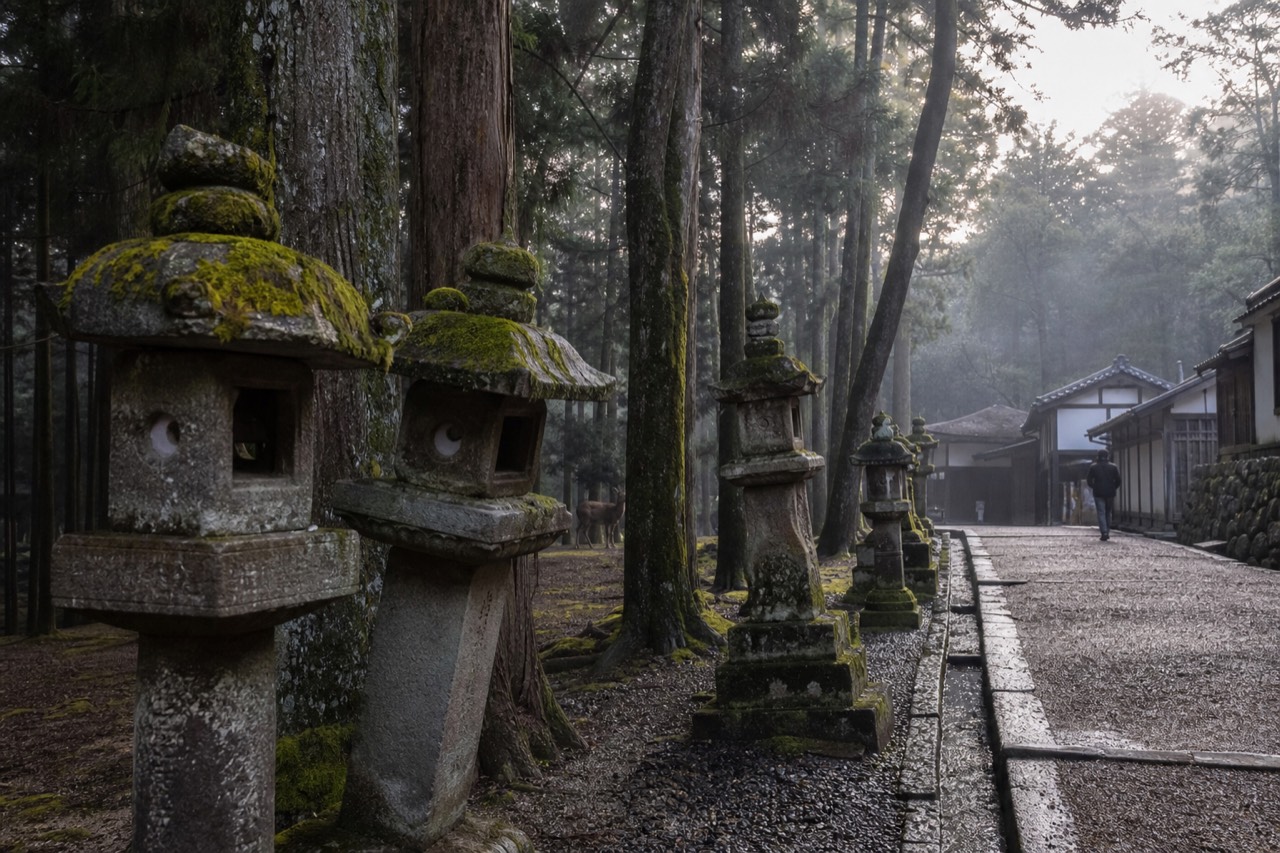
The deer of Nara Park do not care about your itinerary. They wake hungry, nap through the midday heat, and grow restless again as the light softens, which means the park has a rhythm you can plan around rather than fight. The temples, shrines and museum around the grass set their own clocks, and those clocks do not always match the deer's.
What is the best time of day to visit Nara Park?
The best time of day to visit Nara Park is early morning, between about 7:00 and 9:00, when the deer are active and hungry, the tour coaches have not yet arrived, and the air is still cool; the second-best window is the last two hours before the paid halls close, around 15:00 to 17:00, when crowds thin and the deer gather near the closing food stalls.
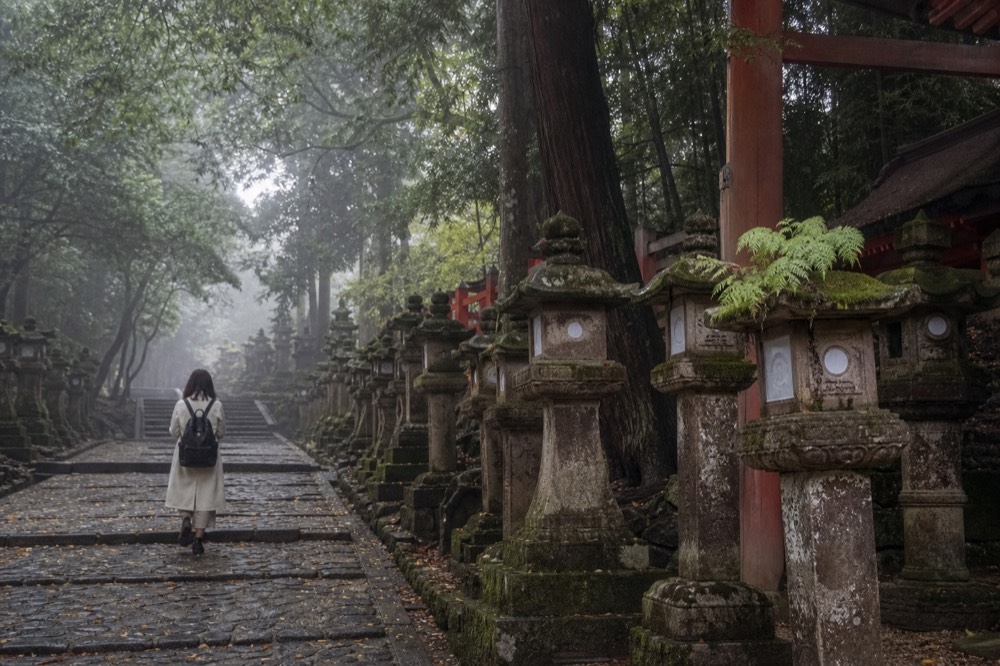
Early morning is the honest answer, and it comes with a bonus most first-time visitors miss: at that hour the park belongs to the deer. They lounge on the open lawns, they approach people readily because they have not been fed all night, and the famous stone lanterns of the approach to Kasuga Taisha photograph beautifully in low, raking light. The shrine's worship area opens at 06:30 from March to October and 07:00 from November to February, so an early start lets you walk the lantern-lined approach before the first coach pulls in.
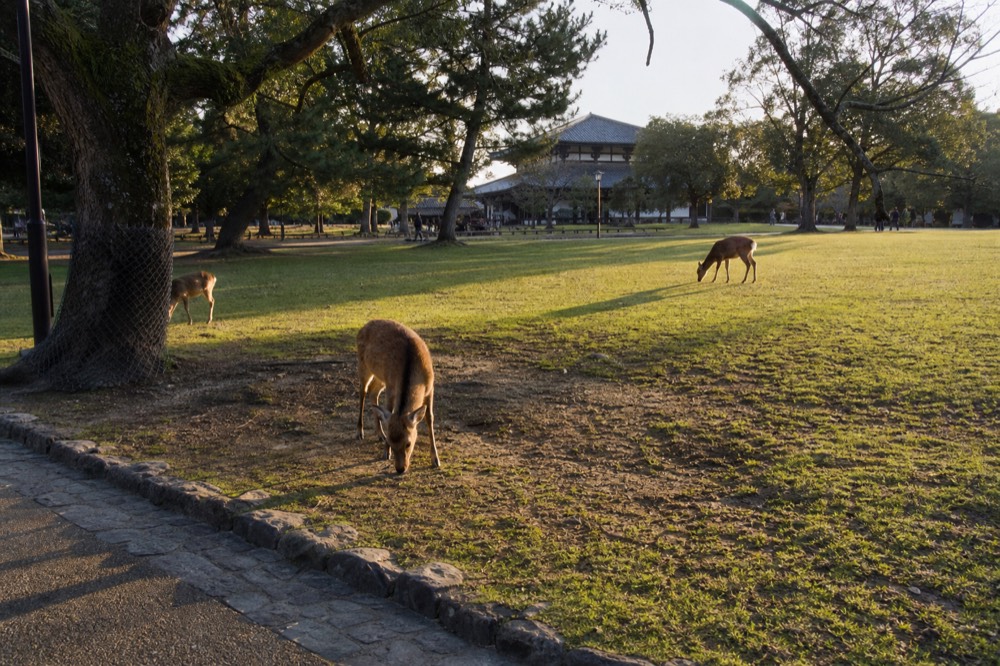
The catch is that the paid interiors open later. Todai-ji's Daibutsuden, the Great Buddha Hall, opens at 07:30 from April to October but not until 08:00 from November to March, and it stays open until 17:30 or 17:00 depending on season. Kofuku-ji's three paid buildings keep a single schedule, 09:00 to 17:00 with last entry at 16:45. So a 7:00 arrival means an hour or two of park and shrine grounds before anything with a ticket gate unlocks, which is exactly the right order: outside first, inside later.
If you would rather hand the timing puzzle to someone else, a structured coach day is one way to do it.
The numbers behind the morning argument are the deer's own. The Nara Deer Preservation Foundation counted 1,687 deer in the park in its July 2026 census, a rise of 222 on the previous year, and it counts them in the hours just after dawn, 05:30 to 08:00, because that is when the animals are easiest to find on the open ground. Visitors see the same effect: dawn and early morning are when the park's lawns are genuinely full of deer, not just the strip around the cracker vendors.
Why early morning is the quiet window
Early morning wins on all three fronts at once: the deer are unfed and approach readily, coach groups typically arrive from mid-morning onward, and the summer heat, which has pushed Kyoto to record highs near 40 degrees in recent years, has not yet built; the park is at its most atmospheric between 07:00 and 09:00.
The deer are the deciding factor. They are habituated but wild, as the foundation's own guidance puts it, and they respond to food with focus. In the first hours after sunrise they have gone all night without a cracker, so they are alert, mobile and far more likely to come to you on the open lawns. By mid-afternoon, many have been fed by hundreds of visitors and simply lie down, which is why so many photographs of "sleepy, uninterested deer" come from late-day visits.
Crowds follow the coaches. A typical full-day Kyoto and Nara tour runs about 10.5 hours from Kyoto, door to door, and the Nara leg tends to land in the middle of the day, when the Great Buddha Hall queue is longest and the cracker stalls are busiest. Arrive before that wave and you share the park with joggers, local dog walkers and a handful of photographers. The difference is not subtle; the wide lawn in front of Todai-ji can feel almost private at 7:30 and packed by 11:00.
Timing the calm also means timing the animals' calendar, not just the clock. Calving runs from mid-May through June, and the foundation warns that does turn aggressive around a birth and that approaching a newborn fawn provokes the mother. The rut runs September to November, when stags, including de-antlered stags, must not be approached. A morning visit in those windows is still the best plan, but it needs more distance and less feeding, not less caution.
The practical anchors, all from the sites themselves:
| Site | Opens | Closes | Note |
|---|---|---|---|
| Kasuga Taisha worship area, Mar-Oct | 06:30 | 17:30 | Grounds walk-through |
| Kasuga Taisha worship area, Nov-Feb | 07:00 | 17:00 | Grounds walk-through |
| Todai-ji Daibutsuden, Apr-Oct | 07:30 | 17:30 | 800 yen, cash only |
| Todai-ji Daibutsuden, Nov-Mar | 08:00 | 17:00 | 800 yen, cash only |
| Kofuku-ji paid halls | 09:00 | 17:00 | Last entry 16:45, cash only |
The one morning trap is the Honmaru Palace problem in reverse: nothing at Nara requires advance booking. Todai-ji states plainly that advance reservations are neither accepted nor required, and Kofuku-ji says the same. You cannot out-plan anyone by booking early; you can only arrive early.
What the afternoon offers: feeding, crowds and light
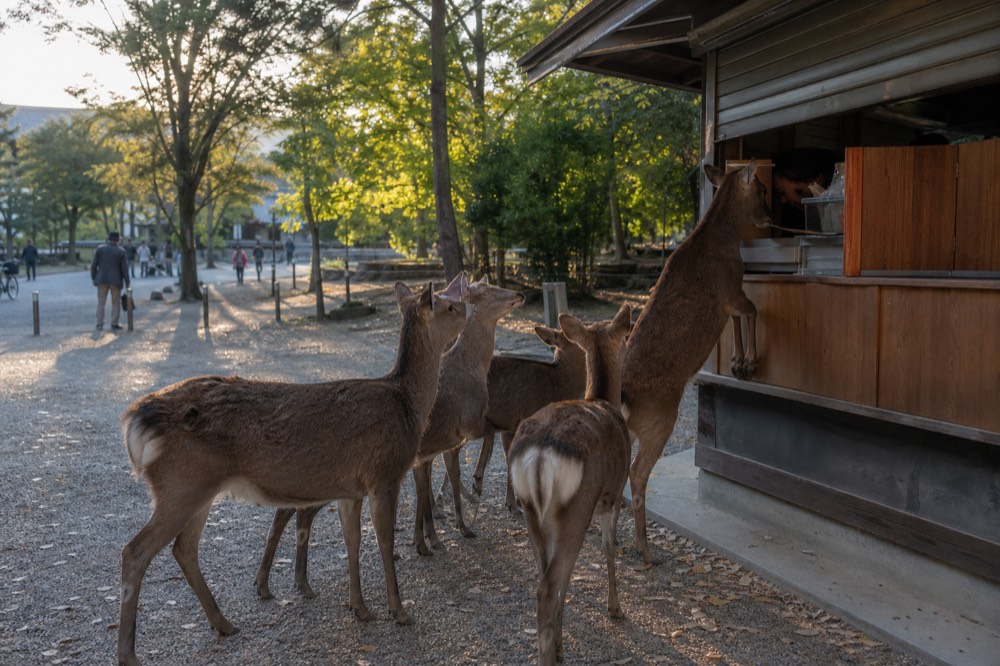
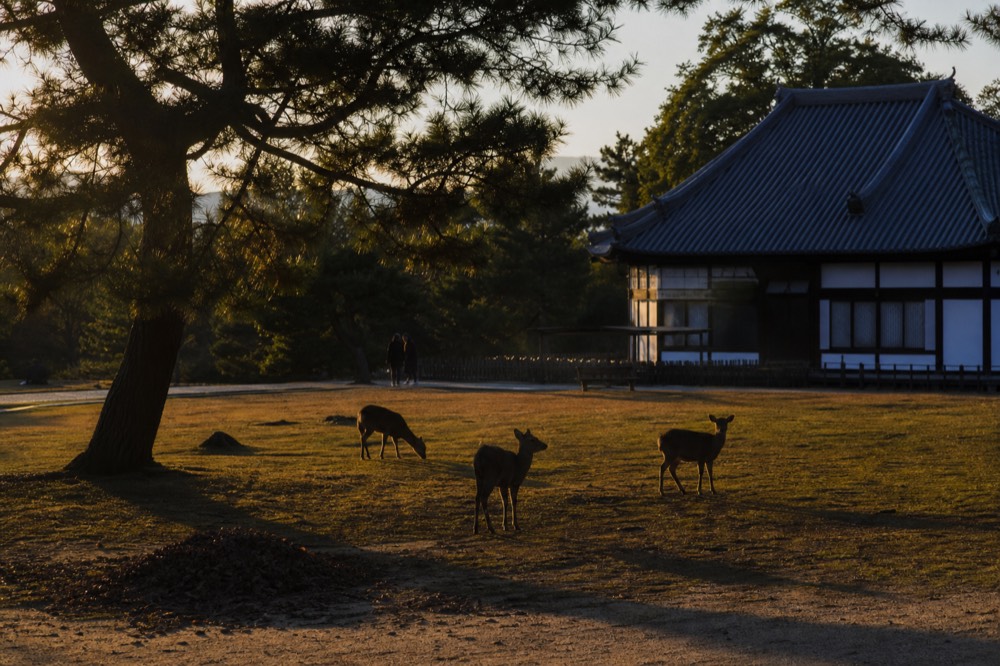
Midday is the park's busiest and least rewarding stretch, roughly 11:00 to 14:00, but from about 15:00 the dynamics flip: coach groups leave, the air cools, the low sun turns the lantern paths golden, and the deer, knowing the cracker stalls will close, gather near the vendors and become intensely social again.
The afternoon is the underrated window, and the reason is arithmetic. Tour coaches need to get their groups back to Kyoto or Osaka, so the mass departures begin in mid-afternoon. What remains is a park that is still fully open, with every paid hall admitting visitors until 16:45 or later, and a rising sense of urgency among the deer. Vendors have reported crackers selling out by midday at peak times, but where they are still on sale in the afternoon, the deer know the routine and congregate.
Afternoon light also suits the park's best photography. The approach to Kasuga Taisha is lined with lanterns, roughly 2,000 stone and 1,000 hanging by the standard count, and the shrine's wooded setting means the light filters rather than blasts. At midday the contrast is harsh and the lawns are shadeless; at 16:00 the same paths glow. The foundation's own census work happens at dawn because the deer are visible then, but the evening aggregation near the stalls is nearly as reliable for close encounters.
Feeding etiquette matters more when the animals are keen. The foundation's guidance is specific: feed nothing except shika senbei, hand the cracker over fast, do not tease, and never keep it in a closed fist, or the deer will follow and press. Both hands empty after the last cracker, shown openly to the deer, ends the encounter cleanly. This is worth rehearsing mentally before you buy the first bundle, because an eager afternoon stag is not the moment to improvise.
If a late-afternoon arrival in Nara is what your Kyoto schedule allows, a coach tour that handles the morning in Kyoto and reaches Nara after the peak can be a sensible fit.
The Kyoto and Nara Day Tour, operated by JTB Sunrise Tours, covers Nijo Castle, Kinkaku-ji and the Kyoto Imperial Palace before the coach makes the roughly 60 to 80 minute run to Nara for Kasuga Taisha and Todai-ji with Nara Park. The no-lunch Kyoto option is from $191.65 per adult; the version with a Western set lunch is published at HK$1,597. Reviewers across several years, including 2025, have been blunt that the included lunch is the weakest element of the day, so the cheaper no-lunch option is the one to weigh first.
Season by season: when the clock shifts
Season changes the answer more than most guides admit: in summer the usable window shrinks to early morning and late afternoon because midday heat is severe, in winter every paid hall opens later and closes earlier, and in spring and autumn the full day works, with cherry blossom in Nara usually flowering around 25 March and the strongest maple colour in the Kansai region arriving in late November or even December.
The Japan Meteorological Agency's Kyoto observatory tracks the cherry and maple dates, and its numbers puncture the folklore. Kyoto's normal full bloom is 4 April, and in 2026 the city reached it on 30 March, with flowering recorded on 23 March; Nara's cherry began flowering on 25 March 2026, several days ahead of the usual late-March timing. For a park visit framed by blossom, the last week of March into the first days of April is the target, and the best time of day within it is still early morning, when the lawns are quiet and the light is soft.
| Season | Best window | Why |
|---|---|---|
| Spring (late Mar-early Apr) | 07:00-09:00 | Blossom, cool air, deer active before coaches |
| Summer (Jul-Aug) | 07:00-09:00 and 16:00-17:30 | Midday heat; Kyoto has hit 39.7 C as recently as July 2026 |
| Autumn (Nov) | Morning, with distance | The rut runs Sep-Nov; stags must not be approached |
| Winter (Dec-Feb) | 09:00-15:00 | Halls open 08:00, close 17:00; dawn is cold and dim |
The maple correction matters for Nara planning too. Kyoto's official maple colouring date is 5 December in a normal year, and it was 10 December in 2025; one 2026 forecast puts Kyoto's red-leaf viewing date at 11 December, while another has Arashiyama peaking around 24 November. The mid-November "peak autumn" line that dominates search results is folklore. If vivid red maples are the goal, plan for late November into early December, not the second week of November, and expect the deer to be in rut through the whole window.
Summer is the season that punishes a bad start time hardest. Four of Kyoto's six hottest days in a station record going back to 1880 fall in 2018, 2024, 2025 and 2026, with the 2026 high of 39.7 C set on 23 July. Nara's climate is close behind. In July and August, the middle of the day is for the museum and the Daibutsuden, not the open lawn; the park's shade-free grass is genuinely dangerous at 13:00. June adds the rainy season, which in 2026 ran from about 4 June to 8 July in the Kinki region.
Staying into late afternoon and evening
Late afternoon, roughly 15:00 to closing, is the strongest runner-up to early morning: the paid halls take their last entries at 16:45 or hold until 17:30, the coaches depart, the deer concentrate near the closing stalls, and the lantern paths are at their most photogenic, though you must watch the last-entry times, since 17:00 means 17:00.
Every closing time in the park is a hard edge. At Kofuku-ji the combined ticket window closes at 16:00, after which combined tickets sell only until 16:00, after which only single-hall tickets are sold. The Todai-ji Museum takes its last entry at 17:00 in the April-October season and 16:30 in winter. Kasuga Taisha's special worship inside the middle gate runs only 09:00 to 16:00 daily, and its amulet desk closes with the grounds. An afternoon plan that reaches the park at 15:30 has about ninety usable minutes indoors and should spend them at Todai-ji first.
One evening exception is worth a detour if the dates align: the Chugen Mantoro lantern festival at Kasuga Taisha on 14 and 15 August, when the shrine's stone and hanging lanterns, roughly 2,000 and 1,000 respectively by the standard count, are lit. The shrine also holds the Setsubun Mantoro on 3 February. These are the two nights of the year when "after dark" is not just allowed but is the entire point, and they reward visitors who linger past the normal closing hours with something the morning crowd never sees.
Getting back is the last timing decision. Trains from Nara to Kyoto run regularly, with the JR Miyakoji Rapid doing the trip in about 45 minutes and Kintetsu's options taking about 35 to 45, and a one-way fare runs about 720 to 760 yen depending on operator, though fares change and should be checked at the station. Anyone timing an evening exit around a coach tour instead should note the practical difference in the tour options: the three Osaka departures end at Osaka Namba and do not return to Kyoto, a detail worth confirming before the day starts. More on the routes is in our guide to getting from Kyoto to Nara, and the timing trade-offs for the park's neighbours are covered in how to spend a day in Nara.
For travellers weighing a structured day against an independent one, the site behind this article, Kyoto Nara Day Tour, exists precisely to compare those options, and the coach alternatives below cover the main variations.
The Osaka no-lunch option departs Osaka at 07:15, skips the lunch stop and is published at HK$1,597, ending at Osaka Namba rather than returning to Kyoto. For an Osaka-based visitor, an early coach departure matches the early-morning logic: it puts you on the road before the crowds build, even if the Nara leg still lands midday. The trade-off is fixed timing, no lingering for the late-afternoon window and no evening lanterns.
Whichever window you choose, the underlying rule is simple: go when the deer are awake and the coaches are not. Morning does that most reliably, late afternoon does it second, and midday mostly does neither.
Most timing questions about Nara Park come back to the same three anchors: the deer are liveliest early and late, the paid halls open between 06:30 and 09:00 and close between 16:00 and 17:30, and the coaches thicken the crowd from late morning to mid-afternoon, so the answers below lean on those hours throughout.
Common questions about visiting Nara Park
What is the best time of day to visit Nara Park?
Early morning, about 07:00 to 09:00, when the deer are active and hungry and the coaches have not arrived. The second-best window is 15:00 to closing, when crowds thin and the deer gather near the cracker stalls.
What time does Nara Park open?
The park itself is public ground with no gate or opening time. The paid sites around it set the clock: Kasuga Taisha's worship area from 06:30 or 07:00 depending on season, Todai-ji's Daibutsuden from 07:30 or 08:00, and Kofuku-ji's halls from 09:00.
When are the Nara deer most active?
At dawn and in the first hours of the morning, when they have not been fed overnight, and again in late afternoon near the closing cracker stalls. Midday, especially in summer, they mostly rest in the shade.
When should you avoid feeding the deer?
During the rut, September to November, when stags turn aggressive, and from mid-May through June, when does protect newborn fawns. The foundation designates June and November as deer-protection months for exactly these reasons.
Is Nara Park crowded at midday?
Yes, typically from about 11:00 to 14:00, when most full-day coach tours from Kyoto and Osaka reach Nara. The quietest stretches are before 09:00 and after 15:00.
What time do things close in Nara Park?
Kofuku-ji's combined ticket sells until 16:00; last entry is 16:45 for all halls; Todai-ji's Daibutsuden closes at 17:30 from April to October and 17:00 from November to March; Kasuga Taisha's grounds close at 17:30 or 17:00 by season.